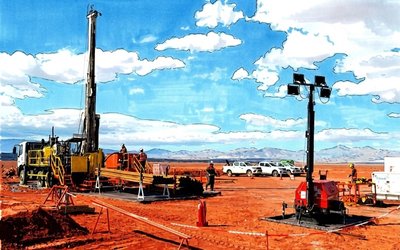
Lake Resources has reached a critical juncture in the development of its Kachi lithium project, confirming successful validation of its Gen4 and Gen5 direct lithium extraction (DLE) technology. This technical milestone, paired with ongoing progress in the environmental impact assessment (EIA) process, positions the company to target project milestones through the first half of 2026. The shift from pilot-scale testing to more robust technical verification is a necessary step for the company as it attempts to move toward a final investment decision (FID).
Technical Validation and Regulatory Path
The integration of Gen4 and Gen5 DLE technology represents a pivot toward higher efficiency and improved recovery rates for the Kachi asset. By refining the extraction process, Lake Resources aims to mitigate the technical risks often associated with DLE deployment in brine-based lithium projects. The company is simultaneously navigating the regulatory landscape, with the EIA process serving as the primary gatekeeper for future construction permits. Successfully clearing these hurdles is essential for maintaining the project timeline, as investors remain focused on the transition from exploration to commercial-scale production.
Liquidity Management and Bridge to FID
To support these operational goals, Lake Resources has secured a bridge to its next phase of development through a combination of existing cash reserves and an at-the-market (ATM) facility. This liquidity strategy is designed to provide the necessary runway to reach the FID without requiring immediate, large-scale capital raises that could dilute existing equity positions. Managing this cash burn while simultaneously advancing technical and environmental workstreams remains the central challenge for management.
As the company continues to refine its operational footprint, it is worth noting how broader industrial trends impact capital-intensive sectors. For those tracking the intersection of industrial technology and resource extraction, our recent stock market analysis provides a framework for evaluating companies that rely on long-term capital expenditure cycles. The current environment for lithium developers is defined by a high sensitivity to both commodity price volatility and the successful execution of proprietary extraction technologies.
AlphaScala Data Context
While Lake Resources operates in the specialized lithium sector, broader industrial and financial health remains a key indicator for market sentiment. For comparison, our platform currently tracks various entities across the financial and industrial spectrum, such as KeyCorp (KEY) with an Alpha Score of 68/100, Deere & Company (DE) at 35/100, and ON Semiconductor (ON) at 45/100. These scores reflect the varying degrees of stability and growth potential inherent in their respective sectors.
The next concrete marker for Lake Resources will be the formal submission and subsequent approval of the EIA, which will serve as the primary catalyst for de-risking the project. Investors should monitor the company's quarterly cash flow statements to ensure the ATM facility is being utilized in alignment with the stated project milestones. Any deviation from the 1H2026 timeline for key regulatory approvals would likely necessitate a reassessment of the company's capital allocation strategy and its ability to reach FID as currently projected.