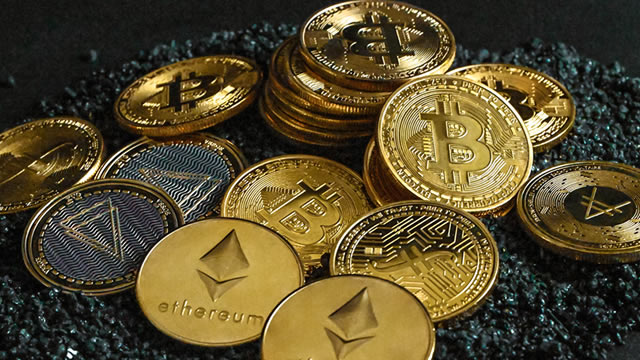
Daily volume on Upbit and peers fell to $3B from $11.6B, while stablecoin holdings swung from $597M to $41M. New AML rules from August could further curb cross-border flows.
South Korean retail crypto holdings contracted by half in just over a year, falling from 121.8 trillion won ($83.3 billion) at the end of January 2025 to 60.6 trillion won ($41.4 billion) by February 2026, according to Bank of Korea data submitted to lawmaker Cha Gyu-geun. The decline was not a slow bleed. It was a concentrated unwind that coincided with a rotation into domestic equities and a drop in crypto asset prices, leaving local exchanges with sharply lower volumes and thinner won-denominated liquidity.
The simple read is that Korean traders chased a stock market rally and let their crypto bags shrink. The better read is that the unwind exposed how much of the local market’s depth was built on speculative retail cash that can leave faster than it arrived. When that cash exits, it does not just reduce spot holdings. It drains the order books that market makers rely on, widening spreads and making the next leg down more violent for altcoins that are disproportionately traded on Korean venues.
The numbers are stark. Daily trading volume across the five largest Korean exchanges–Upbit, Bithumb, Korbit, Coinone, and Gopax–dropped from roughly $11.6 billion in December 2024 to about $3 billion in February 2026. That is a 74% decline in activity, not just a valuation markdown. Won deposits at exchanges also fell, from 10.7 trillion won at the end of 2024 to 7.8 trillion won, signaling that fewer traders are keeping dry powder onshore.
This matters because Korean exchanges have historically been a bellwether for altcoin mania. When won-denominated volume spikes, it often precedes a global speculative wave. The reverse is also true. A sustained volume drought in Seoul removes a key source of marginal demand for smaller-cap tokens, leaving them more vulnerable to cascading liquidations when Bitcoin or Ethereum correct.
While total holdings collapsed, stablecoin balances traced a separate arc. They surged from $60 million in July 2024 to $597 million by December, then crashed back to $41 million in February 2026. That spike-and-crash pattern does not look like a simple rotation into equities. It looks like capital that was briefly parked in dollar-pegged assets before being moved offshore.
This aligns with earlier data showing stablecoins accounted for nearly half of South Korea’s crypto outflows in the first quarter of 2025. Traders used them as a bridge to overseas exchanges, likely to access leverage, trade tokens not listed locally, or escape the tightening regulatory net. The fact that stablecoin balances then evaporated suggests the capital did not return. It found a new home outside the reach of Korean authorities, which is precisely the behavior that the next wave of rules is designed to stop.
South Korea is preparing stricter anti-money laundering rules that will take effect in August. Under the new framework, any crypto transaction exceeding 10 million won that involves an overseas exchange or a private wallet can be flagged as suspicious. That raises the compliance burden for anyone moving funds across borders and could further reduce the incentive to keep capital onshore.
At the same time, the country is building regulated market infrastructure. Samsung SDS will construct the Korea Securities Depository’s token securities platform ahead of a new tokenized securities framework set for February 2027. The dual track–tightening controls on unregistered crypto trading while building a compliant tokenization rail–suggests that policymakers are not anti-crypto. They are anti-unregulated-flow. For traders, that means the window for frictionless cross-border arbitrage is closing.
The next decision point is whether the equity rally that pulled capital out of crypto can sustain itself. If the KOSPI stalls and crypto prices stabilize, some of that sidelined won could return. But if the August AML deadline triggers a pre-emptive exodus from local exchanges, the volume drought could deepen before any recovery takes hold. Watch won deposit balances and stablecoin minting activity on Korean venues as real-time proxies for whether retail confidence is rebuilding or still leaking.
Drafted by the AlphaScala research model and grounded in primary market data – live prices, fundamentals, SEC filings, hedge-fund holdings, and insider activity. Each story is checked against AlphaScala publishing rules before release. Educational coverage, not personalized advice.