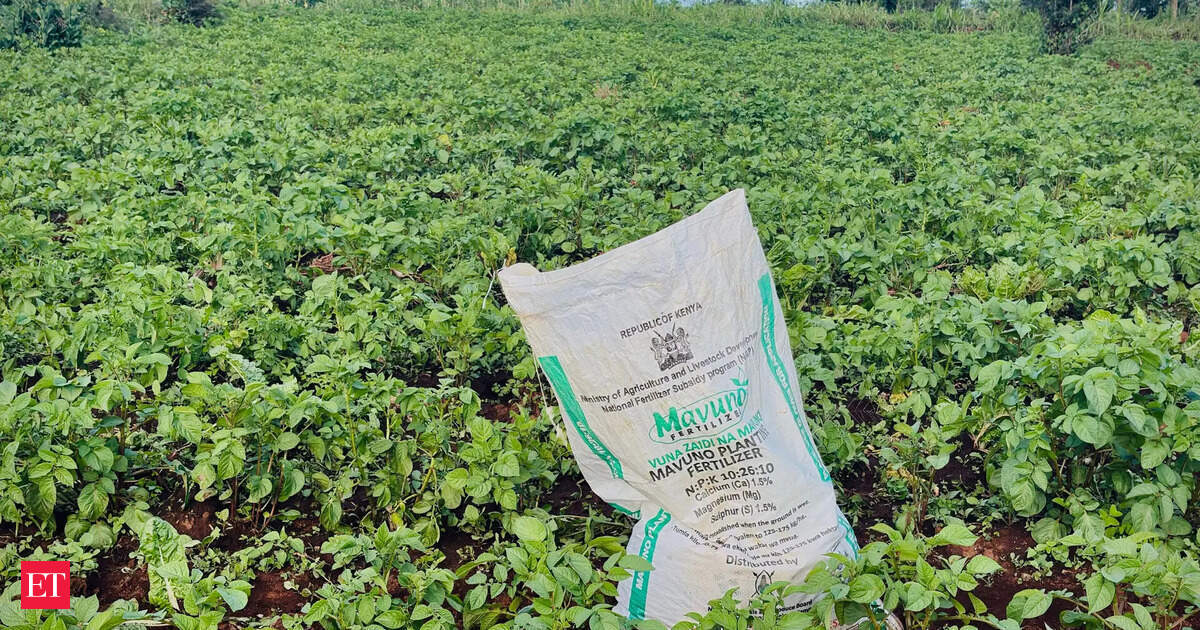
The Indian Biogas Association (IBA) has put a concrete number on a policy idea that could rewire the fertiliser demand curve: a mandatory 10% blend of fermented organic manure with chemical fertilisers by 2030, with the goal of slashing India’s annual fertiliser import bill by $2 billion. The white paper proposal lands at a time when global nitrogen and phosphate markets are already sensitive to demand-side shifts, making this a catalyst worth mapping for anyone holding fertiliser-sector exposure.
The $2B Import Bill Opportunity
India runs one of the world’s largest fertiliser subsidy programmes precisely because it is a structurally import-dependent market for urea and phosphatic fertilisers. A policy that displaces even a fraction of that demand with domestically produced fermented organic manure would not just cut a line item on the current account; it would reduce the call on global spot cargoes, particularly for urea.
The IBA’s proposed pathway is a phased mandate, integrated into existing government schemes, rather than a one-shot regulatory shock. That matters for market timing. If the government signals adoption, the first-order impact would be on near-dated nutrient offtake expectations for Indian kharif and rabi seasons. The better market read, however, is about the knock-on effect: a sustained displacement of chemical tonnes creates a persistent headwind for international urea and phosphate prices, compressing the realised margins of producers that rely on Indian demand at the margin.
Fertiliser Read-Through: Curbing Urea and Phosphate Demand
The simple read is that this policy would save India dollars. The trade read is that it shrinks the addressable import pool for global fertiliser names. Companies with significant exposure to the Indian and broader Asian import market – across nitrogen, phosphate, and even potash – could see volume growth expectations revised lower if the blending mandate gains traction. The mechanism works through crop-nutrient substitution: fermented organic manure supplies a portion of the NPK (nitrogen, phosphorus, and potassium) requirement, reducing the incremental chemical fertiliser dose per acre. For urea producers, that can pressure the price and volume assumptions embedded in forward estimates.
This is not an immediate balance-sheet event. The 2030 timeline gives a long adoption tail, and the proposal needs to survive India’s policy machinery. Still, the announcement introduces a valuation overhang for stocks that have priced in steady import demand growth from India. The recent analysis on Nutrien’s valuation gap illustrates how much global fertiliser names can sway when demand assumptions for specific regions shift. A credible organic-blending mandate could narrow the growth runway that bullish cases for these stocks typically require.
Next Decision Point: Policy Integration
The white paper does not carry legal force, but it frames the debate ahead of India’s budget and subsequent agricultural policy adjustments. The immediate catalyst to watch is whether the Ministry of Chemicals and Fertilisers or the Ministry of Agriculture opens a formal consultation, or whether the proposal gets folded into nutrient-based subsidy rates. A trial blending requirement in a single state or crop segment would be an earlier signpost. Conversely, if the government remains silent through the next budget cycle, the market will likely treat the $2 billion savings figure as aspirational rather than actionable. For traders, the risk window opens when the first concrete policy signal appears, not before. Until then, the proposal sits on the radar as a potential long-dated demand dampener in a sector where every marginal tonne of import demand matters.