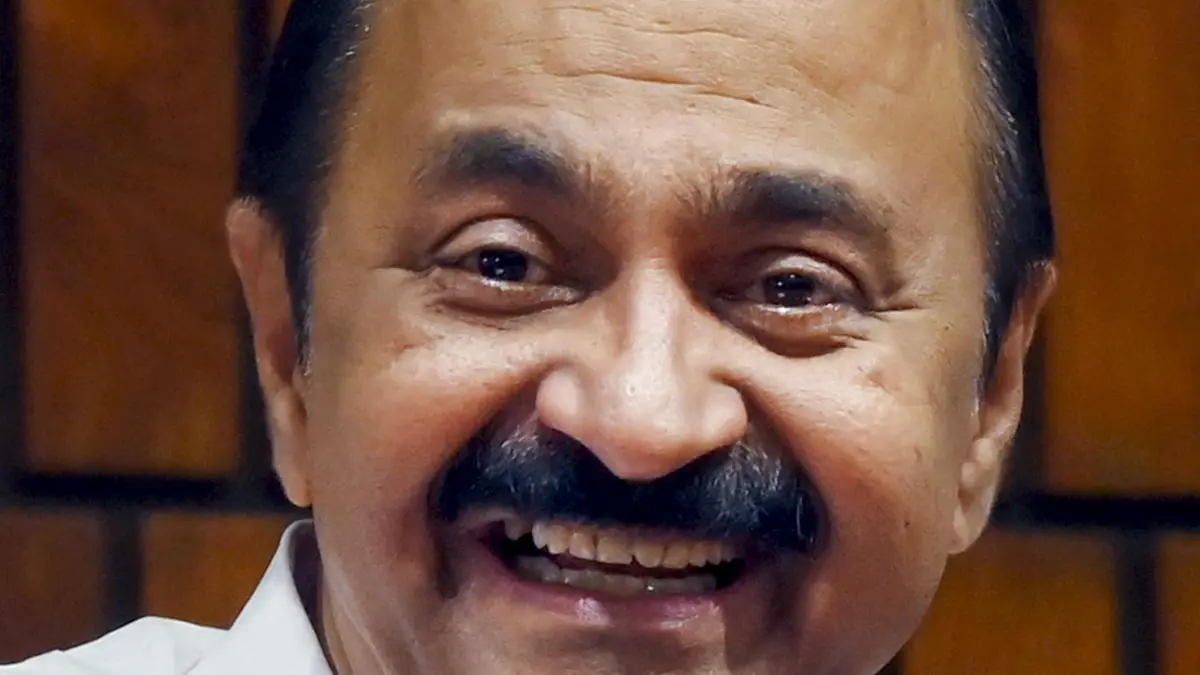
Kerala Chief Minister VD Satheesan presented a revised state budget for 2026-27 on Friday, projecting a cumulative deficit of ₹1,504 crore. The figure improves on the ₹1,773.46 crore gap forecast in the interim budget his predecessor KN Balagopal tabled in January. Satheesan, who also holds the finance portfolio, said the government would absorb ₹1,080.95 crore in additional expenditure without major new taxes or borrowing.
Three external pressures shaped the numbers, Satheesan told the assembly. Escalating geopolitical tensions in West Asia, the risk of lower NRI remittances, and inflationary pressure from volatile crude oil prices all compounded the state's financial challenges.
The headline initiative is 'Mission Samudra,' a project to integrate Kerala's 600-km coastline, two international seaports, a container transshipment terminal, 17 non-major ports, and inland waterways into a unified development strategy. The budget earmarks ₹400 crore for projects under the initiative, which envisions the state as a single "Port City" linking road, rail, sea, and inland waterway networks with manufacturing clusters and greenfield urban centres.
Two corridor projects were also proposed. A Rare Earth and Critical Minerals Corridor and a Southern Kerala Economic Corridor covering Thiruvananthapuram, Kollam, and Alappuzha districts received a combined allocation of ₹150 crore.
Green mobility got a targeted tweak. Road tax on electric vehicles priced up to ₹10 lakh was cut from 5% to 3%. EVs between ₹15 lakh and ₹20 lakh will now attract 5% tax instead of 8%. The tax on EVs costing more than ₹40 lakh was raised from 10% to 15%.
Relief for the transport sector came in two forms: a 50% concession on quarterly tax for stage carriage buses, and lower taxes on all-India tourist permit buses to encourage registrations in Kerala and improve inter-state connectivity. The existing concessional stamp duty of 4% for eligible apartments will now extend to K-RERA-registered villas meeting prescribed environmental standards.
The budget frames itself around a "New Age Keralam" vision combining economic growth with social justice and environmentally sustainable infrastructure. The government plans to use technology to strengthen healthcare and education, generate employment, enhance elderly welfare, and improve opportunities for marginalised communities.
For a state that has long relied on remittance-driven consumption and public-sector employment, the pivot to port-led industrialisation marks a strategic shift. Whether Mission Samudra can attract the private investment needed to turn coastline into jobs will depend on execution speed and investor confidence. The ₹400 crore allocation is seed capital; the real test comes in land acquisition, regulatory clearances, and port connectivity.
Comments have to be in English, and in full sentences. They cannot be abusive or personal. Please abide by our community guidelines for posting your comments.
We have migrated to a new commenting platform. If you are already a registered user of TheHindu Businessline and logged in, you may continue to engage with our articles. If you do not have an account please register and login to post comments. Users can access their older comments by logging into their accounts on Vuukle.
Terms & conditions | Institutional Subscriber