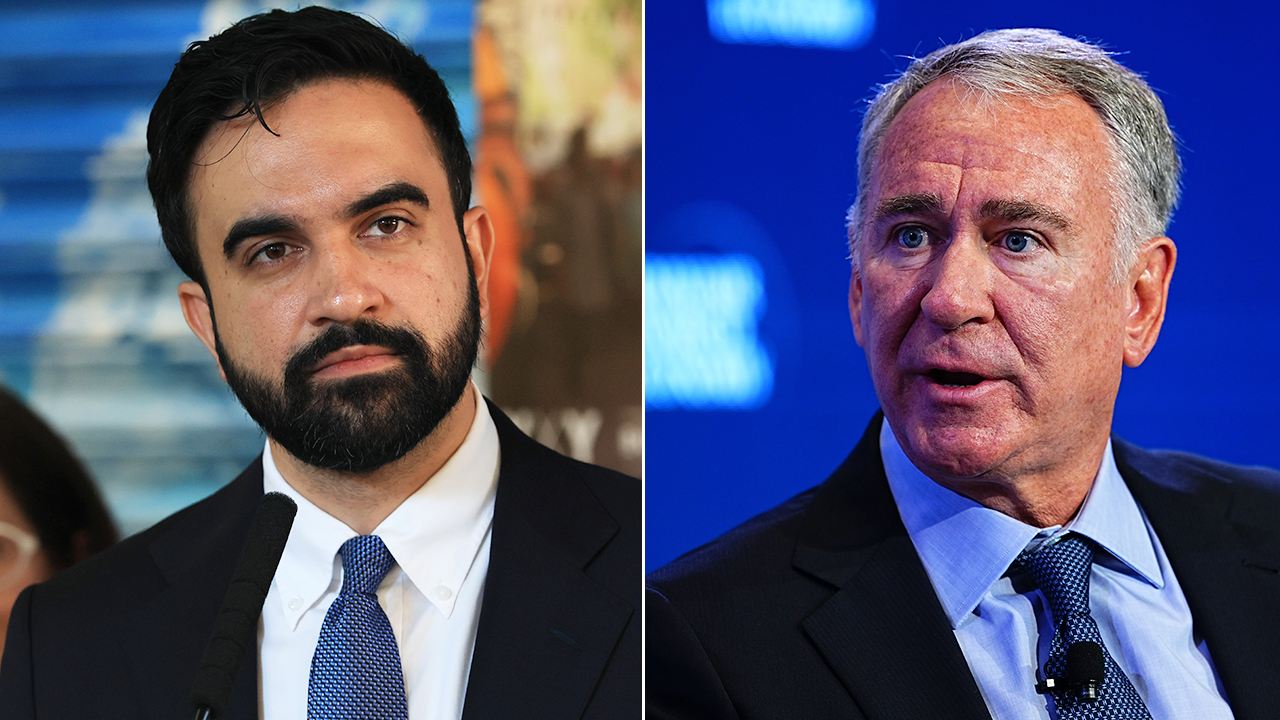
The recent public confrontation between Citadel CEO Ken Griffin and New York City Mayor Zohran Mamdani has moved beyond standard political theater, creating a tangible risk premium for the firm's multi-billion dollar real estate commitments in Manhattan. On April 15, Mamdani released a video filmed outside Griffin’s $238 million Manhattan penthouse—the most expensive residential sale in U.S. history—to promote a proposed pied-à-terre tax on luxury properties. The optics of the event, which Griffin characterized as "creepy" and "frightening," have triggered a reassessment of Citadel’s long-term infrastructure footprint in the city.
The Mechanism of Capital Flight
For institutional investors, the primary concern is not the tax itself, but the signal it sends regarding the regulatory environment for high-net-worth individuals and major financial firms. Citadel’s current development project at 350 Park Avenue is a massive undertaking, projected to involve over $6 billion in total spending. The project is designed to generate 6,000 construction jobs and support 15,000 permanent roles. However, Citadel COO Gerald Beeson noted in an April 23 memo that the firm is now reconsidering the project’s future.
When a firm of Citadel’s scale publicly questions its commitment to a major urban development, it creates a feedback loop. If the firm decides to pull back, the loss of 15,000 permanent jobs would be a significant blow to the Midtown commercial real estate market. This is not merely a dispute over tax rates; it is a fundamental disagreement over the "welcome" extended to successful enterprises. Griffin’s decision to "double down" on business in Miami, where he is currently expanding his headquarters, suggests that the firm is actively diversifying its geographic risk away from jurisdictions with hostile political rhetoric.
Valuation and Geographic Arbitrage
Griffin’s shift toward Florida is a classic example of geographic arbitrage. By moving his firms from Chicago to Miami following the COVID-19 pandemic, Griffin demonstrated a willingness to relocate based on the quality of local governance and tax policy. The current revision of the Miami tower design to "make it bigger" serves as a physical manifestation of this capital migration.
Investors should note that this is not the first time Griffin has cited political hostility as a catalyst for relocation. He has frequently criticized the leadership in Chicago and Illinois, drawing parallels between his past experiences there and the current climate in New York. The "trauma" Griffin described at the Milken Conference in Los Angeles on Tuesday suggests that his decision-making process is heavily influenced by the predictability of the regulatory environment. For those tracking stock market analysis, the risk here is that the "demonizing" of business leaders creates a permanent discount on the attractiveness of NYC-based operations compared to more pro-business hubs.
The 350 Park Avenue Decision Matrix
The future of the 350 Park Avenue project remains the most concrete indicator of the firm’s intent. If the project proceeds, it will serve as a signal that the firm views the political rhetoric as manageable noise. If the project is canceled or significantly downsized, it will confirm that the political risk in New York has crossed a threshold that makes long-term capital investment untenable.
This dynamic is particularly relevant when compared to other high-growth sectors. For instance, while companies like NVIDIA profile are driven by secular AI demand, firms like Citadel are driven by operational efficiency and regulatory stability. When the latter is compromised, the cost of doing business rises, even if the tax code remains unchanged. The "profound lack of judgment" Griffin attributed to the mayor’s video is a qualitative assessment that carries quantitative weight in boardrooms.
Risk Assessment and Market Read
Market participants often make the mistake of viewing such political clashes as temporary headlines. The better read is to look at the capital allocation decisions that follow. The fact that the firm is already revising its Miami plans upward while simultaneously questioning its New York commitments is a clear directional indicator.
Investors should monitor the following markers to gauge the severity of this shift:
- Official confirmation of the 350 Park Avenue project status.
- Any further expansion of Citadel’s Miami footprint.
- The introduction of the pied-à-terre tax in the City Council.
If the tax proposal gains legislative momentum, the probability of Citadel reducing its Manhattan presence increases. Conversely, if the administration attempts to walk back the rhetoric to secure the $6 billion investment, it would signal that the city is sensitive to the threat of capital flight. For now, the situation remains in a state of flux, with the firm maintaining a wait-and-see approach. The risk for New York is that the "creepy" nature of the public targeting has already done the damage, regardless of whether the tax is eventually passed. In the world of high-stakes finance, the perception of being unwelcome is often enough to trigger a permanent change in strategy.