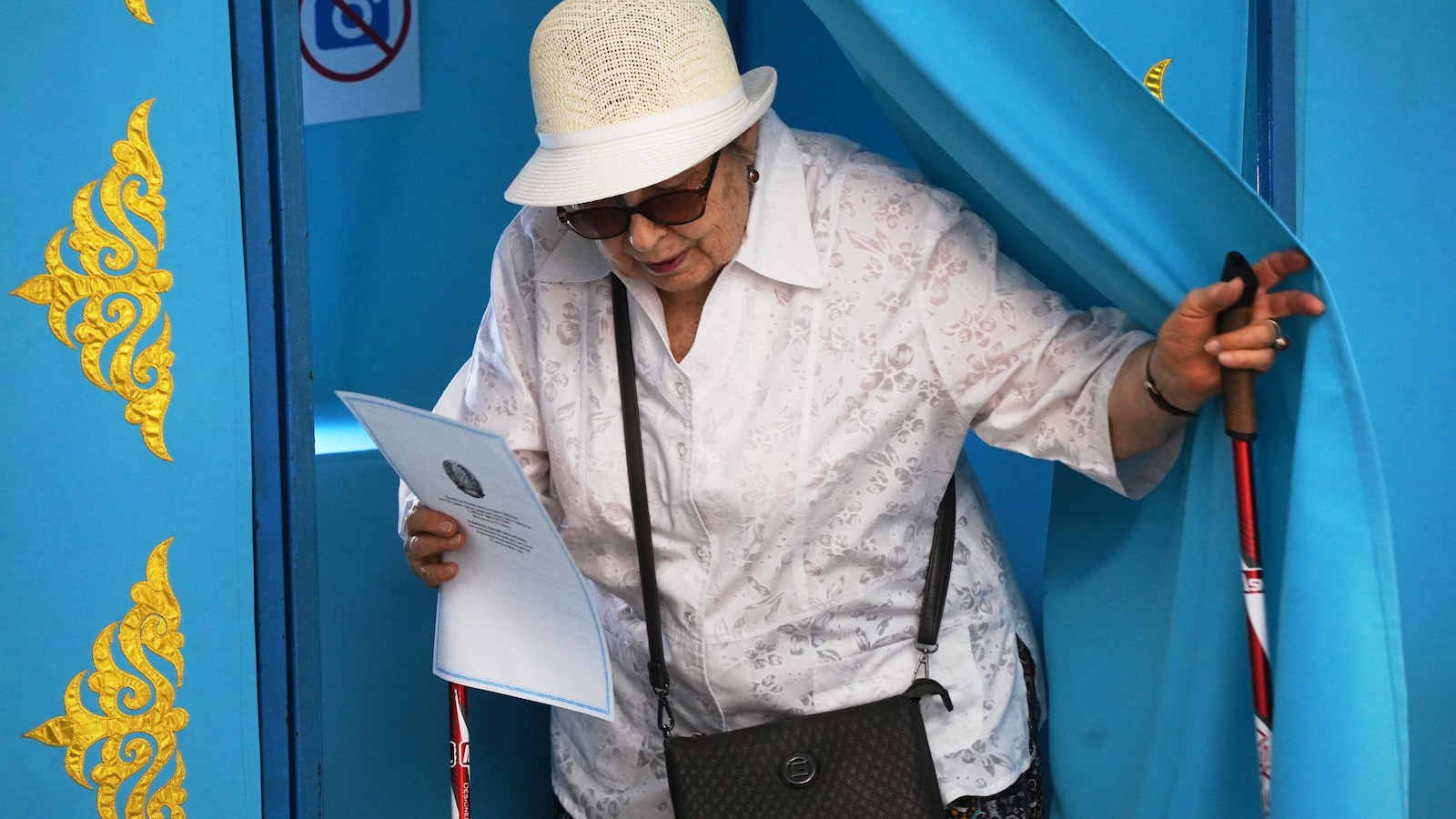
Kazakhstan voted Sunday in a parliamentary election widely expected to strengthen President Kassym-Jomart Tokayev’s control over Central Asia’s largest nation. The pro-presidential Adilet party is set to win an overwhelming majority, with smaller loyalist parties also entering the new single-chamber parliament called the Kurultai.
The election caps a constitutional overhaul Tokayev pushed through in March. Voters backed the changes by 87% in a referendum that merged the two chambers of parliament and gave the president authority to appoint key officials subject to parliamentary approval. Last month, the Constitutional Court ruled the amendments reset the clock on Tokayev’s previous terms, clearing the way for another seven-year bid.
For investors, the vote sharpens a familiar risk: a government concentrating power at a time of economic strain. Inflation hit 10.2% in February, and tax hikes have stoked public discontent. Analysts said the economic pressure has made authorities wary of a repeat of January 2022, when fuel price protests escalated into violence that left dozens of protesters and police officers dead. Tokayev called in troops from the Russia-led Collective Security Treaty Organization to restore order.
Tokayev called the election a “truly historic event” and said the country must “firmly and consistently implement our strategy to transform Kazakhstan into a truly developed state.” The timing is delicate. Since Russia’s invasion of Ukraine, Tokayev has tried to maintain ties with Moscow while keeping Western sanctions workarounds at arm’s length.
The vote also unfolded as media crackdowns intensified. Independent journalists and popular bloggers face roughly 10 criminal cases. The most recent involves Lukpan Akhmedyarov, a YouTube journalist charged with “disseminating false information” after publishing a list of Kazakh citizens fighting in Ukraine. He faces up to seven years in prison.
“In the run-up to these parliamentary elections, repression has intensified sharply, with attacks on independent media, cyberattacks, and criminal cases launched against independent journalists and popular bloggers,” Akhmedyarov told the Associated Press from Almaty. “It feels like the authorities want to silence all media outlets they don’t control – everyone they couldn’t reach an agreement with or couldn’t buy off.”
Akhmedyarov said the streets of Kazakhstan’s major cities are “flooded with advertisements and posters for the pro-presidential Adilet party.” Predicting the outcome, he added, “is not very difficult.”
The new parliament is expected to convene in the coming weeks. A presidential election is not due until 2030 under the reset term. The gradual policy build-up that Tokayev’s constitutional overhaul represents can catch markets off guard when economic conditions shift.