Stocks● Neutral
Karnataka Alcobev Overhaul: Local Distillers at Risk
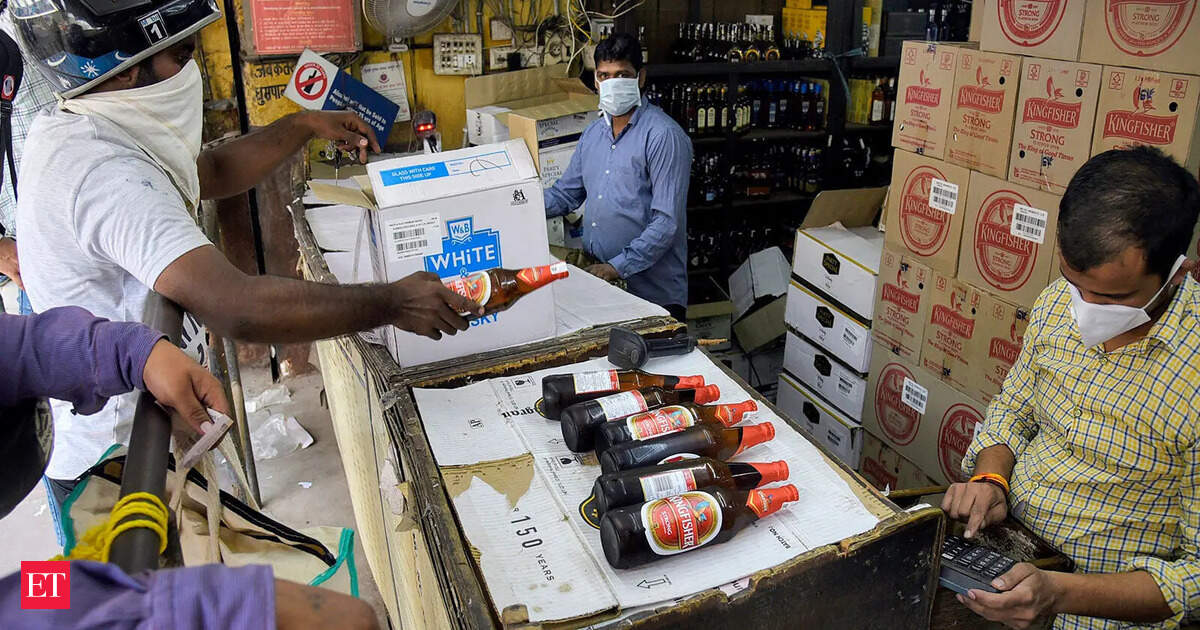
Karnataka's new alcobev policy shifts pricing to producers, threatening local distillers' market share. Industry seeks review. Outcome determines sector winners.
Continue with
Karnataka has introduced a new excise duty on alcohol-in-beverage (alcobev) that shifts pricing power from the government to producers. The stated goal is to lower retail prices by cutting the number of price slabs, making drinks more competitive with neighboring states. Local distillers have reacted negatively. They argue the reform favors large national brands over smaller regional players. The industry is now seeking a government review.
The Policy Change: Pricing Power Moves to Producers
The core of the new framework is a switch from government-set maximum retail prices to producer-determined pricing, subject to a revised excise duty schedule. By reducing the number of price slabs, the government aims to simplify compliance and bring down final shelf prices. The immediate effect is that price flexibility now sits with the manufacturer, not the state.
For large distillers with scale, distribution muscle, and brand recognition, the new setup creates room to absorb the excise burden or adjust pricing to capture volume. Smaller local producers lack that margin of safety. They face a choice between raising prices and losing market share, or cutting margins to stay competitive.
Sector Readthrough: Local vs National Distillers
The complaint from local distillers is not about the excise duty level per se. It is about the competitive asymmetry the policy creates. When prices are set by producers, the cost of capital, supply-chain efficiency, and marketing spend become differentiators. Large players with established India-wide networks can amortize fixed costs over higher volumes. Local players, often operating single-state facilities, cannot match that.
The read-through for the broader Indian alcobev sector is a potential shift in market share toward the top five national firms and away from regional brands in Karnataka, a key consumption state. The policy also raises the barrier to entry for new local labels, because the excise pass-through mechanics favor incumbents with pricing power.
Government revenue is another variable. If local distillers lose volume, the state’s excise collections could suffer a net drag, even if per-unit duty remains unchanged. The industry is now seeking a government review. No timeline for adjustments has been announced.