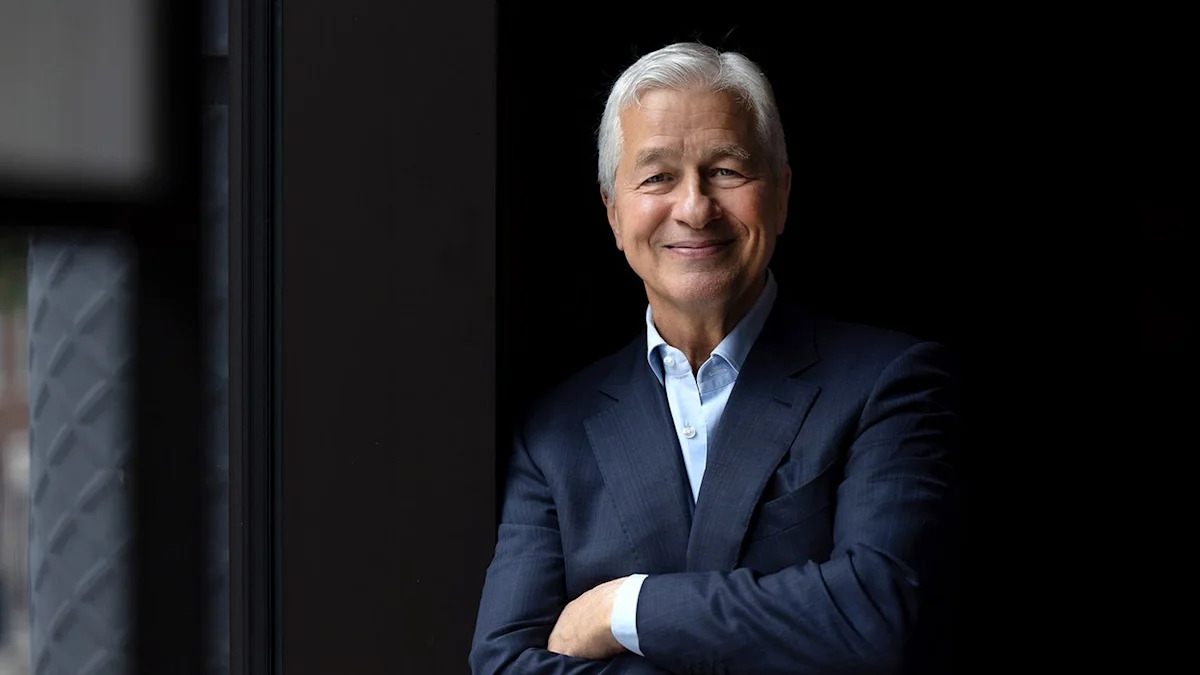
JPMorgan Chase reported second-quarter earnings with a warning from Chief Executive Jamie Dimon. He laid out a series of risks, each stable on its own. His word for them was tectonic plates. Together, he said, they could collide into an earthquake. The warning was not a prediction. It was a caution, delivered with U.S. stocks near all-time highs.
That is the backdrop for JPMorgan's commodity outlook, which sees gold trading above $5,000 an ounce by the fourth quarter of 2026. The bank left room for further gains after that, according to the outlook. The two messages from the same institution fit together. Dimon says risk is elevated. The gold call names the asset that tends to benefit when that risk becomes real.
The $5,000 Gold Call
For an investor, the question is how to own gold. Physical bullion means paying a markup and storing the metal, with no dividend to show for it. Gold miners offer leverage because operating costs stay roughly fixed while revenue moves with the spot price. Once gold clears all-in costs, profit grows faster than the metal. The same leverage cuts the other way when gold falls. Mining also carries the risk of a single underperforming asset.
Streaming and royalty companies sit between the two. They advance capital to miners in exchange for the right to buy gold at a discount to spot, usually a percentage of the current price. That guarantees a margin before the metal is ever sold. The model removes the operating risk that comes with running a mine.
All-in costs for a miner include extraction, processing, financing and sustaining capital. When spot sits far above that number, a miner's margin stretches. When spot falls close to it, production becomes uneconomic. Streamers do not carry those costs at all. Their purchase price is set as a percentage of spot, so the margin is locked in by contract.
The Streaming Route to Gold
Franco-Nevada is the biggest of the three. It finances miners across dozens of properties, holding investments in 446 assets, 121 of them in production. That diversification is hard to match with a traditional miner. Royal Gold runs the same royalty model. Wheaton Precious Metals rounds out the group with a variable dividend.
Dividends separate the three. Royal Gold has raised its payout for 25 consecutive years. Franco-Nevada's streak is 19 years. Wheaton pays a variable dividend, which means shareholder income rises with the gold price. That variability is a feature for an investor using gold as a hedge.
The differences between the three are visible in the numbers. Franco-Nevada's scale gives it the widest property net. Royal Gold's dividend record makes it the income pick. Wheaton's variable payout ties shareholder returns most directly to the gold price.
A streamer's cost base is a percentage of spot, so when gold falls, the margin compresses; it does not turn into a loss. When gold rises, the fixed percentage buys more margin. The structure does not eliminate the metal's volatility. It removes the operational tail risk that can turn a bad gold market into a bankrupt miner.
AlphaScala's proprietary score puts Wheaton Precious Metals at 68, a Moderate reading, and JPMorgan at 65. The two stocks sit in different sectors, basic materials and financials. Both are expressions of the same macro bet. The bank warns of stress; Wheaton profits from the metal investors buy when stress shows up.
Gold has spent recent months trading below and around its record. The JPMorgan target of $5,000 by the fourth quarter of 2026 implies a world where the tectonic plates Dimon described collide. The streamers are positioned for that world without themselves being a mine.
Franco-Nevada's 446-asset book and Royal Gold's 25-year dividend streak are the concrete numbers. The JPMorgan forecast supplies the date. Neither says when the collision comes. Both say which vehicle is ready for it.