JioMart Orders Surge 116%; Reliance Retail Margin Falls to 7.9%
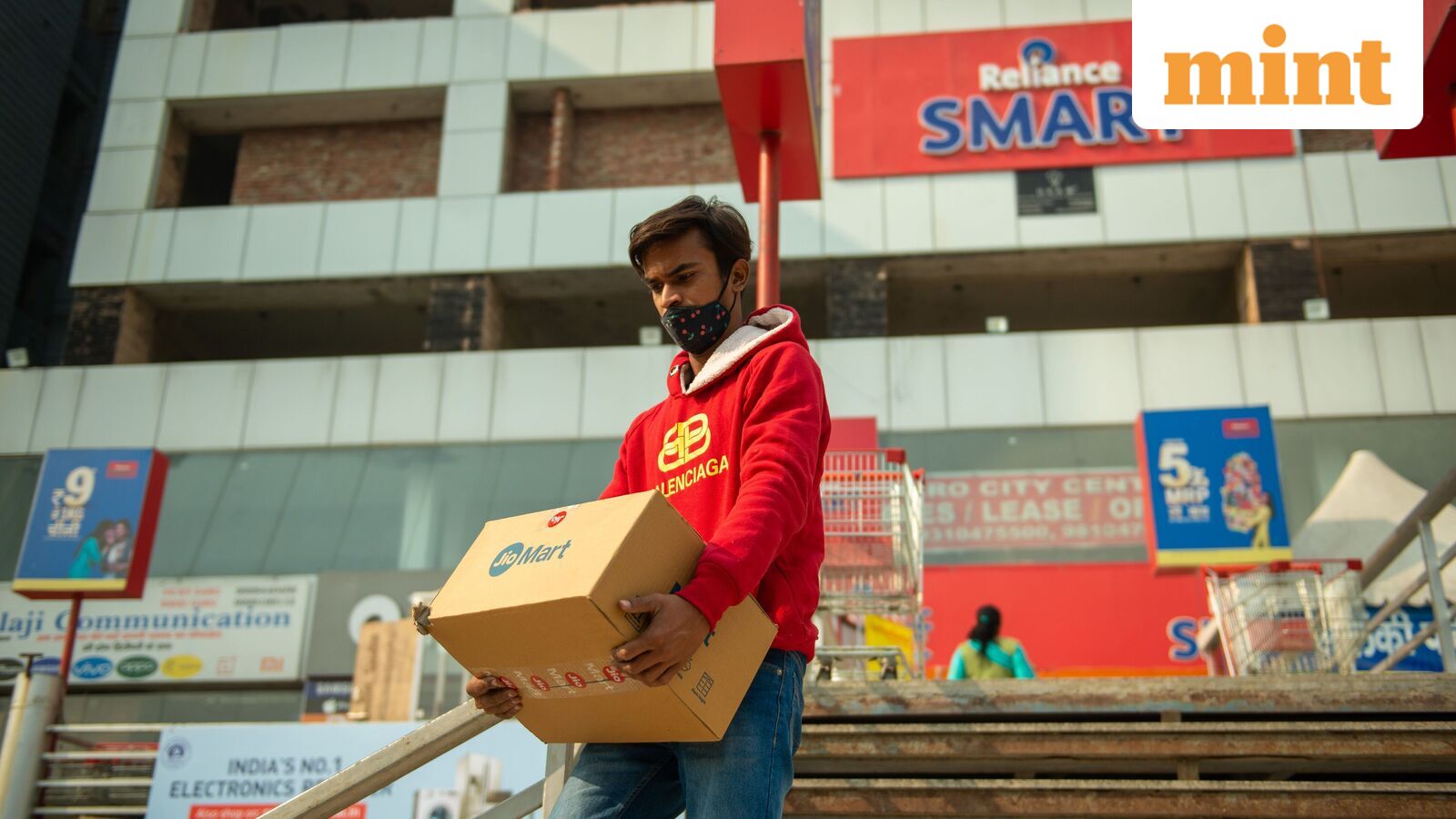
JioMart's average daily orders doubled. The cost of growth is showing in the retailer's earnings. The next three years will test whether stores can drive profit.
Reliance Retail's Ebitda margin slipped to 7.9% in the June quarter from 8.7% a year earlier, the company said in its investor presentation. The decline came as investment in JioMart's quick-commerce expansion accelerated. Average daily orders on the platform jumped 116% year-on-year, though Reliance did not disclose the absolute number for the quarter. In the March quarter, JioMart crossed 2 million daily orders.
JioMart is using Reliance's network of roughly 3,100 stores to fulfil orders with delivery timelines starting at 30 minutes. The stores include Reliance Smart, Fresh, Digital, and Trends. CFO Dinesh Taluja told analysts in April that the company has "the widest reach and network that any hyperlocal player has in the country today." At the end of June, JioMart covered more than 5,500 pin codes across 1,200 cities.
The model differs from the dark-store approach of Blinkit, Zepto, and Swiggy Instamart. Blinkit had 2,443 dark stores at the end of June, while Instamart had 1,171. JioMart operates about 600 dedicated dark stores alongside its retail network. The company's strategy is to use whichever infrastructure makes sense in each market, a former Reliance Retail employee said, speaking on condition of anonymity.
Brands are beginning to treat JioMart as a distinct channel. Gopal Snacks pushes larger 400g packs on JioMart for household restocking, while smaller 150g packs go to Blinkit and Zepto for impulse purchases, said Diganth P., chief commercial advisor at the company. Milky Mist's sales on JioMart are growing 30-35% every month, and the company wants to build on that, CEO K. Rathnam said. Pluckk, a premium fresh produce brand, sees JioMart as part of an omnichannel strategy that complements the speed-led role of Blinkit and Zepto, co-founder and CEO Pratik Gupta said.
The margin pressure is the trade-off. Reliance's operating Ebitda margin fell as it poured money into digital commerce. The company's investor presentation says the next phase of growth depends on improving order density, inventory turns, and lowering the cost to serve customers. "If you have an existing store and you can add another stream of business to it, that can be attractive. You need enough orders in a micro-market to make the economics work," said Devangshu Dutta, founder of retail consultancy Third Eyesight.
Reliance has set a three-year target to double operating Ebitda, with JioMart positioned as the "principal growth platform for the next four quarters." Taluja said in the June-quarter investor call that the company's value creation is sequenced: build online scale first, then monetise it. "This year, online growth will be a focus but it will be quite measured. Growth will be funded from existing profits," he said. The company also plans to increase the share of its own brands and other forms of monetisation.
Competitors are expanding. Amazon Now and Flipkart Minutes are building their own quick-commerce networks. Blinkit remains the market leader with 3.6 million daily orders in the June quarter. JioMart's 2 million daily orders in March still lag behind. The company's active seller base grew 26% in the June quarter.
The former Reliance Retail employee said the company's bet is increasingly about making each micro-market work before adding more capacity. "They are not saying stores versus dark stores. It is more about using whatever infrastructure makes sense in a particular market," the person said.
Reliance's ability to scale JioMart without a sharp drop in margins will be tested over the next three years. The company said in its investor presentation that it will "scale where service quality and market-level economics can be demonstrated."
Drafted by a large language model from the source reporting linked above, then screened by automated publishing checks. It is not read by a journalist before publication. Some articles cite our Alpha Score. Verify prices and figures against the original source. Educational coverage, not personalized advice.