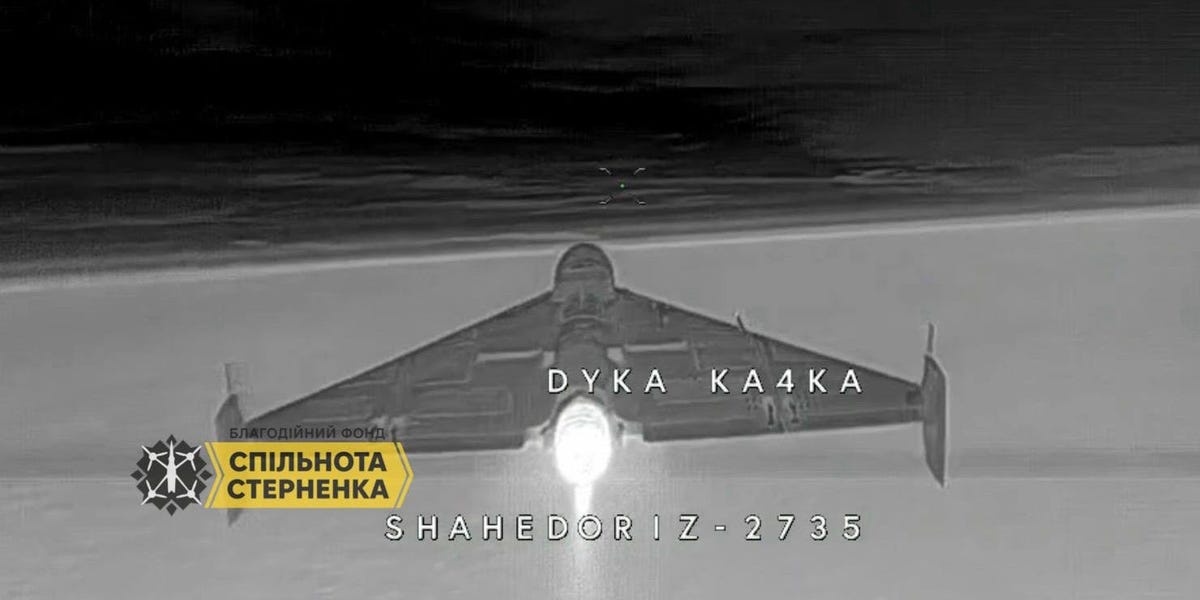
Russia plans to make jet-powered Shahed drones account for half of its long-range attacks on Ukraine, according to commander in chief Oleksandr Syrskyi. The shift from slower propeller-driven systems to turbojet variants directly threatens the effectiveness of Ukraine's current air defense mix – jamming, machine-gun fire, and quadcopter interception – which relies on low-speed, low-altitude engagement profiles. For defense investors, this is not a headline; it is a signal change in the threat model that re-orders the procurement priorities of NATO member states.
Why Jet Propulsion Changes the Air Defense Calculus
Propeller-driven Shaheds fly at roughly 150-200 km/h at altitudes below 1,000 meters, making them vulnerable to acoustic detection, electronic jamming, and visual gun engagement. A turbojet version pushes speed above 400 km/h and can operate at higher altitudes, shrinking reaction time and defeating low-cost countermeasures. The Ukrainian system that works against current Shaheds – a blend of truck-mounted machine guns, man-portable air defense, and drone-on-drone intercepts – was never designed for a jet-speed incoming threat.
Syrskyi did not specify a timeline for the 50% target. The statement confirms that Russian industry is scaling jet-drone production. That puts pressure on Ukraine's allies to accelerate deliveries of radar-directed air defense systems – specifically units that can track and engage fast, low-signature targets. The cost of interceptors rises with the threat: a Stinger missile costs about $120,000, while a Shahed drone costs roughly $20,000 – a ratio that already strains defense budgets. A jet Shahed will cost more to build. The interceptor cost gap remains unfavorable.
The Defense Stock Read-Through
Three contractor groups stand to benefit from this procurement pivot. First, manufacturers of medium-range surface-to-air systems Lockheed Martin (LMT) and RTX (RTX) . The Patriot system and the NASAMS are the primary Western systems in Ukrainian use. They are expensive and limited in number. A higher-speed drone threat increases the case for distributed, lower-tier systems like RTX's Coyote interceptor or Nordic-origin systems.
Second, companies supplying radar and electronic warfare upgrades. Northrop Grumman (NOC) produces the AN/APG-80 radar and also has a strong counter-UAS portfolio. L3Harris (LHX) and Elbit Systems provide jammers and sensors designed for drone detection. Jet-powered drones emit a stronger acoustic and heat signature, requiring new software and hardware to distinguish them from aircraft.
Third, engine and propulsion suppliers. If jet Shaheds use modified small turbojets – possibly derived from Russian cruise missile engines – companies like GE Aerospace (GE) or Rolls-Royce could face export control questions. The more direct market read is through airframe primes. General Dynamics (GD) , through its Gulfstream and mission systems divisions, produces components for high-speed drones and could see increased demand for drone airframe engineering.
The overarching theme is that the capital cost of defense against cheap drones is rising. That pushes procurement spending toward more and better interceptors, sensors, and integration contracts – a positive for the defense prime ecosystem as long as budgets grow.
The Production Scale Question
The biggest uncertainty is whether Russia can produce jet Shaheds at the volume currently achieved by propeller variants. Recent reports suggest Russia received engine components from Iran. Domestic production is constrained by precision manufacturing capacity. If the 50% target is aspirational rather than operational, the market reaction may be delayed. If Russian factories show they can stamp out thousands of jet Shaheds per month, the demand signal for countermeasures becomes immediate and large.
U.S. Army and European NATO procurement cycles are already trending toward counter-UAS. The Army is fielding the Fixed Site Low, Slow, Small Unmanned Aircraft System Integrated Defeat System (FS-LIDS) and the Mobile-LIDS by RTX and L3Harris. A jet drone threat would accelerate fielding and add budget line items.
Next Decision Point for Defense Investors
The immediate catalyst to watch is the next Ukrainian military communiqué on drone interception rates. If jet Shaheds begin appearing in mass raids and the current system fails to achieve 80%+ interception, Western nations will face pressure to reallocate funds from other programs to air defense. The second marker is U.S. Department of Defense contract awards in Q3 and Q4 for counter-UAS. A spike in directed awards to RTX and L3Harris would confirm the thesis. The third is Russian state media showing production footage of jet Shaheds – that signals scale, not just prototype.
For a broader view on how defense spending themes feed into stock market trends, the same logic applies: a higher per-threat cost increases the total addressable market for defense primes. Execution risk hangs on production capacity and budget politics. Investors should track the speed of the threat evolution – a drone that flies twice as fast does not just outrun defenders; it outruns the current procurement cycle.