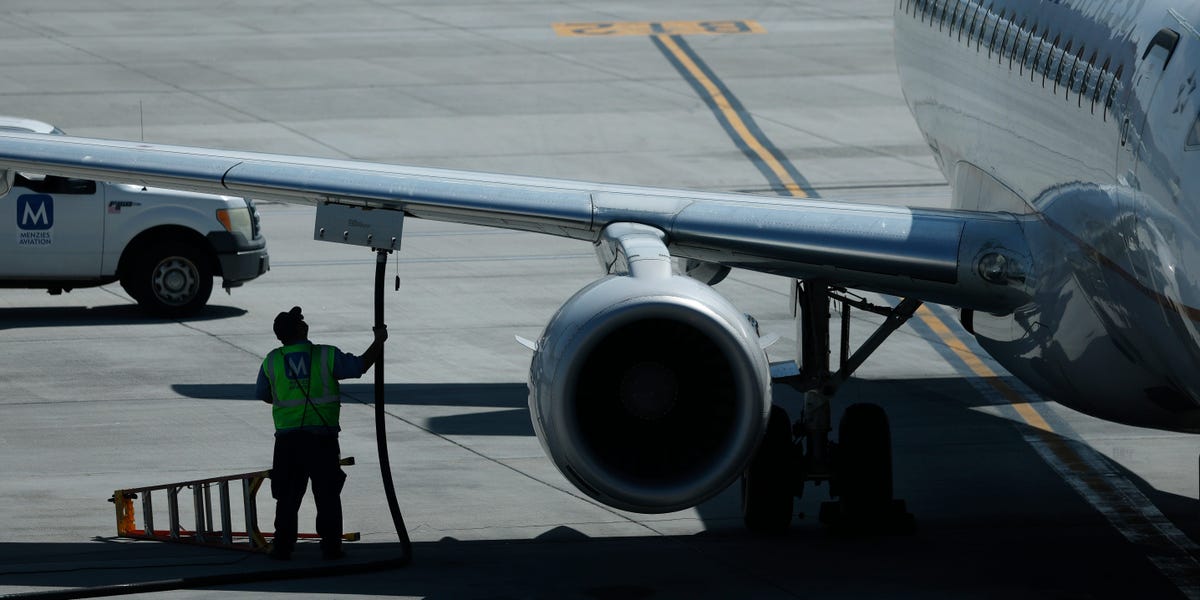
The sustained elevation in crude oil prices, catalyzed by regional instability in the Middle East, is forcing a structural shift in airline cost management. As jet fuel represents one of the largest variable expenses for major carriers, the recent upward trend in energy markets has directly eroded bottom-line performance for United, Delta, American, and Southwest. Each of these carriers has reported hundreds of millions in additional fuel expenditures, creating a direct correlation between geopolitical risk premiums in the oil market and the operational overhead of the aviation sector.
Fuel Price Transmission to Consumer Pricing
Rising fuel costs are not being absorbed by corporate balance sheets alone. Airlines are increasingly passing these costs to consumers through higher ticket prices, a move that risks dampening demand if discretionary travel budgets tighten. The mechanism is straightforward. As the price per gallon of Jet A fuel climbs, the break-even load factor for any given flight increases. Carriers are forced to adjust their yield management strategies to ensure that each seat covers the inflated cost of propulsion. This creates a feedback loop where energy market volatility dictates the pricing power of the entire travel industry.
Strategic Responses to Energy Inflation
To mitigate the impact of these surging costs, airlines are deploying several tactical responses. These measures are designed to protect margins while maintaining flight schedules in a high-cost environment:
- Increasing hedging activity to lock in future fuel prices and reduce exposure to spot market volatility.
- Accelerating the retirement of older, less fuel-efficient aircraft in favor of modern fleets that consume significantly less fuel per passenger mile.
- Adjusting route networks to prioritize high-margin business travel over lower-yield leisure routes that are more sensitive to price hikes.
These adjustments are critical as the industry faces a period of sustained energy price uncertainty. While the crude oil profile suggests that supply-side constraints remain a primary driver of current price levels, carriers are focusing on internal efficiencies to offset what they cannot control in the commodities market. For broader context on how these energy costs ripple through the consumer staples sector, investors often monitor firms like Costco Wholesale Corporation, which maintains an Alpha Score of 59/100 as detailed on the COST stock page.
Monitoring the Next Cost Inflection Point
Market participants are now looking toward the next round of quarterly guidance updates to determine if current fuel price levels have reached a plateau or if further margin compression is expected. The primary marker for the next phase of this trend will be the updated fuel consumption forecasts provided by major carriers in their upcoming filings. If these forecasts indicate that airlines are unable to pass further costs to consumers without sacrificing load factors, the sector may face a period of significant earnings revisions. The interplay between commodities analysis and airline operational efficiency remains the most critical variable for the remainder of the fiscal year.