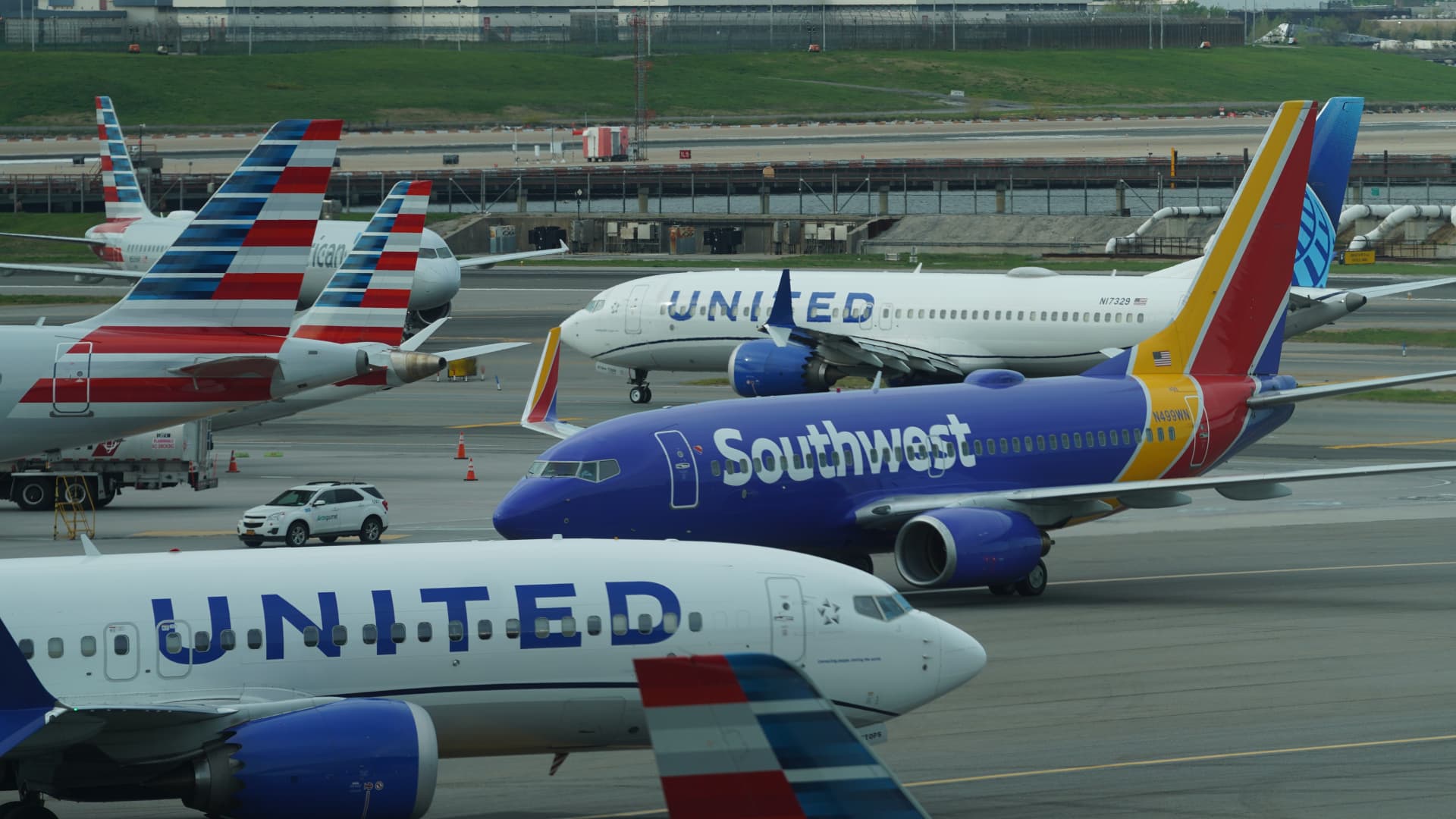
Jet fuel prices remain elevated after the strikes on Iran choked shipping routes in late February, and airlines are passing those costs to travelers without seeing demand fall. U.S. airfares rose 26.5% in June from a year earlier, federal data show. United Airlines expects to pay about $6 billion more for fuel this year than it forecast at the start of 2026. American Airlines put the increase at a similar $6 billion. Each jump is more than 50% above 2025 levels.
Airline executives told analysts this month that customers are still booking even after repeated fare hikes. They expect pricing power to hold through the rest of the year at least.
"We observed minimal to no negative impact on demand from higher price points, a trend we see continuing," United Chief Commercial Officer Andrew Nocella said on the company's July 16 earnings call. United expects unit revenue to rise for the rest of 2026 and even exceed the second quarter's increase, he said.
Southwest Airlines CEO Bob Jordan told CNBC in late July that demand remains "really strong" despite high fuel and high prices. The carrier's average one-way fare hit $225.61 in the second quarter, up from $186.65 in the same period last year.
Jet fuel costs have eased from April's four-year highs of $4.78 a gallon on the U.S. Gulf Coast, but Monday's price of about $3.60 a gallon is still roughly 50% above the level on Feb. 28, according to S&P Global Energy Platts data. Prices vary by geography and local supply. The on-again, off-again ceasefires with Iran have made it harder for airlines to schedule and price flights, executives said.
Airlines are trying to recover not just the fuel-cost increase but also higher labor, maintenance, and airport fees. "Labor costs have escalated dramatically. Maintenance is off the charts," United CEO Scott Kirby said on the same call. Carriers have pruned schedules this year, leaving fewer flights per route and pushing fares higher.
In a sign of how seriously airlines viewed the fuel-market turmoil, Southwest sent a boat filled with more than 12 million gallons of jet fuel through the Panama Canal from Houston to Los Angeles in May. It was the airline's first shipment of fuel from Texas to another U.S. destination by sea, a response to fears of a supply crunch on the import-reliant West Coast.
Pricing Power and Capacity
The four biggest U.S. carriers – United, American, Delta, and Southwest – have expanded their market share this year. They now fly 82.1% of seats on U.S. airlines, up from 80.7% last year and 79.7% in 2022, according to Cirium data. The gain comes partly from the collapse of budget carrier Spirit Airlines, which shut down in May after failing to reach a deal with bondholders. Spirit grounded many of its Airbus jets due to an engine defect and struggled with rising costs and a shift in travel toward full-service carriers.
Smaller low-cost airlines are also moderating growth or shrinking. Avelo is shrinking, and Allegiant and Sun Country, which merged in May, are also pulling back. JetBlue, Frontier, and Breeze, however, plan to add capacity. JetBlue CEO Joanna Geraghty said the carrier would keep a "conservative capacity profile" given the fluid geopolitical backdrop and volatile fuel. JetBlue forecast unit revenue growth of as much as 16.5% in the current quarter.
Frontier, now the largest U.S. discounter, saw average fare revenue rise to $63.04 in the second quarter from $40.94 a year earlier. The Denver-based carrier plans to grow capacity as much as 18% this quarter and expects unit revenue growth of 20%. "There's a lot of energy in the airline about bringing us back to profitability," CEO Jimmy Dempsey said Thursday.
Demand may be softening slightly. Airport checkpoint screenings through July 24 were down 0.5% from the same period a year earlier, and down 2.6% in the four weeks ended that day, Bernstein airline analyst David Vernon noted in a Monday report. The summer travel rush ends earlier now, with August losing steam, but international bookings in fall are rising, executives say.
Justin Wittekind, a podcast writer and researcher flying United from New York to Ontario, California, said he paid about $340 round trip. He would think twice at $400. "But if I have to go home … I'll pay $400, but I wouldn't like it," he said.
Airlines maintain that most travelers are like Wittekind: they grumble but keep booking. As long as demand holds and fuel stays volatile, cheap flights will remain scarce.
United's Alpha Score of 63/100 places it in Moderate territory, while American's 60 also sits in that range, reflecting both carriers' exposure to fuel cost volatility.