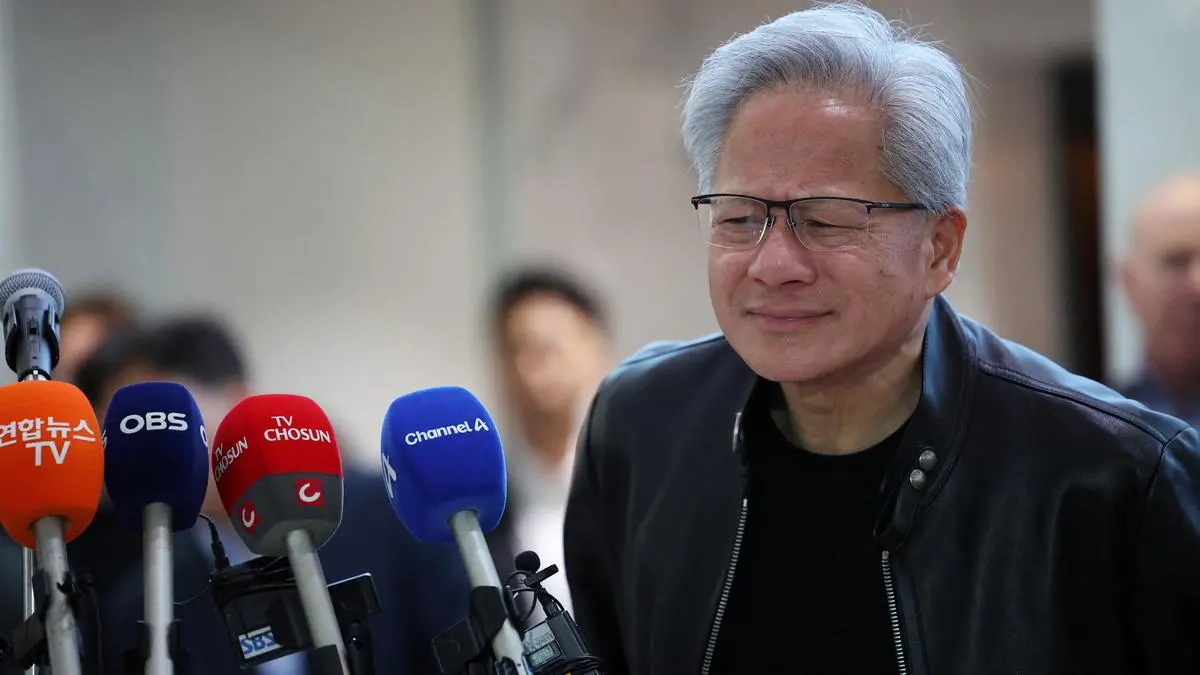
Jensen Huang wants new social norms and government regulation for artificial intelligence. The Nvidia chief, whose chips power much of the AI boom, told the Associated Press Tuesday that society adapted to cars with sidewalks and crosswalks – the same will happen with AI.
“We need to create new social norms,” Huang said. He urged everyone to engage with the technology, arguing AI closes the digital divide by letting people do advanced work without coding. Huang also backed safety standards and said national security must be a priority.
That stance puts him on the side of critics who warn of job losses and existential risk, not against them. Huang framed regulation as an enabler of adoption, not a brake. “When cars came along, you obviously can't play in the streets now,” he said. Companies that hesitated to invest in AI might accelerate once clear rules are in place.
The sector readthrough runs through two channels. First, if regulation caps AI modelers' margins, demand for Nvidia's GPUs could slow. Second, clear standards remove uncertainty – a net positive for hardware spend. Huang's automotive comparison suggests he sees the second channel as dominant.
President Donald Trump and Senator Bernie Sanders have floated the idea of government owning shares in AI companies. Huang dismissed it. “I'm not exactly sure what they're trying to achieve,” he said, pointing out that AI firms already benefit the public through taxes, jobs, and stock ownership. “Americans have a stake in American companies already.”
That pushback matters for Nvidia investors. Government equity in OpenAI or Anthropic would cap their margins and, by extension, hardware demand. Huang's skepticism reduces that tail risk, at least while no bill has moved past markup in Congress.
NVDA shares fell 2.37% to $207.41 on the session. The Alpha Score at 69 of 100 is a Moderate reading – neither strong momentum nor a clear selloff. The company remains the world's most valuable at roughly $5 trillion in market cap.
The next catalyst is congressional action on AI policy. No concrete proposal has advanced. Until then, Huang's interview changes no orders or revenue projections. For a broader view of how AI peers and chip suppliers are reacting to the policy debate, the stock market analysis page tracks the sector in real time.