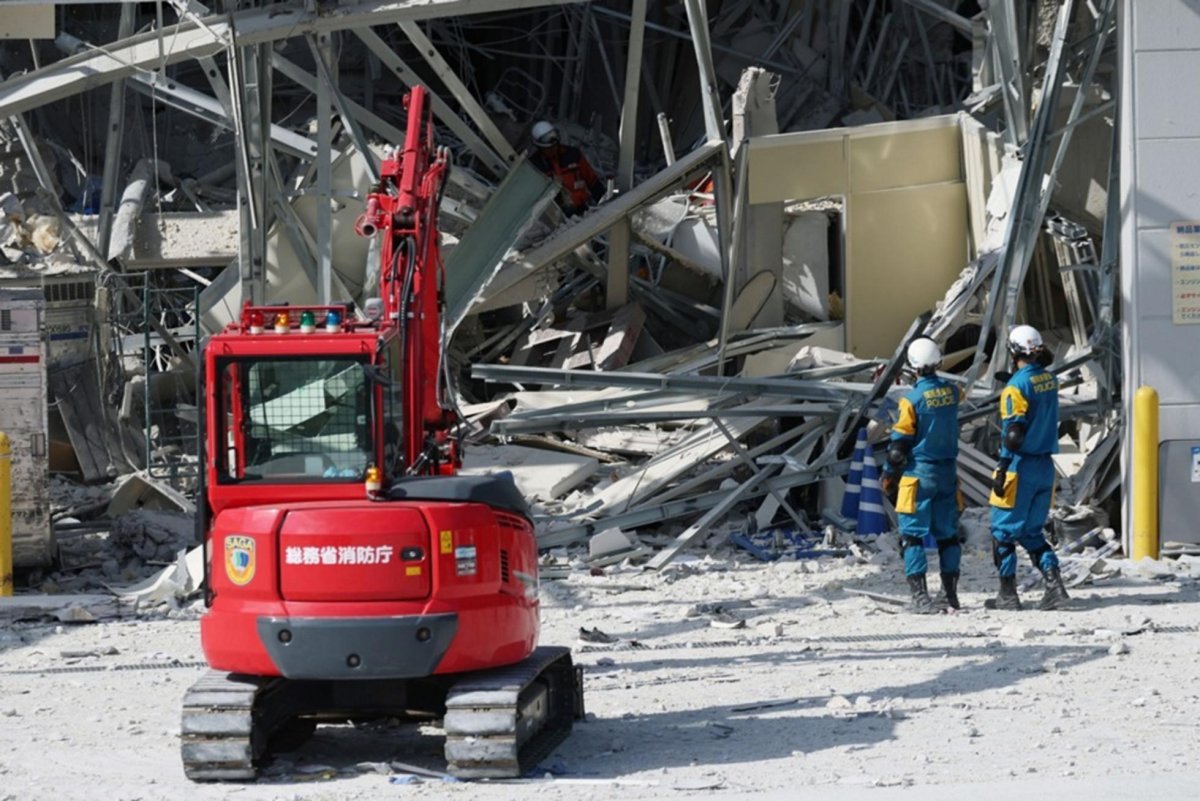
A magnitude 7.1 earthquake struck Japan's Kumamoto prefecture on Tuesday, forcing semiconductor and automobile plants across Kyushu to suspend operations. Companies cited equipment inspections and damaged facilities for the shutdowns. Blocked supply routes also contributed.
Japan Advanced Semiconductor Manufacturing, the TSMC subsidiary in Kumamoto, evacuated employees and paused production immediately after the quake. JASM began gradually resuming operations after confirming its buildings were safe, but inspections and adjustments of individual manufacturing systems remain underway. The company is majority-owned by TSMC, with Sony Semiconductor Solutions, Denso, and Toyota Motor holding minority stakes. Its plants produce system semiconductors used in automobiles, industrial equipment, and electronics. The combined monthly capacity of the first and planned second factories exceeds 100,000 12-inch wafers.
Renesas Electronics suspended operations at its Kawashiri plant in Kumamoto and Nishiki plant in Nishiki. Ceiling panels fell and water leaked at the Kawashiri facility, prompting equipment inspections. Mitsubishi Electric stopped production at power semiconductor plants in Koshi and Kikuchi. Sony Group suspended output at its image-sensor plant in Kikuyo. Tokyo Electron halted operations at semiconductor equipment plants in Koshi and Ozu.
Semiconductor companies are examining equipment for small distortions and contamination that can disrupt highly sensitive manufacturing processes. Production may remain suspended even when factory buildings are structurally safe, the companies said.
The disruption has spread to automobile production. Toyota Motor suspended operations at its Miyata, Kokura, and Kanda plants in Fukuoka prefecture through Friday. No major damage was identified. Toyota cited employee safety and transportation conditions. The company also cited uncertainty over parts deliveries from suppliers. Toyota has not decided whether production will resume Monday.
Nissan Motor Kyushu suspended part of its production at a factory in Kanda from Thursday afternoon through Friday because of parts shortages, not damage to equipment. The shutdown of one supplier can stop assembly lines that operate with limited inventories.
Honda Motor extended the closure of its Kumamoto factory in Ozu through Friday. The plant is Japan's only Honda motorcycle production base. Honda said leaks and flooding inside the plant required repairs and equipment inspections. The same facility took about five months to return to its pre-earthquake production system following the 2016 Kumamoto earthquakes.
Yamaha Motor suspended operations at a marine-engine plant. Liquefaction was reported at its plant in Yatsushiro. Bridgestone halted production at a factory making rubber products for construction equipment.
Suntory suspended production and shipments of beer and soft drinks from its Kyushu Kumamoto plant. Nippon Paper Industries has not set a date for resuming operations at its Yatsushiro mill, where a chimney and other structures collapsed.
The initial risk to South Korea is more likely to emerge through supply chains than direct damage, the report said. Intermediate goods represented 60.9% of trade between South Korea and Japan in 2024, according to the Korea International Trade Association. The affected facilities primarily produce automotive semiconductors, power chips, image sensors, and semiconductor manufacturing equipment, not memory chips. A prolonged shutdown in Kumamoto could delay deliveries of automotive chips and machinery components to South Korean automakers and electronics manufacturers, the report said.
For investors tracking the disruption, TSM has an Alpha Score of 64. TM scores 49. HMC scores 56.
Toyota has not decided whether production will resume Monday.