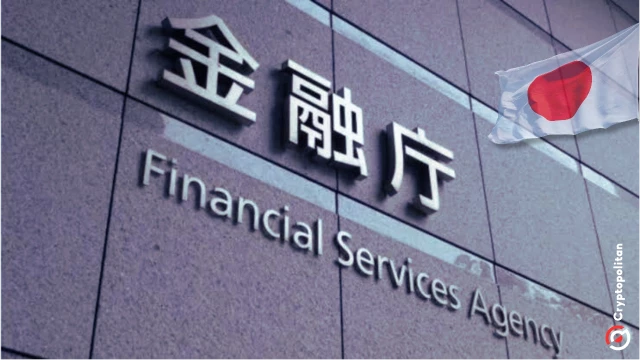
Japan's Financial Services Agency will open a dedicated Crypto Assets and Stablecoins Division on August 7, giving digital-asset firms a single regulator and laying the groundwork for bank-led stablecoin issuance.
Before the reorganization, crypto oversight was split between two small offices under the Risk Analysis Division of the Comprehensive Policy Bureau. The new division sits under the freshly created Asset Management and Insurance Supervision Bureau. It includes a Crypto Asset Monitoring Office and a Digital Payment Planning Office, with a third unit focused on innovation.
The move fulfills a promise Finance Minister Satsuki Katayama made in December 2025. Japan has since passed a law reclassifying crypto assets as financial products under the Financial Instruments and Exchange Act, effective 2027, and proposed a flat 20% crypto tax starting 2028, down from a top rate of 55%.
Japan's megabanks are already running stablecoin experiments under the new framework. MUFG and SMFG have disclosed initiatives; MFG is also involved. Only licensed banks, money transfer providers, and trust companies can issue yen-pegged stablecoins, giving the three lenders a built-in advantage. The FSA has also tightened enforcement against offshore platforms. Bitget said this month it would wind down services for Japanese residents, following Bybit's earlier exit after FSA warnings.
The reorganization takes effect August 7, 2026, when the division opens under the Asset Management and Insurance Supervision Bureau. Crypto responsibilities were previously spread across units under the Comprehensive Policy Bureau's risk-analysis section. The FSA said finance is digitalizing and supervision needs to be handled more closely; the change aligns with Japan's July law reclassifying crypto as a financial product and its planned flat 20% crypto tax.