The Recidivism Number That Undercuts Oversight
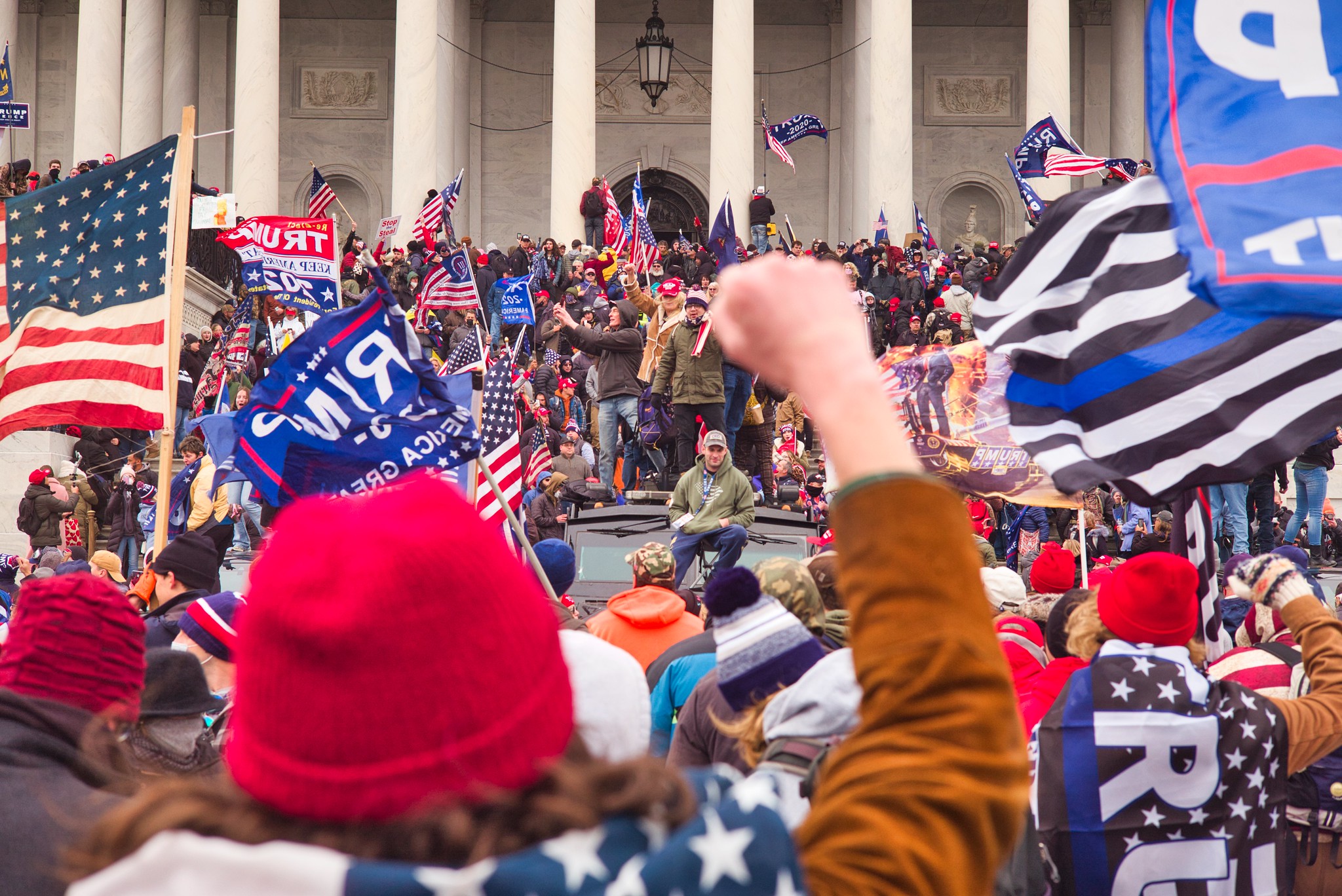
At least 97 of the more than 1,500 individuals granted clemency by President Trump for their roles in the January 6 Capitol attack have been arrested for, charged with, or convicted of crimes separate from Jan. 6 since their participation in the riot. That finding comes from a Lawfare study that is the most comprehensive to date. The number represents roughly one in 16 clemency recipients now facing other criminal proceedings.
The alleged crimes span low-grade offenses like trespassing and drug paraphernalia possession to serious felonies including grand larceny, stalking, child molestation, and homicide. One pardonee was convicted in February 2026 of child molestation and sentenced to life in prison. Another was convicted in 2025 of reckless homicide. At least 14 have been charged with sex crimes or crimes related to child sexual abuse material. At least six have faced domestic violence charges. At least 20 have been charged with driving under the influence or public intoxication.
Why Previous Counts Missed More Than Half
The New York Times Editorial Board, in an editorial titled "The People Trump Pardoned Are on a Crime Spree," counted 39 Jan. 6 defendants who committed other crimes after the attack. The Citizens for Responsibility and Ethics in Washington (CREW) identified 33 in December 2025. Lawfare's count more than doubles those figures.
The gap exists because tracking pardoned individuals requires manual research. Unlike parolees, pardoned individuals are not subject to monitoring, reporting requirements, or oversight of any kind. The only way to know what becomes of them is to look. Lawfare's researchers read news reports, monitored social media, mined dockets, and called county clerk offices. Many state-level dockets are difficult to access remotely, with filing rules and public access policies varying widely by jurisdiction.
The Department of Justice's deletion of Jan. 6 defendant records – which Lawfare has worked to restore and archive – compounds the blind spot. More than an estimated 10,000 individuals are believed to have participated in the assault on the Capitol that day. Of those, only about 1,600 were charged before the clemency order. The order directed the attorney general to "pursue dismissal with prejudice to the government of all pending indictments." Participants who were never charged – like Tim Arvidson, who later allegedly shot and killed a man on the side of the road – avoided prosecution entirely. Absence of a prosecution is not the same as absence of a crime. The 97 cases are almost certainly an underestimate of the true extent of subsequent criminality among all Jan. 6 participants.
How the Bulk Clemency Mechanism Enabled Crime
The standard pardon process includes safeguards. Under normal DOJ procedures, defendants must wait a minimum five-year period and submit a notarized petition disclosing all prior arrests, debts, lawsuits, and unpaid taxes. They must include three notarized character affidavits from non-family members. The Office of the Pardon Attorney conducts a detailed investigation, interviewing the applicant, references, neighbors, and employers. The office notifies victims and allows them to submit comments. The attorney general reviews the findings and sends a written recommendation to the president.
Trump's Granting Pardons and Commutation of Sentences for Certain Offenses proclamation followed none of these steps. Signed within hours of his inauguration, the order included no investigation, no victim notification, and no assessment of recidivism risk. The president's action set free incarcerated or detained individuals who then proceeded to allegedly commit crimes within the period they would still have been in prison.
The Five Facilitation Cases
Five recipients of presidential clemency were arrested in connection with conduct that occurred at least in part after Trump's freeing them from prison. These represent the crimes most clearly attributable to the clemency decision. They include alleged child molestation, grand larceny, and deadly conduct. Three of these five have been convicted. One still has charges pending. One was arrested, the then-interim U.S. attorney for the District of Columbia ultimately declined to bring charges.
The practical import: the clemency order did not simply erase past accountability. It created forward-looking liability. For a trading desk tracking political risk, this sequence – bulk clemency, no monitoring, new crimes, political backlash – represents a feedback loop that can alter enforcement priorities, Justice Department funding, and election-year policy debates.
Violent, Sex, and Gun Crimes Among Clemency Recipients
The 41 individuals charged with or convicted of violent crimes since Jan. 6 include cases that fit the federal definition of a crime of violence: an offense involving the use or attempted use of physical force, or a felony that by its nature involves substantial risk that physical force will be used. Specific examples from the study include one man who threw his juvenile daughter to the ground and punched her repeatedly in a hotel room, one who picked up a 12-year-old boy by the neck and slammed him to the ground for criticizing President Trump, and one who allegedly beat, sexually assaulted, threatened, and choked a victim for more than 12 hours.
The cohort also includes individuals charged with possession of child pornography, online solicitation of a 15 year old, secretly filming naked women in tanning beds, and sending explicit images to a 13 year old online. In 28 cases, Jan. 6 convicts faced additional charges related to guns. Several cases involved law enforcement finding caches of weapons during searches related to the Jan. 6 investigation.
The Firearm and Violence Overlap
In some cases, defendants convinced either judges or the new administration that gun charges were sufficiently related to Jan. 6 that they should be dropped. In other instances, such cases survived. The distinction matters for the legal exposure of the clemency order: if subsequent state-level firearms charges are dismissed based on the federal pardon, it would signal that the order's scope is being interpreted broadly.
The Anti-Weaponization Fund: A Second-Order Exposure
On May 18, the Trump administration announced the creation of a $1.776 billion fund entitled the "Anti-Weaponization Fund." The fund would "provide a systematic process to hear and redress claims of others who suffered weaponization and lawfare." Acting Attorney General Todd Blanche, appearing before the Senate Committee on Appropriations, said he would not rule out allowing pardoned Jan. 6 defendants convicted of assaulting police officers during the attack to seek compensation from the fund on the basis of claims they were politically targeted.
Sen. Chris Van Hollen (D-Md.) questioned Blanche about whether a specific pardonee – who law enforcement alleged promised to buy his victims' silence with funds from a Jan. 6 restitution payment – would be eligible for a payout. Blanche deflected and accused Sen. Van Hollen of lying. The senator was not lying. The question was compelling: would pardoned Jan. 6 defendants who have been charged with or convicted of other crimes since the attack be eligible for a payout from the Justice Department?
The Justice Department, facing strong pushback even from Republicans, is backing off plans to establish the fund. If the fund materializes, the DOJ's budget and its enforcement posture become a recurring political flashpoint. For readers tracking the NYT stock page, the publication's editorial positioning on this issue can influence subscriber sentiment, though the magnitude is secondary to the policy impact.
What a Fund Revival Would Mean
If the $1.776 billion line item reappears in appropriations language, companies holding federal contracts for prison services, electronic monitoring, or background check databases could see changes in procurement demand. The fund would also create a discrete pool of money for claims processing, potentially benefiting legal services firms and claims administration vendors.
The Assets Affected and the Transmission Channels
No single equity or bond directly tracks Jan. 6 recidivism. The spillover effects operate through three channels:
- Federal law enforcement budget: Congress could condition DOJ funding on oversight of pardoned individuals. This would create procurement demand shifts for companies providing prison services, electronic monitoring, or background check databases.
- Political betting markets: Contracts tied to Trump administration policy durability or to specific legal proceedings react to every new recidivism headline. The five facilitation cases are especially potent because they present a direct causal chain from clemency to harm.
- General market sentiment: Repeated news of post-pardon crimes erodes public confidence in the rule of law. Institutional investors incorporate this into country risk assessments for US equities. The effect is diffuse and slow, compounding with each new data point.
What Confirms or Breaks the Thesis
Confirmations
- New facilitation cases: Another clemency recipient arrested for a violent crime while still within the original prison window. This is the fastest accelerant. Media coverage intensifies, political pressure on the DOJ rises.
- Congressional hearings: If Congress holds hearings forcing Blanche or other officials to defend the compensation fund, the recidivism data enters the public record and broadcasts widely.
- DOJ record litigation: If a lawsuit over destroyed evidence proceeds, the recidivism count could be used as evidence of harm from the record removal.
Breaks
- DOJ reinstates standard pardon procedures: Formal restoration of the pardon attorney process reduces the likelihood of new facilitation cases.
- DOJ drops the Anti-Weaponization Fund entirely: This removes a specific budget-line political flashpoint.
- Subsequent court rulings narrow the pardon's scope: For example, a ruling that the pardon does not cover state-level prosecutions for crimes committed after the pardon. So far no such ruling has emerged.
What to Track Next: A Practical Checklist
- State-level docket updates: Monitor the 97 cases for trial dates, convictions, or dismissals. The 20 DUI cases and 6 domestic violence cases are lower-severity but high-frequency. A cluster of new arrests in a single state would localize the risk.
- DOJ budget requests: The Anti-Weaponization Fund amount ($1.776 billion) is precise. Any re-emergence of that line item in appropriations language signals the risk is being institutionalized.
- NYT editorial follow-ups: The newspaper's editorial board has a track record of returning to the topic. A second editorial citing the 97 figure would amplify the narrative more than a wire report.
- Enrique Tarrio's assault case: The former Proud Boys leader was arrested for simple assault in March 2025, the interim U.S. attorney declined to charge. If charges are revived, it becomes a high-profile facilitation signal.
- The five facilitation cases: Track convictions, dismissals, or new arrests. These represent the clearest causal evidence of the clemency order enabling harm.
The 97 cases are not a static number. Lawfare acknowledges it is almost certainly incomplete. As county-level dockets become accessible and as the DOJ's record-archiving litigation proceeds, the count will rise. The question is whether the increase happens in a steady trickle or in a cluster that forces a formal policy response.