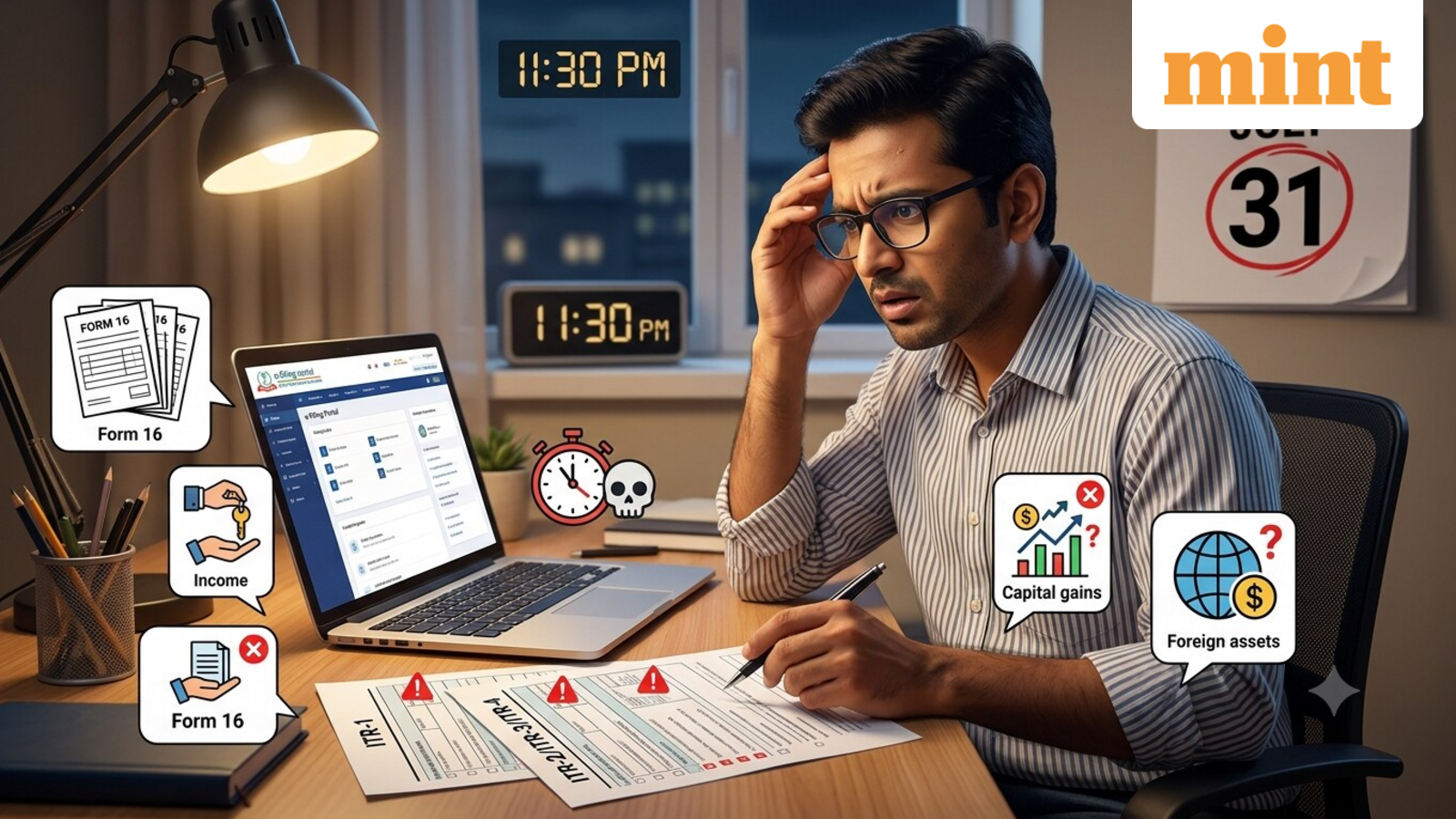
Salaried taxpayers risk refund delays and notices by filing the wrong ITR form. Experts explain how to avoid common errors before the July 31 deadline.
The July 31 deadline for income tax returns for the 2026-27 assessment year is approaching. Salaried taxpayers who file the wrong form risk refund delays and a notice from the Income Tax Department.
The biggest error is assuming that salary income automatically means ITR-1 is the right form, said Adhil Shetty, CEO of BankBazaar.
"A common mistake is assuming that salary income automatically means ITR-1 is the right form," Shetty said. "Many taxpayers overlook other income they may have earned during the year, such as capital gains or foreign assets, all of which may require a different ITR form."
Even a single transaction can change the applicable form, he added. Taxpayers should review all sources of income for the financial year, including capital gains, rental income, interest, and foreign assets, before choosing a form.
A return filed with the wrong form may be treated as defective, forcing the taxpayer to correct it within a set timeline. Failure to do so can delay refund processing or invalidate the return entirely.
Employees who changed jobs during the year should collect Form 16 from every employer, Shetty said. They should combine salary from all employers, reconcile TDS with Form 26AS and the Annual Information Statement, and ensure each employer's TDS was credited correctly. Any tax shortfall from income earned at a previous employer should be paid before filing.
Before submitting the return, taxpayers should check for mismatches between Form 16 and Form 26AS. Shetty said they should first verify details in 26AS and AIS, then use Form 16 to reconcile salary and TDS. If TDS shown in Form 16 is missing or differs from 26AS, they should contact the employer for a correction.
Filing early reduces the risk of technical issues on the e-filing portal and leaves time to correct errors and complete e-verification, Shetty said.
The deadline is July 31.
Prepared with AlphaScala editorial tooling from the source reporting linked above. Indexable analysis may include a cited Alpha Score value. Publishing checks screen each story before release. Educational coverage, not personalized advice.