Stocks● Neutral
ITR 2026: 5 mistakes that trigger tax notices before July 31
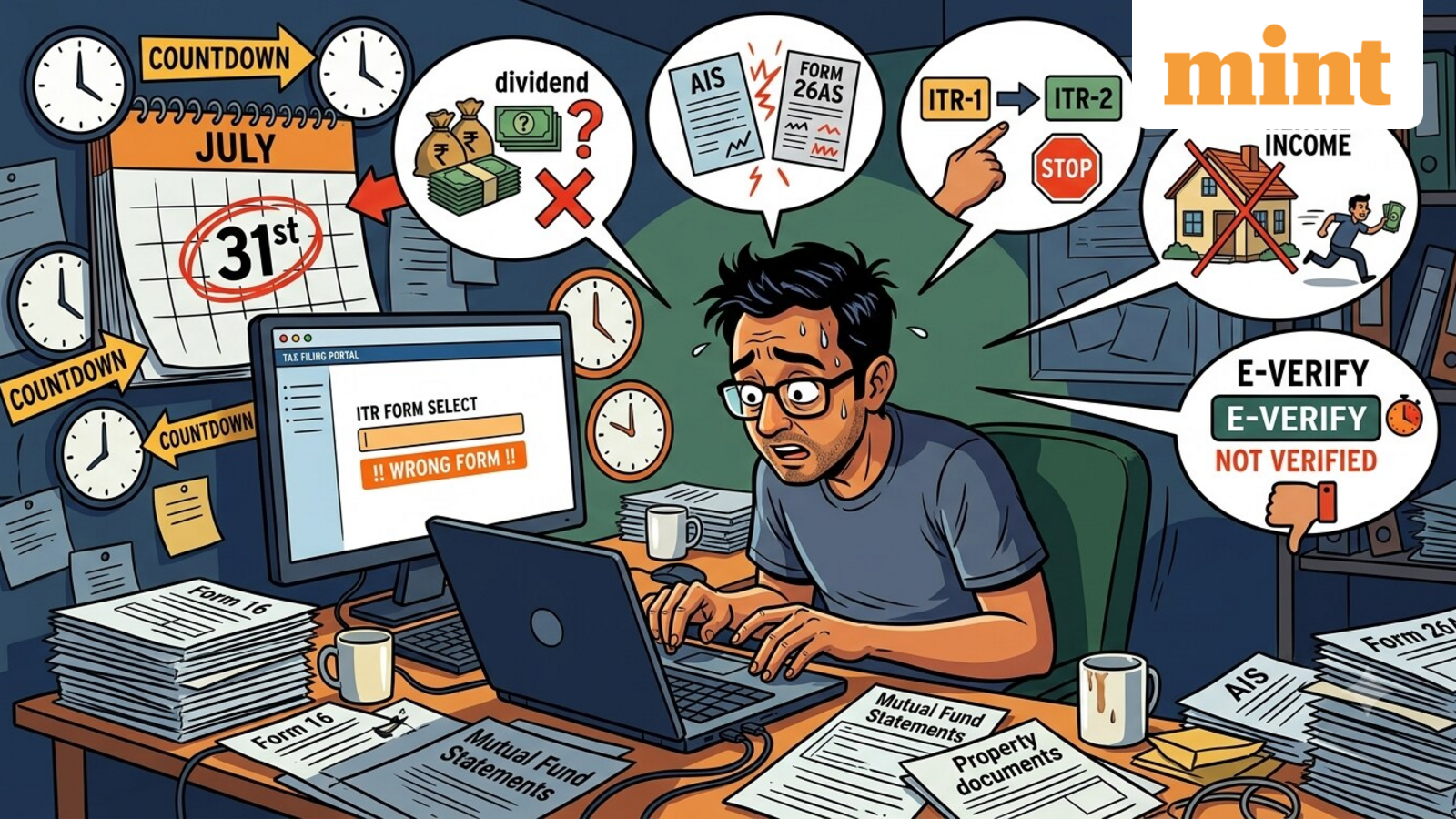
Five ITR filing mistakes that trigger tax notices: relying only on Form 16, skipping AIS reconciliation, picking the wrong form, missing deductions or capital gains, and failing to e-verify.
Continue with
The July 31 deadline for filing income tax returns for Assessment Year 2026-27 is weeks away, and taxpayers are beginning to submit. Pre-filled forms have cut the data-entry work, but errors in a rush still lead to refund delays, fresh tax demands, or a notice from the Income Tax Department.
The department has repeatedly told filers to cross-check the information in Form 26AS, the Annual Information Statement and the Taxpayer Information Summary before clicking submit. Here are the five mistakes that surface most often.
1. Relying only on Form 16
Form 16 shows only the salary income your employer reported. It does not capture interest from savings accounts or fixed deposits, dividend income, rental income, freelance earnings, or capital gains from shares and mutual funds. Every one of those must be added to the return. Leaving them out creates a mismatch with the department's own records, which banks, mutual funds, stockbrokers and other entities feed directly into the AIS. That mismatch triggers a notice.
2. Skipping the AIS and Form 26AS reconciliation
Before filing, compare the income you report with what appears in the AIS, TIS and Form 26AS. Those statements already contain data from employers, banks, mutual funds and brokers. If your return omits income that those records show, the department's system flags the discrepancy. The result is either a demand for additional tax or a scrutiny notice.