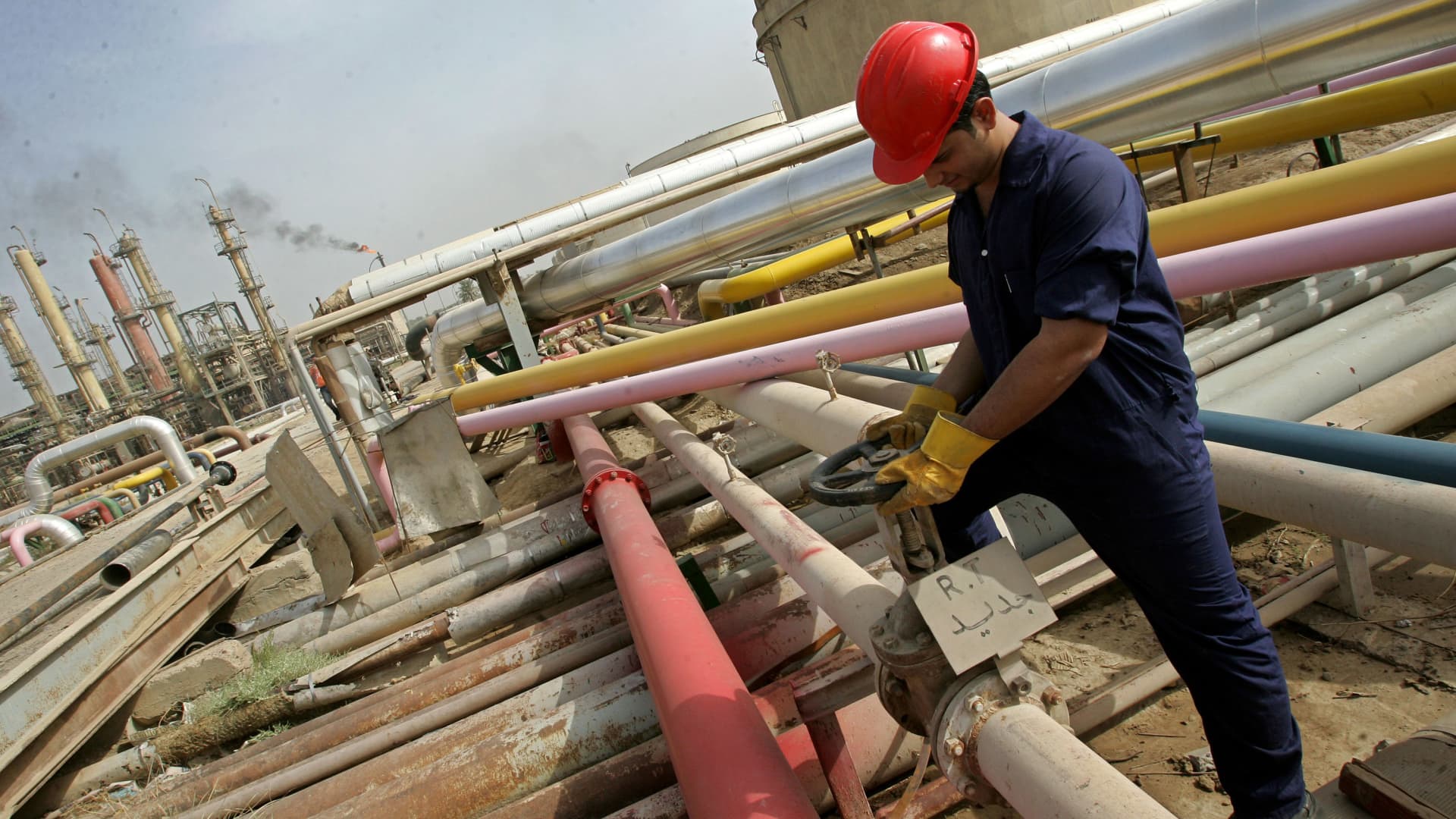
Baghdad wants a significantly higher quota, threatening to follow the UAE out of OPEC. The dispute exposes internal fractures as crude prices face supply and tariff pressures. Iraq's pipeline alternative to Hormuz adds further tension.
Iraq is demanding a significantly higher oil production quota from OPEC, escalating a dispute that saw the United Arab Emirates leave the group in April. The Iraqi oil ministry said Thursday it continues to stress the importance of reviewing quotas, after reports that Baghdad was weighing an exit.
Reuters reported Iraq considered leaving the cartel. Bloomberg quoted an oil ministry spokesperson warning that a "decision will have to be made regarding whether to remain in or withdraw" if quotas are not lifted. The ministry later said reports of a planned departure "did not reflect the Iraqi government's official position."
Iraq is OPEC's second-largest producer after Saudi Arabia, pumping roughly 4.4 million barrels a day under current quotas. The UAE's exit removed about 4% of the group's output. An Iraqi departure would take another 4-5% offline. Spare capacity in Saudi Arabia and the UAE could compensate. The real cost would be the collapse of the quota system itself, which has held OPEC together through years of market swings.
The pressure on Iraq to pump more is acute. Its economy relies on oil for 53% of GDP, according to the World Bank. Since the US and Israel began military operations against Iran on February 28, Iraqi exports through the Strait of Hormuz have virtually dried up, according to exclusive data from economic intelligence provider QuantCube Technology. The indicator measures deadweight tonnage leaving Iraqi ports. The collapse exposes the country's vulnerability to any blockade of the strait.
The Iraqi cabinet in June approved plans to accelerate exports through the Kurdistan-Turkey pipeline network, which would boost shipments from 220,000 barrels per day to 770,000. That route runs through Kurdistan to Turkey's Mediterranean port of Ceyhan, bypassing Hormuz entirely. At full capacity, it would ease the export bottleneck and give Iraq more room to push for a higher quota.
For the crude market, the dispute signals that OPEC's internal discipline is eroding. A higher quota for Iraq would require other members to accept smaller shares or face a production free-for-all. If Iraq were to leave, the cartel would lose its second-largest member in two years. Either outcome weakens OPEC's ability to manage supply, which in a market already under pressure from tariffs and slowing demand would be bearish for prices. Brent crude has already fallen below $73 on supply recovery hopes.
Traders should track two things: the Kurdistan pipeline's operational timeline and Iraq's official quota request at the next OPEC meeting. The QuantCube data showing the export collapse is a reminder that Iraq's bargaining position is as much about geography as it is about production capacity.
Prepared with AlphaScala research tooling and grounded in primary market data: live prices, fundamentals, SEC filings, hedge-fund holdings, and insider activity. Each story is checked against AlphaScala publishing rules before release. Educational coverage, not personalized advice.