The military campaign against Iran is producing the opposite of its stated goal. Rather than toppling the Shia theocracy or triggering a popular uprising, the strikes are driving Iranians toward the regime, several Iranian Americans with ties to the country said.
Professional Iranian Americans who opposed the religious government before the war now describe a shift. They took pride in Iran's World Cup participation but resented how players were judged by nationality. The prevailing sentiment, they said, is that the U.S. and Israel distrust all Iranians, not just the regime. The war is reinforcing that view.
This is the "rally 'round the flag" effect, a term coined by Mueller in 1970. It describes a sudden surge in a leader's popularity during an international crisis. Three factors typically drive it: citizens feel national unity against an external threat, opposition elites temper their criticism, and anxiety pushes people toward unconditional support for those in power.
The U.S. saw this after 9/11, when Democrats and Republicans briefly merged. That dynamic does not apply here. The U.S. was the attacker, not the attacked. There is no rally inside America.
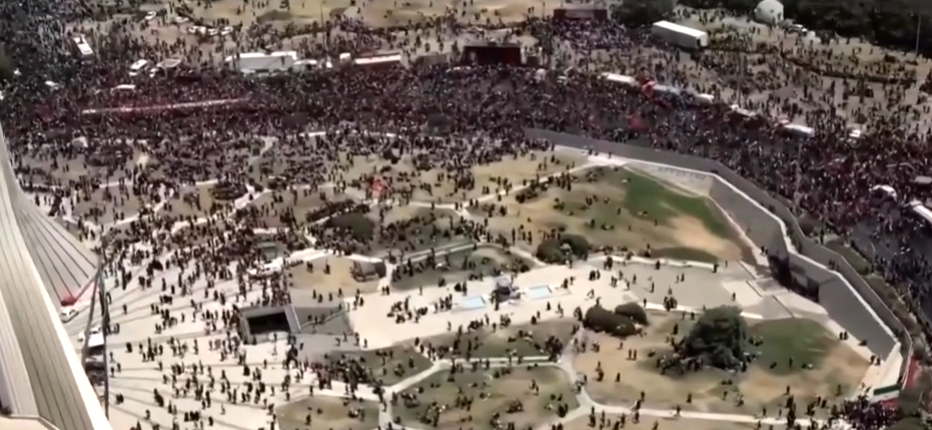
Recent research shows the effect is not guaranteed. It depends on whether the public believes the attack was truly from a foreign enemy. In Iran, the regime presented itself as the victim of assassins. The public funeral projected defiance and unity, not weakness.
That defiance now underpins Tehran's negotiating strategy. Senator Lindsey Graham once said Ukrainians would fight to the last man standing. A similar posture is emerging in Iran.
Dr. Dan Diker, president of the Jerusalem Center for Security and Foreign Affairs, told Newsmax that the only way to defeat Iran's ruling regime "is to defeat it militarily." Prime Minister Benjamin Netanyahu spoke of liberating the Iranian people from tyranny. Critics said his concern is not the Iranian people but his hatred for the regime.
Former prime minister Naftali Bennett, the leading opposition candidate, said the war's objectives were clearly outlined in advance and had not been achieved before the ceasefire. He anticipates Netanyahu will run in the upcoming elections.
The next Israeli Knesset election is scheduled by October 2026, barring an early dissolution. Netanyahu remains sitting prime minister. His political viability depends on the war's outcome and his ongoing corruption trial.
If the coalition holds, the election proceeds as scheduled. If it collapses, the vote could come much earlier. Netanyahu's decision to run would then become clear.
Volatility data shows rising uncertainty in Israel for September but not in Iran. That suggests the Israeli election cycle will take focus, while Iran's internal dynamics remain stable under the unifying pressure of war.