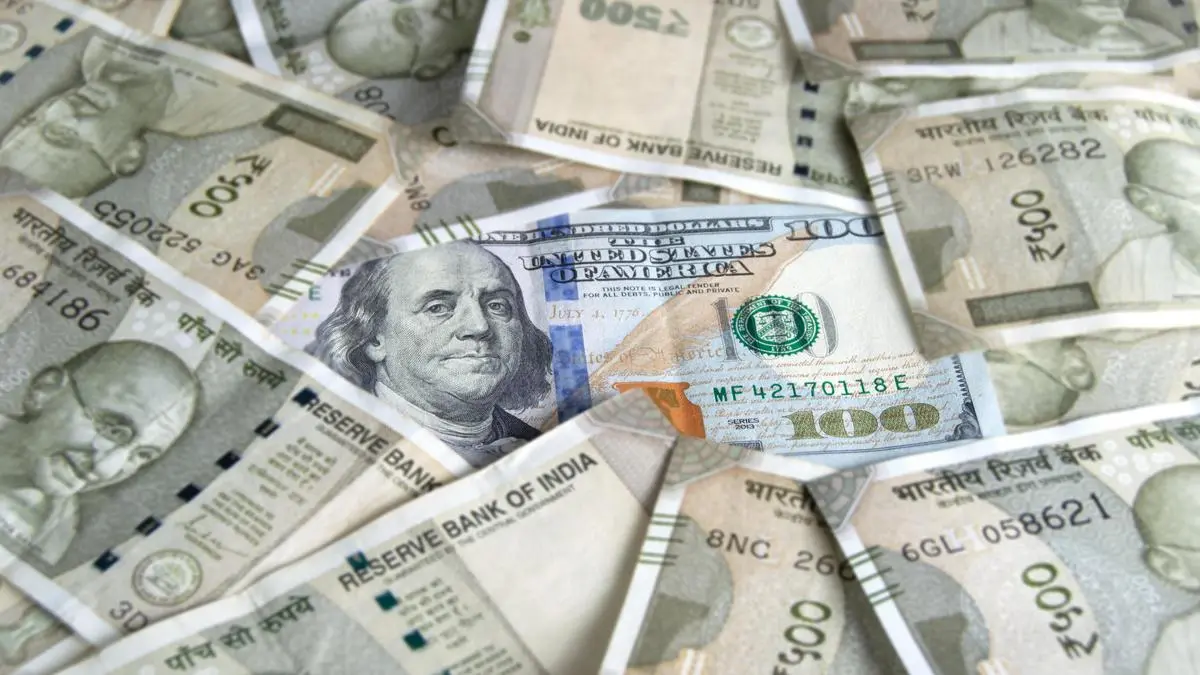
Indian markets return from a long weekend to a Middle East that got hotter. Iran struck U.S. military sites in Kuwait and Bahrain over the weekend, after President Donald Trump threatened to target Iranian leaders unless they upheld the interim peace deal. The rupee closed at 94.3950 per dollar on Thursday, little changed on the week but on track for its first monthly gain since February. That calm is about to be tested.
Oil is the immediate transmission belt. Any retreat in risk sentiment from the escalation tends to hit the South Asian unit, which steadied after hitting historic lows last month. The 10-year benchmark yield ended at 6.7690% on Thursday, down 8 basis points for the week – its fifth straight weekly decline, a 28 bps plunge over five weeks. Yields gave up some of their declines and hit a strong floor on Thursday, with the 10-year failing to break below 6.75%.
Traders expect the benchmark yield to move within the 6.72%-6.84% range this week, with the focus on oil prices, foreign flows and hints on the inclusion of Indian bonds in Bloomberg's Global Aggregate Index. Foreign investors have bought a net ₹27,900 crore of bonds so far this month, mostly after the Reserve Bank of India's June 5 measures to boost inflows. Purchases are already at a record since the RBI created a separate category for unrestricted investment.
“The recent measures address some of the roadblocks to inclusion in the Bloomberg index, particularly the tax issue, as India has now aligned itself with other zero-tax sovereign issuers included in this index,” said Shiv Chopra, a senior portfolio manager for emerging markets fixed income at BNP Paribas Asset Management. “Liquidity and market depth have also now been improved as this benchmark requires a deep pool of investable assets.”
Goldman Sachs analysts see the macro backdrop turning more supportive for INR duration. “Inflation expectations are easing and lower oil prices should reduce fiscal risks,” they said in a note.
The Fed path is the other variable. Over three-quarters of economists in the June 23-25 Reuters poll see the federal funds rate remaining steady through 2026, defying market pricing for two hikes. The U.S. payrolls report is due Thursday and is expected to show 110,000 jobs were added in June. Economic data supporting rate-hike bets could lift global bond yields and pressure risk assets such as the rupee.
Key data this week:
- May industrial output – June 29, Monday (4:00 p.m. IST)
- June HSBC manufacturing PMI – July 1, Wednesday (10:30 a.m. IST)
- June HSBC services PMI – July 3, Friday (10:30 a.m. IST)
- U.S. June consumer confidence – June 30, Tuesday (7:30 p.m. IST)
- U.S. June S&P Global manufacturing PMI final – July 1, Wednesday (7:15 p.m. IST)
- U.S. June ISM manufacturing PMI – July 1, Wednesday (7:30 p.m. IST)
- U.S. June non-farm payroll data and unemployment rate – July 2, Thursday (6:00 p.m. IST)
- U.S. initial weekly jobless claims for the week to June 27 – July 2, Thursday (6:00 p.m. IST)
- U.S. May factory orders – July 2, Thursday (7:30 p.m. IST)