Energy Transfer Hits Record Highs on 20% EBITDA Growth, $25B Backlog
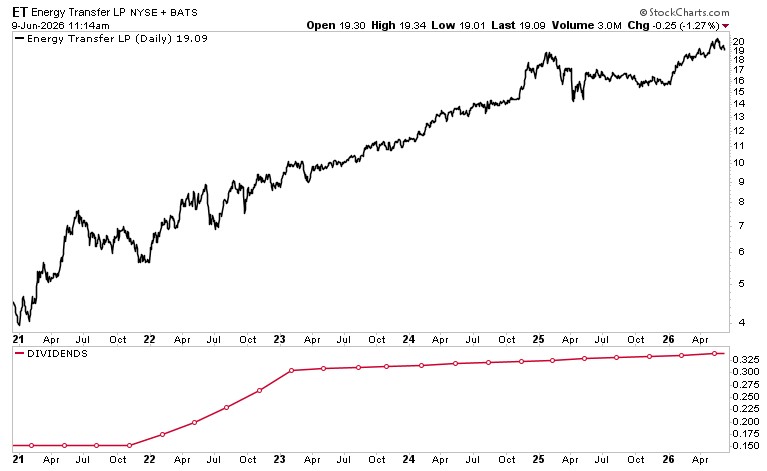
Energy Transfer raised 2026 EBITDA guidance to $18.2B-$18.6B after a 20% Q1 beat. A $25B contract backlog tied to data centers and AI is driving the biggest capex cycle in the company's history.
Energy Transfer LP (NYSE: ET) reported first-quarter adjusted EBITDA of $4.94 billion, up 20% from a year earlier, and raised its full-year guidance range to $18.2 billion to $18.6 billion from the prior $17.45 billion to $17.85 billion. The midstream giant also posted record volumes across its natural gas, NGL, and crude oil pipelines in the quarter ended March 31.
The numbers landed alongside a string of commercial wins that the company says will generate more than $25 billion in transportation fees over the next 18 years. Those contracts come from data center operators, utilities, and industrial end users – a demand pool that is reshaping how midstream companies allocate capital.
Energy Transfer now expects to spend $5.5 billion to $5.9 billion in growth capital this year, with the bulk going into natural gas pipeline expansions. The company is building a new storage cavern at its Bethel facility that will double capacity to over 12 billion cubic feet. It also has a long-term agreement to supply gas to the Nexus Hubbard AI hyperscale campus in Central Texas and a 20-year binding deal with Entergy Louisiana for gas deliveries to Richland Parish.
One contract worth noting: Energy Transfer agreed to supply 900,000 Mcf/d of natural gas to three Oracle data centers. That single deal shows how the AI build-out is translating into real pipeline demand, not just speculative headlines.
Revenue came in at $27.77 billion for the quarter, with net income of $1.25 billion, or $0.35 per unit. Adjusted distributable cash flow rose to $2.70 billion, supporting the company's 18th consecutive quarterly distribution increase. The current payout is $0.3375 per unit, or $1.34 annualized, yielding roughly 7% at Friday's close near $19.18.
Units hit an all-time high of $20.70 on May 20 and have held near that level. The stock is up 23% year to date and has more than doubled since the distribution was cut during the pandemic. Analyst price targets range from $23.59 to $27, implying 23% to 41% upside from current levels.
Insider ownership stands at 10.3%, well above the sub-2% average for midstream peers. Institutional holders have increased to 1,422, up from 1,376 in March, accounting for 31.87% of units. The three largest institutional holders are Morgan Stanley, Alps Advisors, and Goldman Sachs Group Inc.
The company's ET stock page shows an Alpha Score of 62/100 with a Moderate label, reflecting the sector's capital intensity and the stock's already elevated valuation after the run.
Energy Transfer operates roughly 140,000 miles of pipelines across 44 states, with assets in every major U.S. production basin. Its infrastructure includes 236 Bcf of natural gas storage capacity, crude oil and NGL terminals, and LNG export facilities on the Gulf Coast. The company says its natural gas pipeline network is well positioned to serve growing electricity demand from data centers and AI hyperscale campuses.
Limited partnership structure means Energy Transfer does not pay corporate taxes as long as at least 90% of income comes from U.S. commodity transportation. Most contracts include minimum volume commitments and inflation escalators, which means the company gets paid whether the barrels flow or not.
The raised guidance reflects both the volume growth and the fee escalation built into the contract backlog. The company targets annual distribution growth of 3% to 5%, a pace that would take the quarterly payout from $0.3375 to roughly $0.38 within three years at the midpoint.
For context on the broader midstream demand picture, see Matador, Energy Transfer Gas & NGL Deals Show Midstream Demand and Energy Transfer Expands Nederland NGL Terminal by 240,000 bpd.
A potential wildcard: the conflict in Iran could increase demand for Energy Transfer's Gulf Coast infrastructure as global buyers seek alternative supply routes. The company's LNG terminal capacity and crude export facilities would be direct beneficiaries of any disruption in Middle East flows.
The partnership reports second-quarter results in early August. The next distribution declaration is expected in July.
Drafted by a large language model from the source reporting linked above, then screened by automated publishing checks. It is not read by a journalist before publication. Some articles cite our Alpha Score. Verify prices and figures against the original source. Educational coverage, not personalized advice.