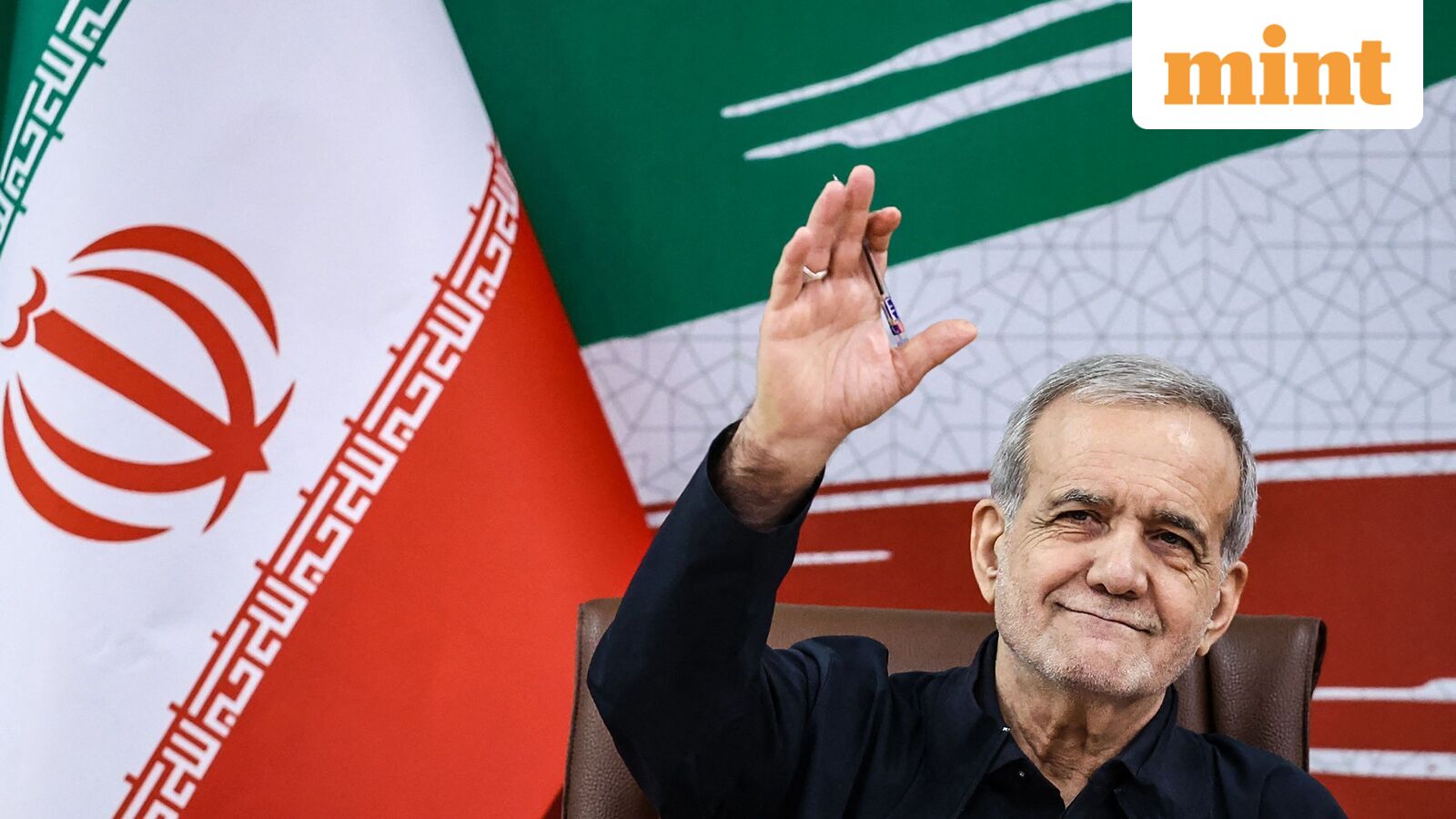
Iranian President Masoud Pezeshkian said Tehran has not compromised on any clause of a memorandum of understanding signed with the United States, and that the country seeks a solution through dialogue and logic, Doha-based Al Jazeera reported, citing Iran's IRNA news agency.
"We signed the memorandum of understanding because we believe that we cannot achieve anything through war," Pezeshkian said in a speech to mark Doctors' Day. "We are not going to bow our heads and give in to the enemy. We can solve our problems with strength but with logic."
The MoU was considered the best possible path by all members of Iran's Security Council, Pezeshkian said. He rejected claims that Tehran had compromised on any part of the agreement. "There is not a single clause in the memorandum that we have compromised," he added.
Pezeshkian's remarks came as Iran's top security official issued a direct warning over the Strait of Hormuz. Mohsen Rezaei, secretary of the Supreme National Security Council, said the waterway would remain closed until the United States changed its behaviour.
"The Strait of Hormuz is closed, despite American claims, and will not open until America corrects its behaviour," Rezaei said in an interview with IRIB, according to Al Jazeera.
Rezaei also accused US President Donald Trump of creating "nuclear insecurity" instead of strengthening global nuclear security. He claimed Washington's actions against Tehran had increased interest among countries in acquiring nuclear weapons.
In a separate warning, Rezaei urged neighbouring countries not to join the US economic campaign against Tehran. "We are telling all surrounding countries not to participate in the economic war with America, otherwise we will consider it an enemy," he said.
If regional states supported Washington's economic pressure measures, Rezaei warned, Iran could block oil routes. "If the countries surrounding Iran join the Americans in the economic war, not a single drop of oil will leave the Persian Gulf and the Strait of Hormuz, and we will also target other routes through which oil is exported from the Persian Gulf."
The threat follows Trump's announcement of what he described as an "Economic D-Day" campaign against Iran. Trump called it "the most crushing economic operation ever taken against any country" and urged US allies to join Washington in isolating Tehran.
The US measures target Iran's economic lifelines, including oil smuggling networks, financial transfers, exchange houses, ship registries and front companies.
Iranian officials have rejected the pressure campaign, arguing that previous sanctions failed to alter Tehran's policies and would instead strengthen resistance.
The Strait of Hormuz is a chokepoint for roughly 20% of the world's oil supply. Any disruption there would affect crude prices, shipping costs and insurance rates across global energy markets.