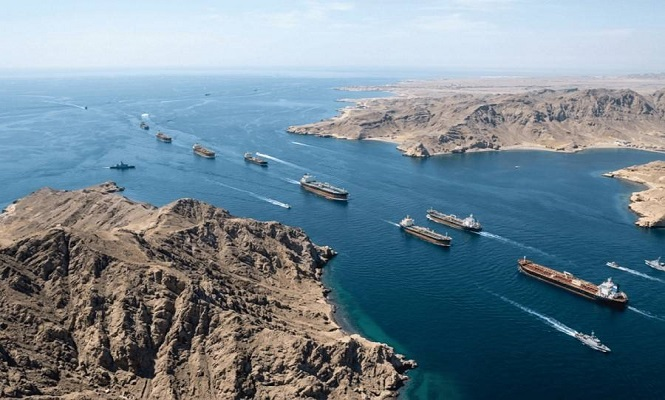
Iran's top military command closed the Strait of Hormuz on Saturday, saying the move was a response to what it called U.S. and Israeli violations of the ceasefire agreement, Iran's semi-official Mehr News Agency reported.
Khatam al-Anbiya Central Headquarters, the country's joint military command, said the closure was a "first step." It warned that further measures could follow if the violations continued.
The strait handles roughly a fifth of the world's oil shipments. A prolonged closure would tighten global supply and push up crude prices, traders said.
The announcement came a day before scheduled U.S.-Iran talks in Oman, which were set to address the ceasefire disputes. The diplomatic track had raised hopes of a de-escalation before the closure order.
Oil futures rose in early Asian trading after the report, extending a week of gains driven by supply concerns. The Strait of Hormuz is the only maritime route for crude from Saudi Arabia, Iraq, Kuwait, the UAE and Iran itself.
Iran's military command said the closure was triggered by "breaches of commitments" by the U.S. and Israel. It did not provide details on the specific violations. Mehr News Agency carried the statement without further comment.
The closure follows months of tensions in the region, including Iranian seizures of tankers and U.S. naval deployments. The ceasefire agreement, brokered earlier this year, had temporarily reduced hostilities.
The command said further steps were possible if the "aggression" persisted. No timeline for reopening the strait was given.