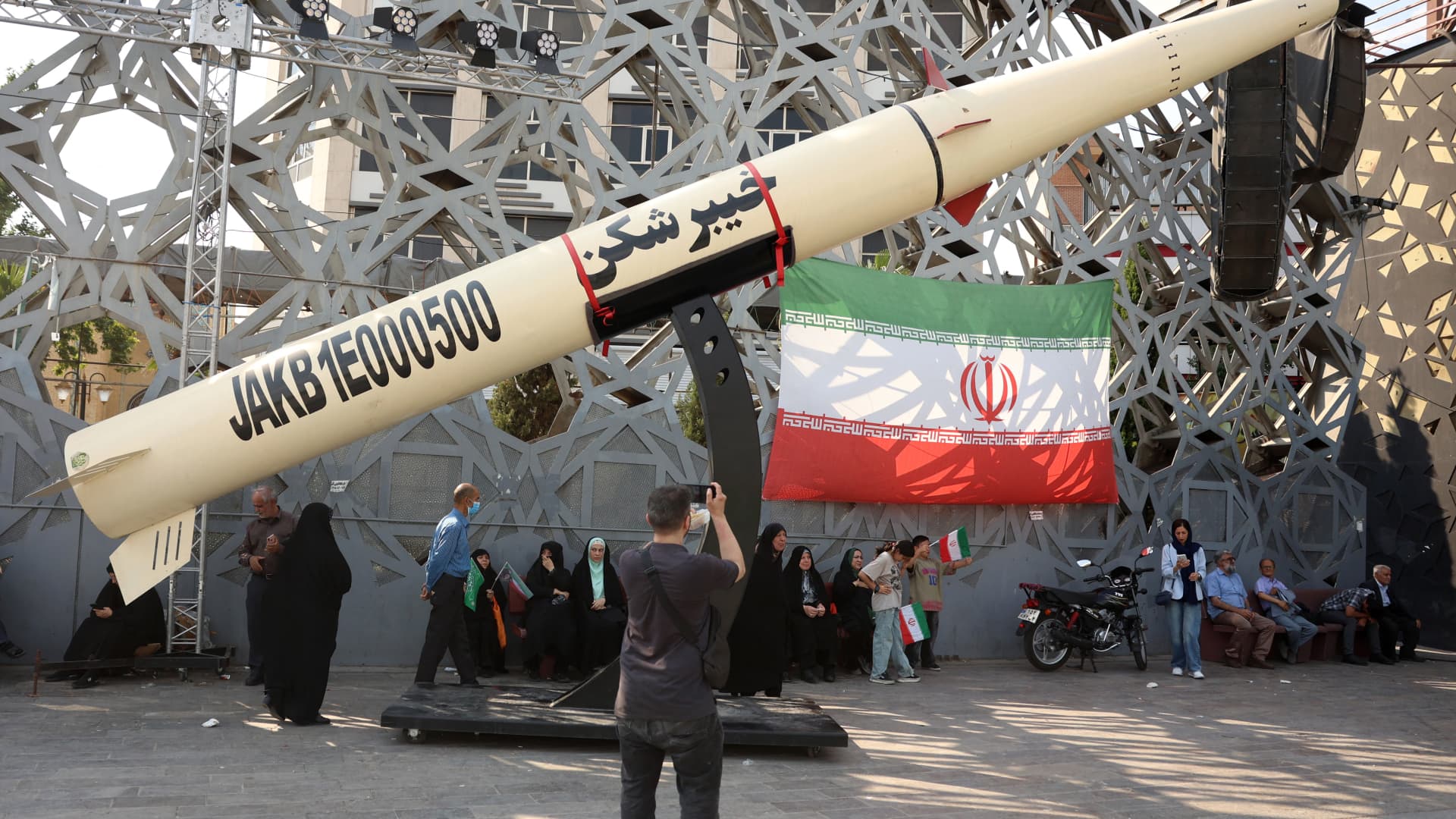
Israel said it identified incoming missiles fired from Iran, threatening to disrupt a fitful ceasefire in the US's 100-day conflict with Tehran. The attack marks the worst flare-up in tensions since the truce started around April 8.
The Event: Missile Launch and Immediate Response
“At this time, the Israeli Air Force is operating to intercept and strike threats where necessary to remove the threat,” the Israeli military said, before warning of an additional barrage of missiles. Iran's semi-official Fars news agency said the country launched several missiles toward enemy positions, without specifying the target. Iran's Islamic Revolutionary Guard Corps said Israel must stop its attack in southern Lebanon, according to the semi-official Tasnim news agency, which cited a statement that also warned against retaliation.
As warning sirens sounded in several areas, Israel said it canceled school across the country for Monday. The Israeli military is actively intercepting and striking threats.
The Ceasefire Context
The fresh attack comes amid skirmishes between Israel and Hezbollah, and as the US and Iran appear to be making little progress toward an interim deal to end the war. Negotiations between Washington and Tehran are bogged down over the fate of billions of dollars of frozen Iranian assets and a parallel conflict between Israel and Iran-backed Hezbollah in Lebanon.
Fighting between Israeli troops and Hezbollah continued over the weekend. The Israel Defense Forces said they intercepted two projectiles launched from Lebanon into Israel on Sunday. Israel retaliated with a strike on two apartment buildings in Beirut's southern suburbs, killing two and injuring 11. Hezbollah last week rejected a US-brokered ceasefire between Israel and Lebanon announced by the State Department just hours before.
Exposure: Which Assets Are at Risk
This missile launch directly threatens the fragile ceasefire framework. The mechanism works through three channels: direct military escalation risk, diplomatic breakdown risk, and energy supply disruption risk.
Direct Military Escalation
The Israeli military's statement about intercepting and striking threats indicates active engagement. Iran's Revolutionary Guard warning against retaliation sets up a potential tit-for-tat cycle. The cancellation of schools across Israel signals the government expects sustained threat levels.
Diplomatic Breakdown
The US-Iran negotiations were already stalled over frozen assets and the Hezbollah conflict. A direct Iranian missile attack on Israel removes the political space for compromise. The US faces pressure to support Israel militarily, which would end any pretense of neutrality in negotiations.
Energy Supply Disruption
Iran sits on the Strait of Hormuz, through which about 20% of global oil passes. Any escalation that threatens this chokepoint would spike crude prices. The mechanism: insurance premiums for tankers rise, shipping companies reroute, and spot prices gap higher on supply fear.
Risk to watch: A sustained missile exchange would push Brent crude above $90 per barrel within 48 hours, based on historical Hormuz risk premiums.
Timeline: What Happens Next
The next 24 to 72 hours determine whether this is a one-off strike or the start of a new escalation cycle.
Immediate (0-24 hours)
- Israeli military continues intercept operations
- Iran may launch additional barrages as warned
- US State Department issues statement, likely condemning Iran
- Oil futures gap higher at market open
Short-term (24-72 hours)
- Israel may conduct retaliatory strikes inside Iran
- Hezbollah could open a second front from Lebanon
- US may deploy additional naval assets to the region
- Diplomatic channels either reopen or collapse entirely
Medium-term (1-4 weeks)
- If ceasefire collapses, Israel resumes full operations in Gaza
- Iran-backed Houthis in Yemen may attack Red Sea shipping
- Global risk premium on Middle East assets resets higher
Affected Assets: How to Position
Crude Oil (WTI, Brent)
Crude is the most direct transmission mechanism. Each major escalation in Iran-Israel tensions adds $5-10 per barrel of risk premium. The mechanism: traders price in supply disruption probability, hedge funds add long positions, and physical buyers accelerate purchases.
Defense Stocks
Israeli defense companies and US defense primes benefit from sustained conflict. The mechanism: governments increase procurement budgets, stockpiles need replenishment, and long-term contracts get signed.
Regional Equity Markets
Tel Aviv Stock Exchange faces direct selling pressure. Gulf Cooperation Council markets may sell off on contagion risk. The mechanism: foreign investors reduce regional exposure, local institutions hedge, and retail sentiment turns negative.
What Would Reduce the Risk
A de-escalation scenario requires specific, verifiable actions:
- Iran confirms no further launches and returns to negotiations
- Israel limits retaliation to defensive strikes only
- US brokers a new ceasefire framework with concrete asset release terms
- Hezbollah accepts the US-brokered Lebanon ceasefire
- Oil prices stabilize below $85 Brent
What Would Make It Worse
Escalation triggers that would confirm the bear case:
- Iran launches a second, larger barrage
- Israel strikes Iranian nuclear or military facilities
- Hezbollah fires rockets into northern Israel
- Houthis attack Saudi or UAE infrastructure
- US deploys combat troops to the region
- Strait of Hormuz sees any military incident
Practical rule: The market prices ceasefire probability into oil and regional equities. A missile launch resets that probability to zero. The next trade depends on whether the response is proportional or escalatory.
The Mechanism: Why This Matters for Traders
The naive read is that Iran-Israel tensions are always elevated and this is just another headline. The better market read is that this specific event breaks a ceasefire that was already fragile, removes diplomatic off-ramps, and introduces direct state-on-state missile attacks rather than proxy warfare.
The positioning implication: hedge funds were underweight oil and overweight regional equities on ceasefire expectations. That positioning is now wrong. The unwind creates mechanical buying pressure in oil and selling pressure in Tel Aviv stocks, regardless of fundamental views.
The execution risk: oil liquidity is thin in Asian hours when this broke. Stop-losses on short oil positions may gap through. Limit orders on Tel Aviv ETFs may not fill at quoted prices.
For traders building a watchlist, the key variable is not whether Iran launched missiles – it is whether Israel retaliates against Iranian territory. That decision determines whether this is a one-day spike or a multi-week repricing.
This article was generated from an automated news agency feed without modifications to text.