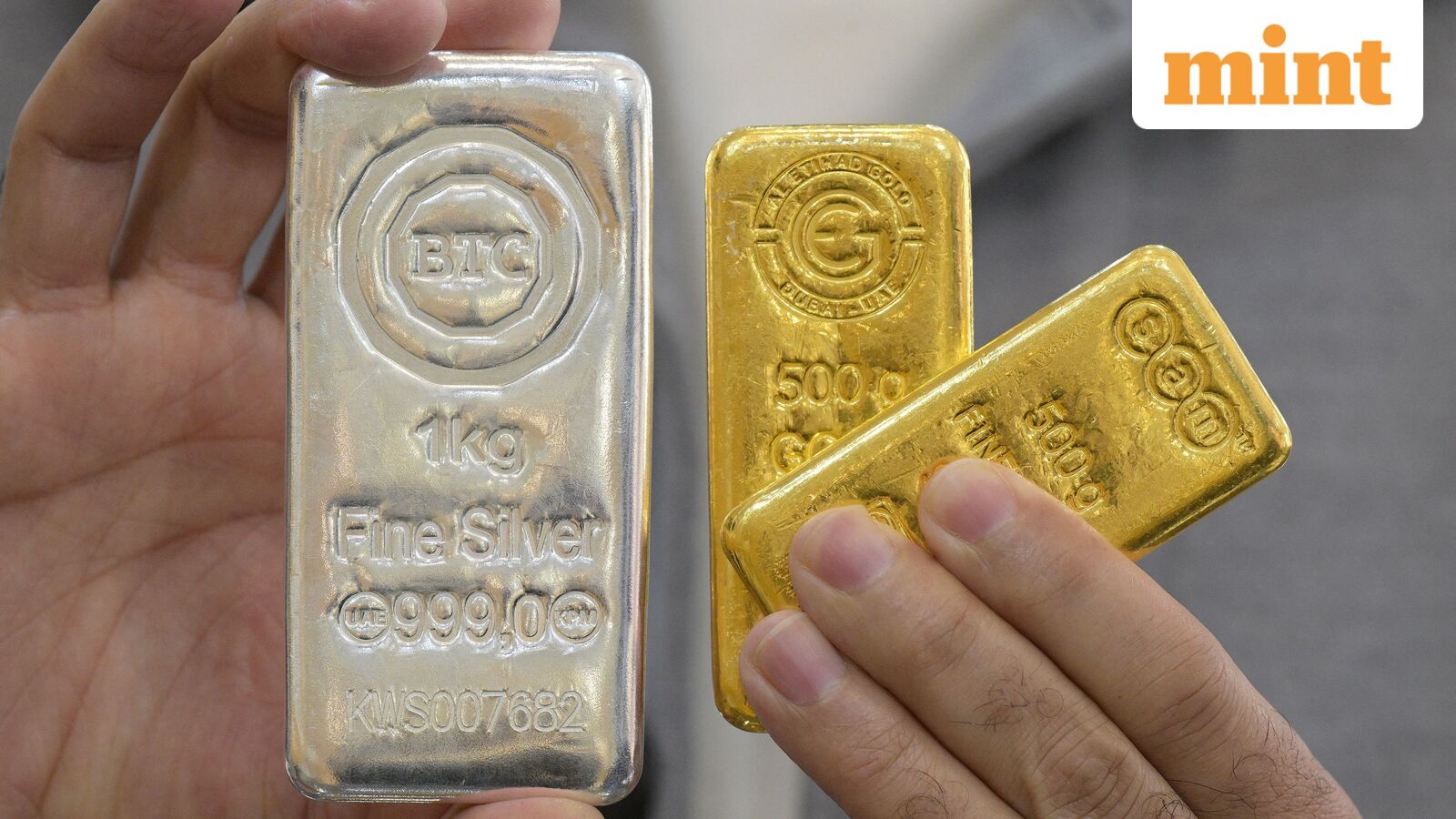
Iran fired two ballistic missiles at US forces stationed in Kuwait overnight, and Tehran is threatening to fully block the Strait of Hormuz. US President Donald Trump told CNBC he does not care if peace negotiations with Iran are over. The combination pushed MCX gold August futures up 0.16% to ₹1,59,440 per 10 grams in Tuesday morning deals. MCX silver July futures slipped 0.2% to ₹2,66,850 per kg.
The catalyst is a sequence, not a single headline. The missile attack, the Strait of Hormuz threat, and Trump’s public indifference to further talks each add a different risk premium to gold. The simple read is that safe-haven demand is rising. The better market read is that the mechanism is more nuanced. Crude oil dropped over 0.95% on the same session, and the dollar index edged lower by 0.01%. Gold is catching a bid from geopolitical uncertainty. The crude decline signals that traders are not yet pricing a full supply disruption. That gap between the two assets creates the decision point.
Iran Missile Strike Resets Gold Risk Premium
US Central Command confirmed that Iran launched two ballistic missiles at American forces in Kuwait at 11 pm ET Sunday. Both were intercepted. No US personnel were harmed. The attack followed a report from Iran’s state-affiliated Tasnim news outlet that Iranian negotiators will stop exchanging messages with the US through intermediaries, citing ongoing ceasefire violations. Tehran also said it will move to fully block the Strait of Hormuz, a chokepoint for about 20% of global crude shipments.
Trump’s response added to the uncertainty. “I don’t care” if peace negotiations are over, he told CNBC, adding that he was “going to ask Israeli Prime Minister Benjamin Netanyahu what’s going on with Lebanon.” Trump said he was not worried about oil prices, which spiked after the Strait of Hormuz threat was reported.
What This Means for Gold
Gold benefits from two distinct channels here. The first is direct safe-haven buying: a missile attack on US forces is an escalation that raises the probability of a broader conflict. The second is the inflation channel: if the Strait of Hormuz is blocked, crude prices would surge, pushing headline inflation higher and delaying central bank rate cuts. That scenario supports gold as an inflation hedge.
Strait of Hormuz Threat vs. Crude Oil Drop
The crude oil decline of over 0.95% on Tuesday morning appears contradictory to the Strait of Hormuz threat. The simple explanation is that the market does not believe the blockade will happen. The better explanation is that the missile attack was intercepted without damage. Traders are pricing a low probability of an actual blockade given the economic damage it would inflict on Iran itself.
Still, the risk is real. Iran has threatened to block the Strait before, and the US military presence in the region makes any miscalculation dangerous. If crude prices reverse and spike, gold would get a second leg from the inflation narrative. If crude stays weak, gold’s rally may be capped by the absence of a tangible supply shock.
Key Factors Driving the Divergence
- Missile attack: Intercepted, no casualties – reduces immediate escalation risk.
- Strait of Hormuz threat: Verbal for now, credible given Iran’s past actions.
- Trump’s indifference: Removes diplomatic off-ramp, prolongs uncertainty.
- Dollar weakness: Minor, supportive for gold priced in rupees.
- Crude oil decline: Suggests market is not pricing a blockade, limiting inflation hedge demand.
City Rates Show Uniform Premium Across India
Retail gold and silver prices in Indian cities moved in line with MCX futures. The table below shows the latest rates for 24K gold, 22K gold, and 999 silver across six major cities.
| City | 24K Gold (₹/10 gm) | 22K Gold (₹/10 gm) | Silver 999 (₹/1 kg) |
|---|
| Mumbai | 1,59,250 | 1,45,979 | 2,66,260 |
| New Delhi | 1,58,970 | 1,45,723 | 2,65,810 |
| Bengaluru | 1,59,370 | 1,46,089 | 2,66,470 |
| Kolkata | 1,58,980 | 1,45,723 | 2,66,200 |
| Hyderabad | 1,59,450 | 1,46,163 | 2,66,970 |
| Chennai | 1,59,660 | 1,46,355 | 2,67,330 |
The spread between the highest and lowest 24K gold price is ₹690 per 10 grams (Chennai vs. Delhi). Silver shows a similar range of ₹1,520 per kg. These differences reflect local taxes, transport costs, and dealer margins. They do not signal any divergence in underlying demand.
What Confirms or Weakens the Gold Thesis
For traders watching this setup, the next move in gold depends on two variables: the actual status of the Strait of Hormuz and the trajectory of crude oil.
Confirming Factors
- A confirmed disruption to tanker traffic through the Strait of Hormuz.
- A second missile attack that causes casualties or damage.
- A sharp rise in crude oil prices above recent highs.
- Further dollar weakness on Fed rate cut expectations.
Weakening Factors
- A resumption of US-Iran talks, even indirect.
- Iran walking back the Strait of Hormuz threat.
- Crude oil continuing to fall, indicating no supply risk.
- A strong dollar rally on risk-off flows into USD.
Gold’s current price of ₹1,59,440 on MCX is near the upper end of its recent range. The risk-reward for a long position depends on whether the geopolitical catalyst intensifies or fades. A trader who buys here is betting that the Strait of Hormuz threat is real and that crude will eventually follow. A trader who waits is betting that the missile attack was a one-off and that Trump’s indifference is a negotiating posture, not a policy shift.
For a broader view of how commodities are reacting to geopolitical shocks, see our commodities analysis page. For a deep dive on gold’s structural drivers, visit the gold profile. The interplay between Iran tensions and crude oil is also covered in Oil Surge Resets Treasury Rate Path After Iran Talks Stall.
Decision Point for Gold Traders
The catalyst is in place, the market has not yet fully repriced the risk. Gold’s 0.16% gain is modest relative to the headline escalation. That suggests either the market is skeptical of the Strait of Hormuz threat or that the safe-haven bid is being offset by the crude oil decline. The next 24 to 48 hours will determine which force wins.
If crude oil reverses and spikes above the previous session’s high, gold will likely follow with a breakout above ₹1,60,000. If crude continues to slide and no new military action occurs, gold may drift back toward ₹1,58,000 support. The missile attack is a real escalation. It is not yet a game-changer for gold. That requires a tangible supply disruption or a broader conflict. Until then, gold is trading on headline risk, not fundamental repricing.