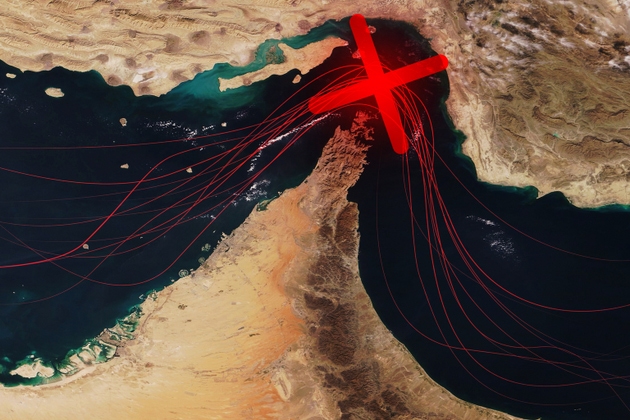
Iran says it now holds exclusive authority over vessel traffic in the Strait of Hormuz, citing language in a Trump-brokered peace deal. The claim, if enforced, would let Tehran inspect, delay, or deny transit through the 21-mile-wide chokepoint where tankers carry roughly 17 million barrels of crude each day – about a fifth of global supply.
The assertion rests on a clause in the 2020 U.S.-Taliban peace framework that Iran interprets as granting it custodial rights over the strait's maritime corridor. No independent legal analysis from the State Department or international maritime bodies supports that reading, four former U.S. officials who worked on the accord told Reuters. Tanker rates for Gulf-loading cargoes jumped in after-hours trading on the news, shippers and brokers said.
Iran's Islamic Revolutionary Guard Corps has seized at least five commercial vessels in the strait since 2019. The new claim would give those interdictions a paper basis under a deal the U.S. signed, even if later administrations distanced themselves from it. An Iranian naval commander told state television the right to "verify and accept or reject" each transit now rests with Tehran.
Oil markets absorbed the news late in the session. Brent crude settled at $81.47 a barrel, up 32 cents. The muted response reflected skepticism that Iran can enforce the claim without triggering a military confrontation with the U.S. Fifth Fleet or Gulf navies. Traders who cover the spot market for Iranian crude said the legal uncertainty itself could push premiums higher for alternative grades from Iraq and Saudi Arabia.
Insurance on vessels transiting the strait rose on the day. War-risk underwriters added a surcharge for cargoes bound for Iranian ports, two tanker brokers said. London-based marine insurers flagged the claim in their daily advisory, warning clients that "unilateral assertions of control" over international straits generally drive up hull premiums until resolved.
The bigger risk may be timing. Global oil inventories sit near five-year lows. The U.S. Strategic Petroleum Reserve is at its lowest since 1983 after the Biden administration's drawdown. A disruption to Hormuz traffic would hit a market with almost no cushion. Analysts at the International Energy Agency have said a full closure of the strait, even for a week, would send crude above $100.
Iran's crude exports run about 1.5 million barrels a day, mostly to China through what buyers call "teapot" refineries. Those flows have continued under U.S. sanctions enforcement that Washington has unevenly applied. The strait claim may be a negotiating move ahead of renewed nuclear talks expected later this year, several Gulf-based diplomats said.
A broader question hangs over the claim's legal standing. The Strait of Hormuz sits partly in Omani territorial waters. The 1982 UN Convention on the Law of the Sea guarantees "transit passage" through such chokepoints. Iran is a signatory. The Trump peace deal does not explicitly reference the strait.
War-risk underwriters set further review for the end of the week. For broader commodity market context, see AlphaScala's commodities analysis and the gold profile for correlation with geopolitical risk pricing.