Inventus Discovers High-Grade Gold in Matinenda Layer at Pardo
Inventus Mining hits 10.5 g/t gold in Matinenda Layer, adding a second stacked horizon at Pardo. Bulk sample already cash-positive. Q4 resource estimate next catalyst.
Inventus Mining Corp. (TSXV: IVS) reported high-grade gold intersections from a new horizon at its Pardo project northeast of Sudbury, Ontario, expanding the near-surface system's resource growth potential. The company said the Matinenda Layer returned 10.51 grams per tonne gold over 0.5 metres in hole PD-26-297 and 7.06 g/t over 0.5 metres in PD-26-299. These are the first high-grade results from that layer, which sits above the previously defined Main Conglomerate horizon.
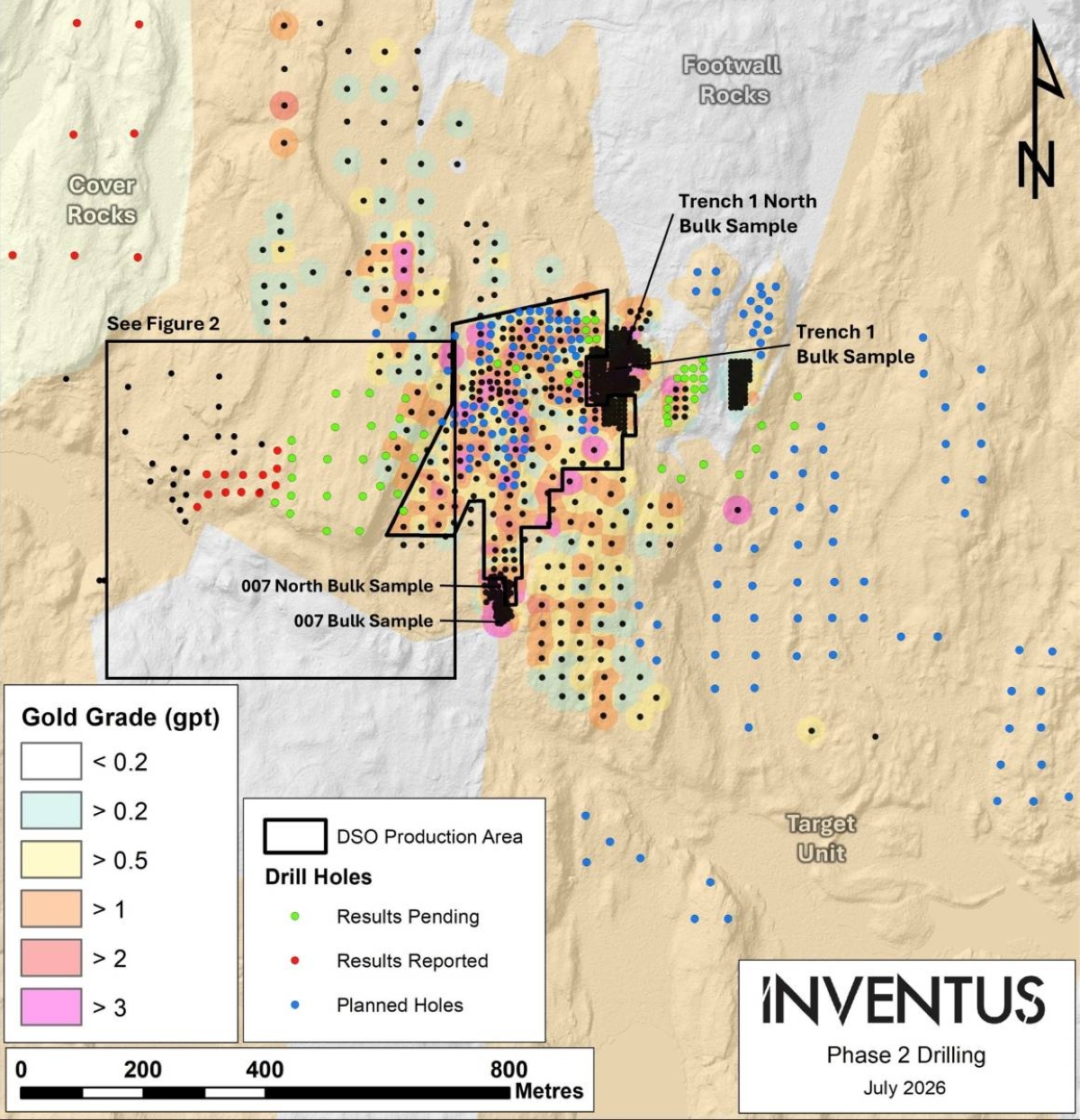
The Pardo gold system is a paleoplacer deposit hosted in flat-lying conglomerate beds, similar in style to the Witwatersrand basin but in a different geological setting. The layers stack like pancakes: the Main, Matinenda, and Upper horizons each run roughly two metres thick, at depths from surface to about 20 metres. That geometry makes drilling cheap and fast. Inventus said it is running two drill rigs and expects to complete at least 120 more holes ahead of a maiden resource estimate planned for the fourth quarter.
The new Matinenda intercepts are narrow but high-grade. The company also reported broader intervals that span both the Main and Matinenda layers: PD-26-297 returned 1.09 g/t gold over 10.82 metres starting at 20 metres depth, and PD-26-284 returned 0.81 g/t gold over 11.62 metres starting at 15 metres. That stacked thickness boosts the system's overall continuity and tonnage potential, a factor that will feed into the Q4 resource model.
The project already has a cash-positive bulk sample trail to support the grade assumptions. Earlier this year, Inventus processed 2,512 tonnes from the Main Layer and recovered 172 ounces of gold, generating $1.17 million in sales – 102% above the bulk sample costs. A second 10,000-tonne batch is pending processing, and the company holds permits for another 20,000 tonnes under the current program.
What the market is watching
Two catalysts sit on the calendar: the reconciliation and validation results of the 7,500-tonne bulk sample, which the company expects to release shortly, and the Q4 maiden resource estimate. Between those events, assay results from 57 holes already drilled and pending are due to trickle out. The fully funded program removes dilution risk for now.
Investors pricing a junior gold explorer at this stage focus on two variables: grade consistency across the lateral extent and the ability to convert that into a resource at a viable strip ratio. The Matinenda Layer's high-grade pop adds optionality – if those narrow intervals repeat across strike, they could lift the average grade of the mine plan beyond just the broader Main Layer trend.
The shallow depth also matters for potential open-pit economics. Pardo sits 65 km from Sudbury, with road access and nearby milling infrastructure. The early bulk sample already demonstrated that processing works, delivering positive cash flow at a small scale.
Where the setup could break
The narrow width of the high-grade Matinenda intercepts (0.5 metres) is a wildcard. If those zones do not coalesce into a laterally continuous seam, they may not materially affect the resource. The broader intervals (10-11 metres) at lower grades (0.8-1.1 g/t) are the bulk of the story. The Matinenda high-grade is a bonus, not the base case.
Another risk: the bulk sample reconciliation could reveal recovery or grade inconsistencies. The company said it is in final stages of validating the 7,500-tonne results. Any miss there would weigh on the resource confidence.
For a company with a $12 million market cap (roughly) and no streamer or royalty overhang, the Pardo project offers a levered play on near-surface gold discovery. The next two quarters will determine whether the Matinenda layer becomes a meaningful second horizon or remains a show-explanation line in the cross-section.
Related: Gold profile
Drafted by a large language model from the source reporting linked above, then screened by automated publishing checks. It is not read by a journalist before publication. Some articles cite our Alpha Score. Verify prices and figures against the original source. Educational coverage, not personalized advice.