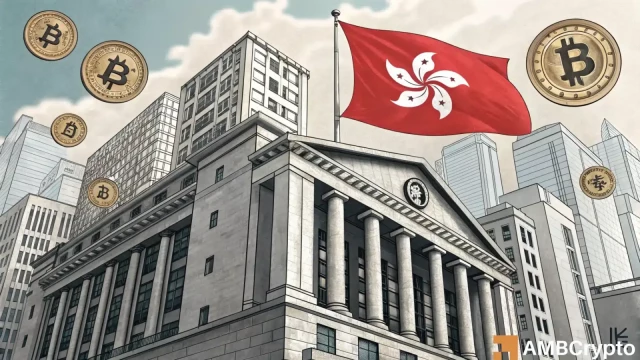
Institutional Legitimacy: HSBC and Anchorpoint Financial Secure Hong Kong’s First Stablecoin Sandbox Licenses

HSBC and Anchorpoint Financial have become the first entities to receive stablecoin issuer licenses under Hong Kong’s regulatory sandbox, marking a major step toward institutionalizing digital assets in the region.
A New Era for Digital Assets in Hong Kong
Hong Kong’s vision to transform into a global hub for digital assets achieved a significant milestone this week as the Hong Kong Monetary Authority (HKMA) granted the region's first stablecoin issuer licenses under its regulatory sandbox. HSBC, the global banking behemoth, and the boutique firm Anchorpoint Financial have emerged as the inaugural participants, signaling a pivotal shift in how traditional financial institutions engage with the burgeoning stablecoin ecosystem.
This development marks the first tangible execution of the HKMA’s stablecoin issuer sandbox, a program designed to foster innovation while ensuring robust investor protection and systemic stability. By integrating established banking giants alongside specialized financial firms, regulators are attempting to strike a delicate balance between encouraging blockchain-based payment efficiency and maintaining the stringent oversight synonymous with Hong Kong’s financial sector.
The Regulatory Sandbox: Why It Matters
The HKMA’s stablecoin sandbox is not merely a pilot program; it is a strategic framework meant to stress-test the operational and risk-management capabilities of issuers before they are granted full-scale operating licenses. For traders and institutional investors, the inclusion of HSBC—a bank with a massive global footprint—provides a level of institutional validation that has historically been missing from the private stablecoin market.
For participants, the sandbox requires strict adherence to capital reserve requirements, reserve management transparency, and anti-money laundering (AML) protocols. The goal is to ensure that any stablecoin issued under this regime can maintain a true 1:1 peg to its underlying fiat currency, effectively insulating the broader financial system from the volatility and liquidity crunches that have plagued offshore, unregulated stablecoin projects in the past.
Market Implications: Stability vs. Innovation
The market’s reaction to this news hinges on a central tension: will the heavy hand of banking regulation stifle the very innovation that makes stablecoins attractive? Proponents argue that the involvement of banks like HSBC will provide the necessary infrastructure for institutional-grade adoption, potentially opening the door for cross-border payment settlements that are faster and cheaper than traditional SWIFT-based transfers.
Conversely, critics in the decentralized finance (DeFi) space worry that banking-led stablecoins may lack the agility and interoperability of their crypto-native counterparts. However, from a risk-management perspective, the presence of audited reserves and clear regulatory recourse is a massive upgrade for institutional capital, which has long been sidelined by the fear of counterparty risk in the crypto sector.
What Traders Should Watch Next
For investors and traders, the immediate focus should be on the operational rollout of these assets. The success of the HSBC and Anchorpoint projects will likely set the gold standard for future applicants. Key metrics to monitor include:
- Reserve Transparency: How frequently will these issuers provide attestations, and what assets will constitute their reserves?
- Liquidity Depth: How easily can these tokens be traded against major fiat pairs and other digital assets?
- Regulatory Evolution: Will the HKMA expand the scope of the sandbox to include yield-bearing stablecoins, or will it remain strictly focused on payment-based instruments?
As the sandbox progresses, the HKMA is expected to refine its legislative framework, moving toward a permanent, full-scale regulatory regime for stablecoins. This will be the ultimate test of Hong Kong’s ambition to compete with other jurisdictions like Singapore and the European Union, which are also racing to establish clear rules for digital fiat representations.
While the industry waits for the first tokens to hit the market, the entry of HSBC and Anchorpoint Financial confirms one thing: the era of the 'Wild West' for stablecoins is rapidly closing in Hong Kong, replaced by an institutional framework designed to bridge the gap between traditional banking and the digital future.