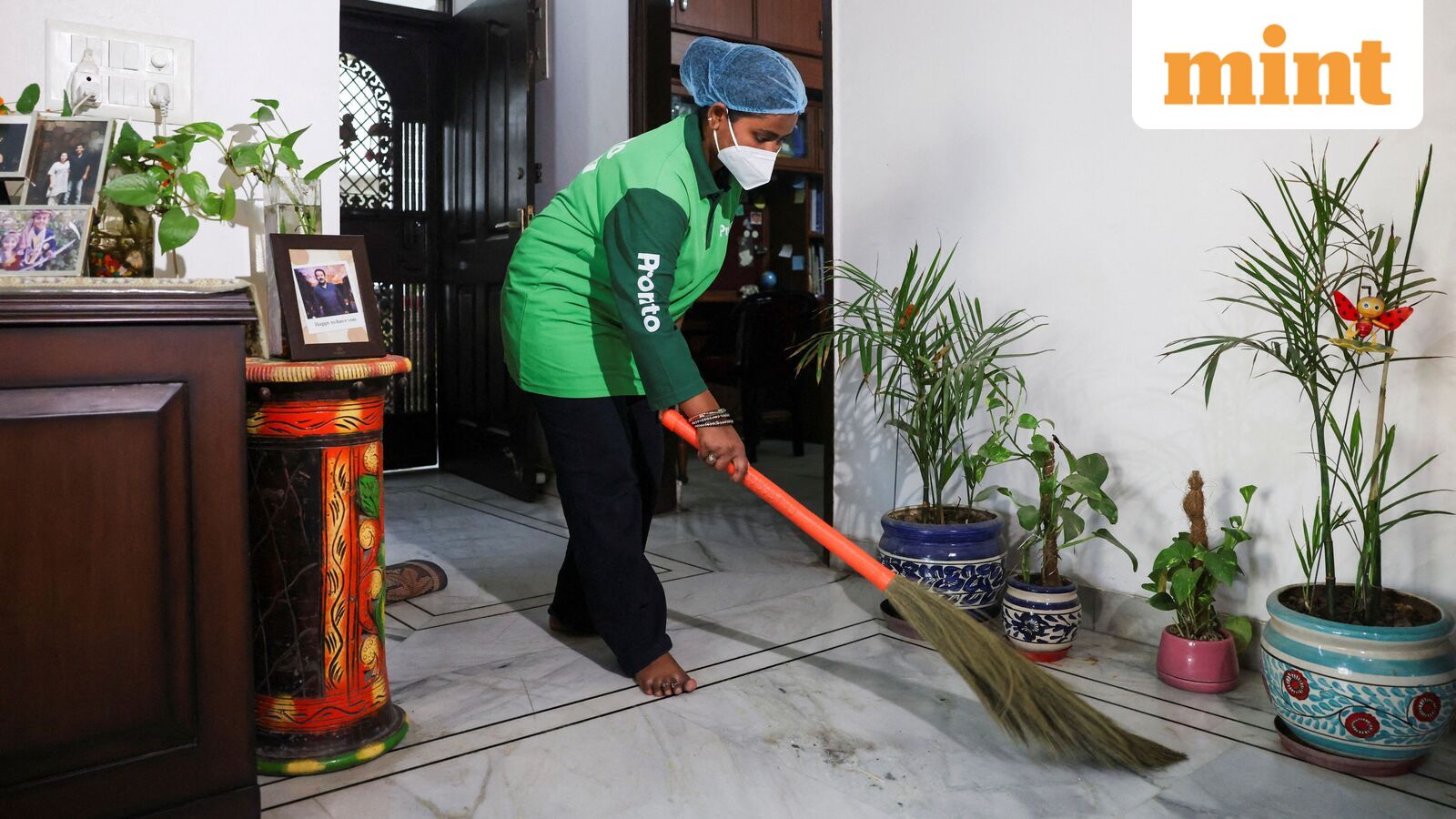
Snabbit, Pronto, and Urban Company's InstaHelp may need to nearly double prices to turn profitable. The math fails when workers have to travel more than 400 meters between jobs, according to industry executives and analysts.
Each worker now completes 8-10 jobs over about 9.5 hours a day, keeping the all-in servicing cost at ₹95-100 per hour. That is close to what customers pay in many cases. The model works only in dense micro-markets where jobs cluster within a 300-400 meter walking radius.
“Anytime a professional has to go beyond 400 meters per job, the model breaks, because utilization per professional then deteriorates,” said an executive familiar with Snabbit’s operations. Most platforms do not want their workers covering more than 400 meters on foot, the executive added.
Expansion into lower-density areas such as Jayanagar, Cox Town, and Kalyan Nagar in Bengaluru has been harder. A Snabbit spokesperson said those areas are “horizontally spread out,” so the average travel distance between jobs can be marginally higher, leading to slightly longer expert arrival times. “Density is a key determinant of whether a hyperlocal market is viable,” the spokesperson added.
A senior executive at Pronto said the platform tried to expand into areas within Indiranagar and HAL. “Though demand exists, the travel distances have been higher–1-3 km or more–and serving such demand at current rates of below ₹100 per job is not really making sense at our economic level.”
Urban Company’s June-quarter results show the scale of the challenge. InstaHelp fulfilled about 3.8 million jobs in the quarter, up from 2.6 million a quarter ago. Average order value fell to ₹138 from ₹150. Per-order Ebitda loss stood at ₹346, compared with ₹447 in the previous quarter. The loss was as high as ₹1,374 in the first quarter of 2025-26, when InstaHelp launched.
Urban Company attributed the AOV decline to high competitive intensity. “In this phase of category development, we are prioritizing market leadership over everything else,” it said.
Pradyumna Nag, founder of Prequate Advisory, said the model will likely turn profitable only at around ₹180-200 per hour. At ₹100 per hour, the monthly take-home for a worker comes to just ₹22,000-25,000, because a significant portion of customer payments goes toward platform commissions, marketing, and travel costs.
Pranay Jain, managing director at Avendus Capital, said utilization is about 40% on average, 20% in newer cities, and 50% in the best micro-markets. “As utilization rises to 75-80%, which is achievable, supply costs will be spread across more jobs, and the cost of supply can fall sharply.”
Current prices are designed to induce trials and customer adoption, Jain said. As platforms mature, they are likely to improve monetization through complex services, premiumization, and convenience offerings such as 10-minute fulfillment in dense micro-markets.
Snabbit has raised $112 million across five rounds, with its latest Series D closing on April 28, 2026. Pronto has raised $60 million across four rounds. Urban Company said it is “investing aggressively to cement market leadership and will continue to do so.”
Mint estimates Snabbit handles about 1.51 million jobs monthly, InstaHelp roughly 1.27 million, and Pronto around 1.25 million. Snabbit is available in 10 cities, Pronto in 11, and InstaHelp in five major cities.
Workers earn about ₹35,000-40,000 a month while working an average of 9.5 hours a day, including travel time. The Snabbit spokesperson said the median distance traveled between two jobs is currently about 250 meters. “As density within a micro-market improves, this distance can reduce further, helping experts spend more time on paid work and less time travelling.”
The Snabbit executive said expansion will require built-in pricing, including monthly packs, peak and surge pricing, and investment in personal mobility to help professionals move faster on the ground.