Commodities● Neutral
Inflation Fears Cloud Industrial Metals as Ranges Tighten
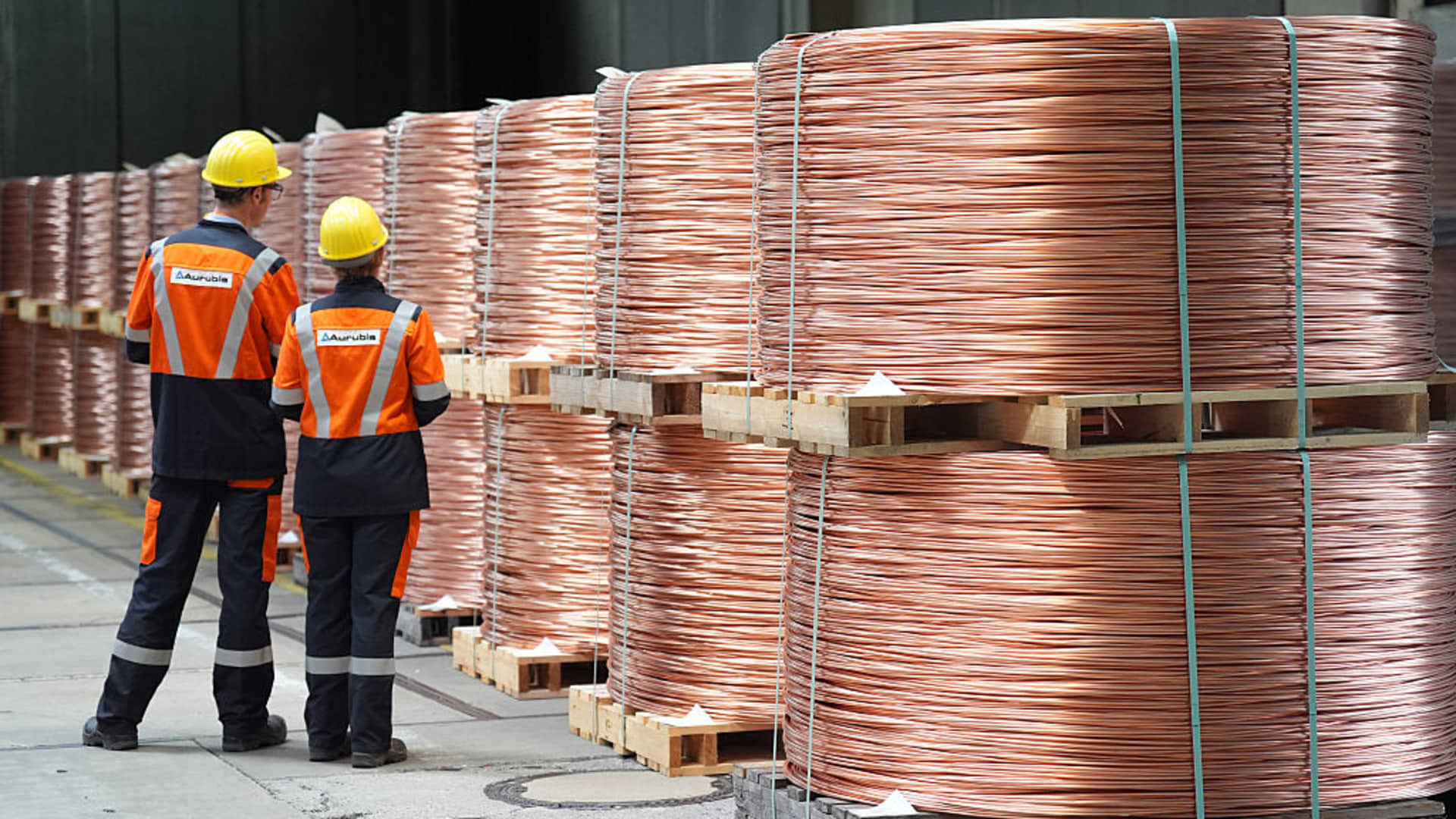
Copper consolidates in $13,200-$13,800 as inflation fears clash with supply disruptions. Two conditions needed for a breakout: stable yields and Chinese recovery.
Continue with
Copper Consolidates in a $13,200–$13,800 Range
Copper futures for August delivery dropped 1.3% on the London Metals Exchange on Tuesday before rebounding 0.5% on Wednesday to $13,477 per ton. Aluminum, nickel, tin, and zinc have oscillated between gains and losses in the same sessions. The moves track broader volatility in global bond and equity markets, with U.S. Treasury yields climbing to multi-decade highs on rising inflation expectations.
Analysts told CNBC the outlook for many industrial metals was being clouded as complications unfolded on both the supply and demand sides. The simple read is that inflation fears are crushing demand expectations. The better market read is more layered.
The Macro Background: Yields, Dollar, and China
Higher Treasury yields support a strong U.S. dollar, which triggers periodic profit-taking across long copper positions. Charles Cooper, head of copper research at Wood Mackenzie, described a "stark divergence between U.S. and Chinese bond markets" driving heavy fund volatility.
"In the US, rising inflation expectations are pushing Treasury yields higher, supporting a strong U.S. dollar and prompting periodic profit-taking across long copper positions," he said. "Conversely, Chinese government bond yields are hovering near historic lows, signalling a sluggish domestic manufacturing and property sector that is currently struggling to provide the physical demand required to support a sustained next leg higher."
Cooper added that high absolute prices have triggered a wave of demand caution in China's spot market, allowing broader macroeconomic headwinds to drive aggressive two-way volatility. He sees copper consolidating in a $13,200–$13,800 per ton range. Further upside requires two conditions: stabilization in global bond yields and a clearer recovery in Chinese industrial activity.
Supply Disruptions That Refuse to Ease
The physical market remains highly sensitive to ongoing supply-side disruption risks. A return to full operations at the world's second-biggest copper mine, Grasberg in Indonesia, has been delayed to 2028 following a fatal mudslide in 2025. Flooding at the Kamoa-Kakula mine in the Democratic Republic of Congo and an accident at the El Teniente mine in Chile also impacted supplies last year.
Many physical copper supplies remain concentrated in U.S. warehouses following tariff-driven stockpiling, limiting availability to the broader market. This concentration creates a two-sided risk: any easing of trade tensions could release inventory into global markets, while any escalation could tighten supply further.
Aluminum Faces Hormuz-Driven Supply Risk
Aluminum faces a structurally tight supply set against weak end-demand in Europe and North America, according to Shashank Sriram, senior metals analyst at Wood Mackenzie. Around 9% of global aluminum supply comes from the Gulf, and most firms there have been unable to export the metal beyond the region since Iran effectively closed the Strait of Hormuz.
"As the conflict persists, supply risks are becoming more entrenched," Sriram told CNBC. "Even in a scenario where the Strait reopens, the supply shock is not quickly reversible – beyond shipping dislocations and raw material disruptions, the restart of smelters following both controlled shutdowns and uncontrolled damage will be gradual, which means recovery will be phased rather than immediate."
Wood Mackenzie sees insufficient demand-side momentum to sustain a move toward $4,000 per ton in the near future. The supply disruption is real, without demand to absorb higher prices the rally stalls. For more on the Hormuz impact, see UAE Bypass Pipeline at 50% as Hormuz Closure Reshapes Oil Risk.