Commodities● Neutral
Constellation (CR1) Confirms Methane, Helium in New Permit SPA-0143
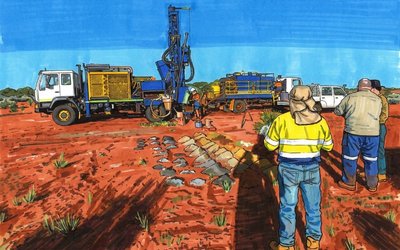
CSIRO core from WHRD021 shows sustained gas flow with up to 97% methane. Constellation Resources (CR1) advances NatH2 play with surveys targeting 2H26.
Continue with
Constellation Resources (ASX: CR1) has confirmed the presence of methane, helium, and ethane in its newly awarded exploration area SPA-0143, based on CSIRO analysis of a diamond drill hole. The finding moves a historical gas seep from anecdote to quantified prospectivity. The next step depends on permitting approvals and planned ground surveys in the second half of 2026.
SPA-0143: A Gas System Supported by Core Evidence
The core technical evidence comes from CSIRO examination of diamond drill hole WHRD021. Gas was observed venting from the collar over an eight-month period. Sampling revealed repeated venting with high air-corrected values of up to 97% methane and 0.24% helium. The presence of ethane (C2H6) further supports a thermogenic or mixed gas system rather than a purely biogenic source.
CSIRO Analysis Validates Historical Seep
The sustained gas flow over eight months indicates that the formation is actively feeding gas to surface. Air-correction removes atmospheric contamination, so the measured values reflect true reservoir composition. 97% methane plus measurable helium and ethane aligns with the characteristics of a conventional gas accumulation that may also host natural hydrogen.
The CSIRO has previously reported that its study results from the Edmund-Collier project consistently support the generation and migration of hydrogen, helium, and associated gases within historical diamond drill holes. WHRD021 extends that pattern to SPA-0143.
AMOCO Ignition as Supporting Data
AMOCO drilling in the same region intersected combustible gas at approximately 300 metres depth, leading to a surface ignition event. This historical data point, when combined with the CSIRO findings, suggests an active gas system with sufficient pressure and volume to reach the surface.
The Permit Pathway: Preferred Applicant Status Granted
Constellation Resources has secured preferred applicant status from the Department of Mines, Petroleum and Energy (DMPE) on 19 May 2026 for STP-SPA-0143, which adjoins the existing permit SPA-0119. Formal tenure is the next administrative step.
DMPE Decision on 19 May 2026
Granting preferred applicant status does not immediately unlock field work, it clears the way toward a formal exploration licence. The company now holds three linked permits for its NatH2 play: SPA-0118, SPA-0119, and SPA-0143.
Native Title Approvals as Gatekeeper
Native title approvals have been obtained for SPA-0118 and SPA-0119. On-ground activities for these two permits are expected to be approved shortly. SPA-0143 will require its own native title agreement before surveys can start.