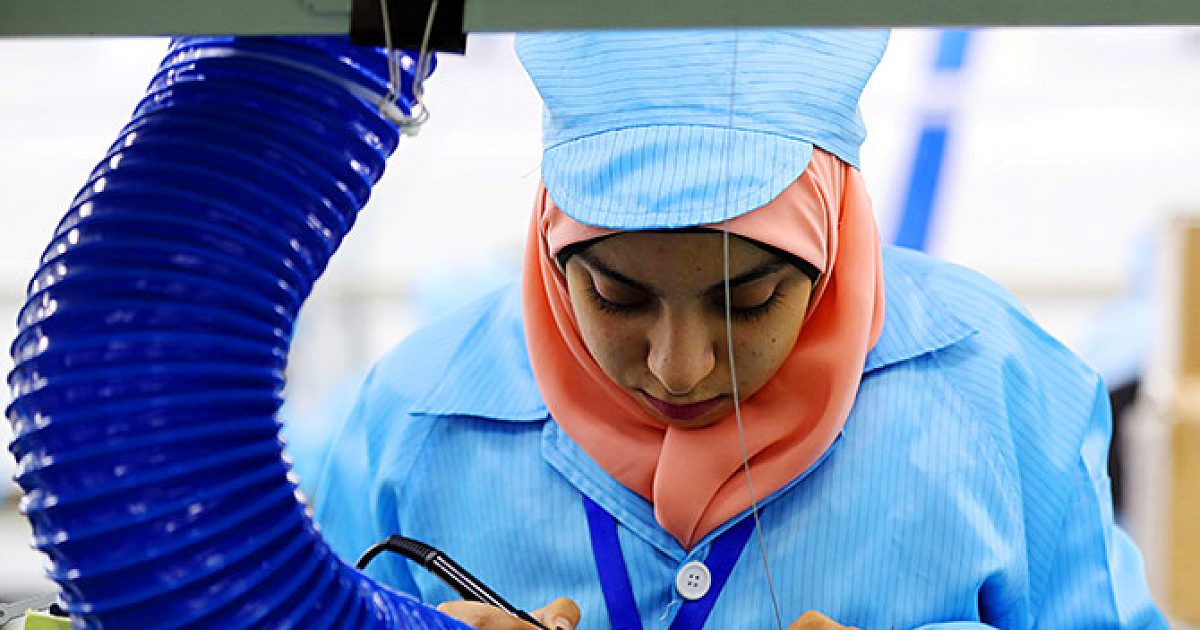
India has launched a Rs 62,500 crore production-linked incentive scheme for mobile phone manufacturing, setting steep sales thresholds and a mechanism designed to push Indian brands into the global segment.
The Mobile Phone Manufacturing Scheme (MPMS), announced Friday, runs from FY27 to FY31. It offers incentives of 2.5% to 5% on incremental sales, with extra benefits for manufacturers that source more components domestically. The goal is to deepen local value addition and seed an Indian smartphone brand that can compete at scale, the electronics and IT ministry said.
"We are very closely coordinating with the industry and we hope that during the tenure of this mobile phone manufacturing scheme, we have good success on having an Indian brand as well," Minister Ashwini Vaishnaw said. The government is in talks with three Indian players and expects a final product within 18 months, he added.
The eligibility bar
To qualify, companies must be registered in India and show turnover of Rs 10,000 crore in FY26. The scheme uses a moving baseline: a brand's eligible sales in any given year are its domestic sales minus the prior year's figure plus 15%. On top of that, companies must grow by at least Rs 5,000 crore each year, rising to Rs 25,000 crore in incremental sales by FY31.
New brands don't get a grace period. They must hit Rs 10,000 crore in annual domestic sales before becoming eligible, then face the same year-on-year growth thresholds.
The supply-chain angle
The MPMS targets two segments: phone manufacturing broadly and Indian-brand phones specifically. By rewarding domestic sourcing of key components, the scheme aims to pull in component makers and EMS (electronics manufacturing services) firms that currently operate at lower levels of local value addition.
Smartphones became India's single-largest export category in 2025, overtaking diesel fuel and cut diamonds, the ministry noted. Electronics manufacturing has grown seven times and exports 11 times since FY15. The scheme is an attempt to lock in that growth before tariff advantages erode or global supply chains shift again.
Who benefits
For existing manufacturers, the scheme rewards incremental output above the 15% baseline. Companies with established scale–like Foxconn's Indian arm, Wistron (now in Tata's hands), or Samsung's local unit–can layer the incentive on volume they already plan to add. The risk is that the progressive threshold penalises any year where sales growth slows below 15% plus the absolute Rs 5,000 crore requirement.
For the three Indian players in talks with the government, the scheme offers a direct route: volume subsidies tied to scale rather than equity. Vaishnaw said the challenge to these companies was to produce a design that matches global best-in-class across economy, premium, and super-premium segments. "These players have suggested that they would like to opt for the segment that has high volume," he said.
Component suppliers, die-casters, and PCB fabricators that feed into mobile phone assembly are watching the domestic-sourcing add-on closely. If the government makes the incentive structure steep enough to pull procurement away from China and Vietnam, the entire Indian electronics ecosystem could shift faster than the current 15-18% local value-add suggests.
The moving baseline creates a peculiar incentive: a manufacturer who scales aggressively in FY27 raises its own bar for every subsequent year. The scheme rewards continuous acceleration, not steady growth. That suits a new entrant better than an incumbent sitting on high market share.
"The design has to match the best in the sector," Vaishnaw said. The scheme is now open for applications. No closing date has been set.