India's LPG-to-PNG Push Accelerates as West Asia Conflict Hits Supply
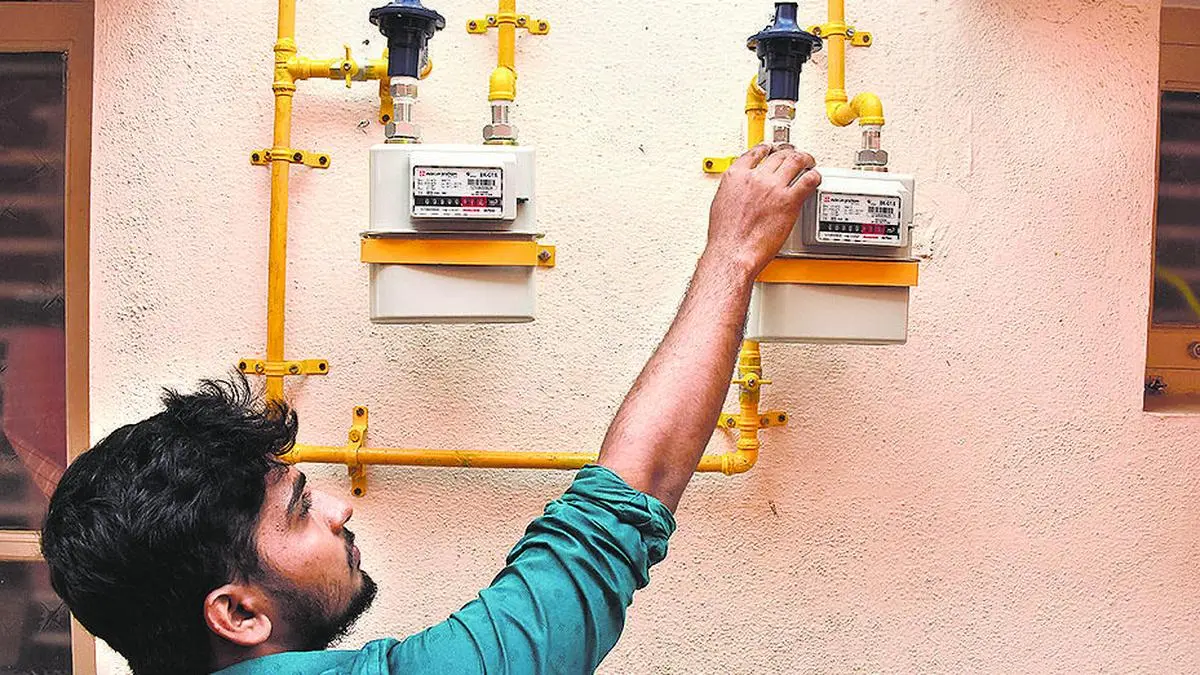
Oil Ministry pushes for faster conversion of 21 lakh households to PNG as LPG under-recovery swells to ₹59,000 crore. Details on affected stocks and policy timeline.
India’s oil ministry is pressing for a faster conversion of household LPG consumers to piped natural gas (PNG) as the West Asia conflict disrupts supply routes that feed roughly half of the country’s LPG consumption, according to a government review meeting held this month. The push comes as the cost of a 14.2 kg domestic LPG cylinder hit ₹1,600 in June 2026, while state-run oil marketing companies (OMCs) sold it at ₹942 to general consumers and ₹642 to PM Ujjwala households, widening under-recoveries.
Senior ministry officials told OMCs and city gas distribution (CGD) entities to treat the conversion as a “war footing” priority, given LPG’s dependence on the Middle East Gulf region. The meeting identified roughly 21 lakh households where PNG infrastructure is already in place and directed CGD operators to connect them immediately to the Domestic PNG (D-PNG) network.
According to the latest Petroleum and Natural Gas Regulatory Board (PNGRB) data, India had 1.74 crore domestic PNG connections as of June, against a pro-rata target of 4.41 crore, a 39% achievement rate. About 1.50 lakh connections were added in June alone. The top three geographical areas (GAs) accounted for roughly 20% of the monthly additions. The NCT of Delhi GA, authorised to Indraprastha Gas (IGL), recorded the highest number, followed by Ahmedabad City and Daskroi Area GA (authorised to Adani Total Gas) and Vadodara (Vadodara Gas).
The year 2026 marks a turning point for the CGD sector, which began with the PNGRB’s PNG National Drive 2.0 to expand the consumer base. The West Asian conflict added urgency, as the government seeks to conserve LPG by accelerating D-PNG adoption.
Exposure: OMCs and CGDs
The under-recovery for PSU OMCs, the gap between the subsidised selling price and the market cost, swelled to more than ₹59,000 crore in July 2026, up from over ₹51,000 crore in June. The retail selling price of a domestic LPG cylinder in Delhi has been held at ₹942 since June, carrying an implicit subsidy of more than ₹700 per cylinder in June and ₹500 per cylinder in July. By August, the implicit subsidy had narrowed to ₹188 per cylinder.
For CGD entities like IGL and Adani Total Gas, the policy push creates a direct demand catalyst: faster household connections translate into higher volume growth and infrastructure utilisation. However, the pace of conversion depends on gas availability, pipeline reach, and household willingness to switch.
What would reduce the risk
A sustained de-escalation in the West Asia conflict would ease LPG supply constraints and reduce the urgency of the conversion drive, lowering OMCs’ under-recoveries. Successful execution of the 21-lakh household shift, combined with the broader PNGRB drive, would cut India’s LPG import dependence and stabilise the subsidy burden.
What would make it worse
An escalation of the conflict, particularly a disruption in Strait of Hormuz transits, could push LPG prices higher, widening the under-recovery further and forcing deeper subsidy cuts. Slow infrastructure rollout or household resistance to PNG conversion would prolong the LPG vulnerability, keeping OMCs’ subsidy costs elevated and supply chains exposed.
Timeline
The PNGRB’s PNG National Drive 2.0 runs through 2026, with quarterly targets. The next review of LPG pricing and subsidy levels is expected when the ministry updates the retail selling price, likely in September. The West Asia conflict remains the primary external variable.
Drafted by a large language model from the source reporting linked above, then screened by automated publishing checks. It is not read by a journalist before publication. Some articles cite our Alpha Score. Verify prices and figures against the original source. Educational coverage, not personalized advice.