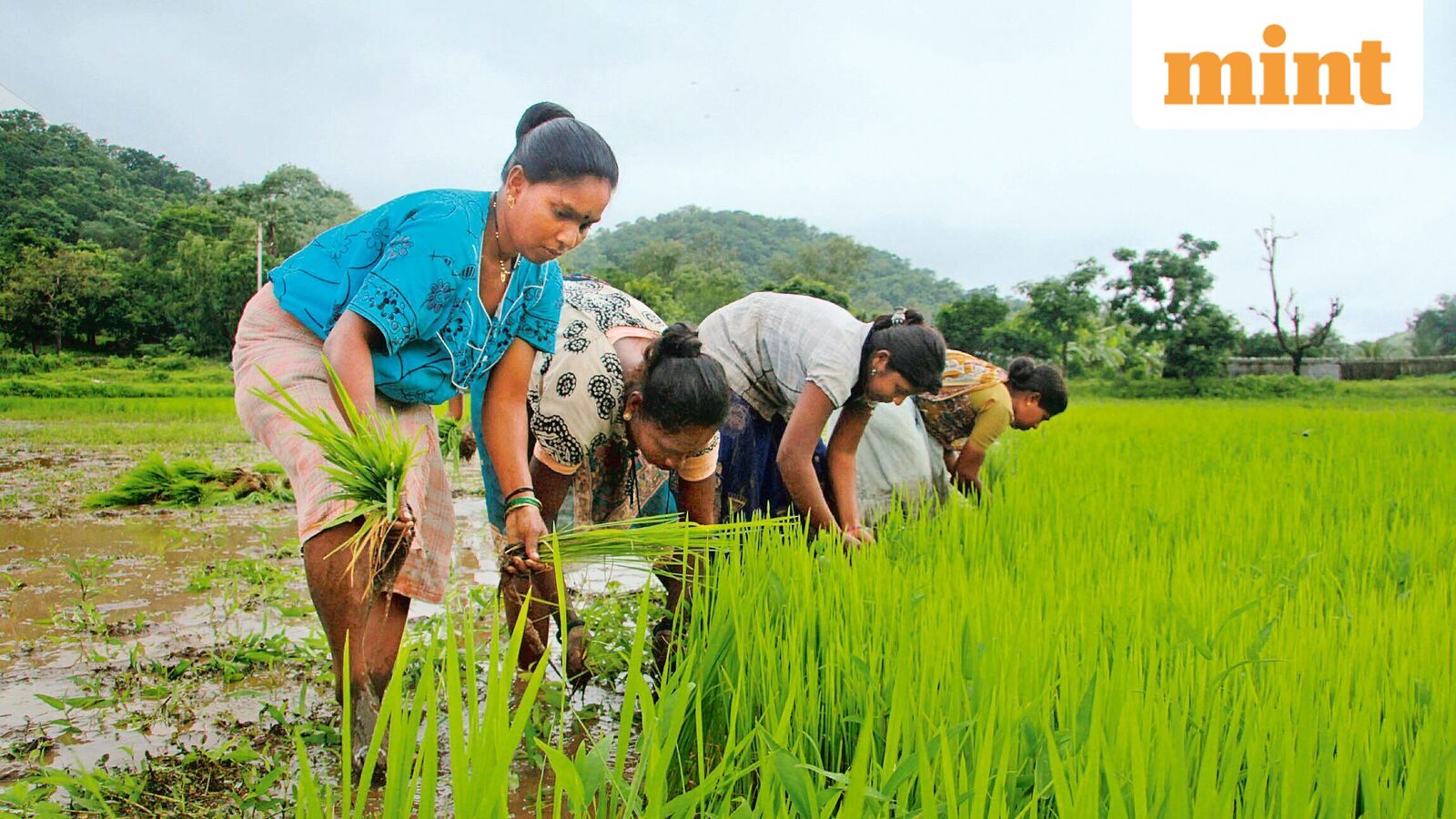
From 25% to 40% participation in six years. Former chief statistician argues the rise in women's work is a policy-driven trend, not a statistical artifact.
India's female labor force participation rate has climbed from roughly one-quarter of working-age women in 2017-18 to above 40% in the latest Periodic Labour Force Survey data. The increase has been especially pronounced in rural India.
Two criticisms have trailed the numbers. The first is methodological. Changes in instructions given to PLFS field investigators in 2023-24 may have improved identification of subsidiary economic activity among women who previously reported only domestic duties. That could raise measured participation, some argue.
Former chief statistician T.C.A. Anant, now a visiting professor at the Institute for Studies of Industrial Development, rejected that reading. Female participation was rising for several years before 2023-24 and continued to rise after, he wrote in an essay for Mint. "Better probing may affect the level at the margin," he said. "It cannot plausibly explain an eight-year trend."
The second criticism is more substantive. Much of the increase has occurred in self-employment, including women classified as helpers in household enterprises. Since these women may not receive a separate wage, the rise is sometimes interpreted as evidence of distress rather than an improvement in employment opportunities.
Anant pushed back on that view. "'Unpaid' is a description of how income is distributed within a household enterprise," he wrote. "It is not a statement that the work produces no economic value." A woman working in a family dairy, for example, may not draw a salary, yet she feeds and cares for cattle, cleans sheds, milks animals and takes the milk to a collection centre, he said. The income accrues to the household, even if the enterprise's bank account or formal identity is in the name of a male relative.
He cited independent evidence that points the same direction. India has spent more than a decade encouraging women-led livelihood activity through the National Rural Livelihoods Mission, launched in 2011. By mid-2025, ministry of rural development data reported more than 100 million rural women mobilized into roughly 9.1 million self-help groups, up from around 46 million rural households in 2017-18. Livestock, especially dairy, poultry and goat-rearing, along with food processing, has been a core part of the strategy.
India's Time Use Survey tells a similar story. Time devoted to employment and production of goods for own final use rose from 84 minutes per day in 2019 to 94 minutes per day in 2024. "The labour survey, time-use survey and the NRLM administrative system are different sources," Anant noted. "Yet they all point towards an expansion of women's economic activity in rural India."
Government programs have supported households in acquiring milch animals, goats and poultry, while women provide much of the labour. The resulting income may accrue to the household enterprise even if no explicit wage is paid to the woman, he said. Animal husbandry provides the most plausible connection between the policy effort and the rising participation numbers.
Anant did not dismiss the possibility of distress. "None of this means that distress is absent from rural India, or that every increase in female self-employment represents a high-quality job," he wrote. Nor does a rise in labour force participation tell enough about women's control over the income they help generate, he said. Those are important qualifications. "They are different from concluding that the measured increase in women's work is merely statistical or is necessarily a sign of distress."
He argued that the convergence across sources suggests a long-term policy effort to expand women's livelihood opportunities may finally be registering in aggregate labour-market statistics. "Future data on farm household incomes and the contribution of livestock and allied activities to it should allow this proposition to be tested more directly," Anant said.
Even after the recent rise, women's labour force participation remains far below men's. That gap represents a large reservoir of potential household income and economic output, he said. Many rural women cannot easily spend long stretches of the day away from household responsibilities, so livelihood opportunities need not all resemble conventional salaried employment. Animal husbandry, food processing and other home- or village-based enterprises can allow productive work alongside time constraints, he wrote.
The main challenge, Anant said, is not simply to get more women counted as workers. "It is to raise the productivity, earnings and agency associated with the work they are already doing: through better access to credit and markets, stronger producer organizations, improved technology and greater ownership and control of productive assets."
Drafted by a large language model from the source reporting linked above, then screened by automated publishing checks. It is not read by a journalist before publication. Some articles cite our Alpha Score. Verify prices and figures against the original source. Educational coverage, not personalized advice.