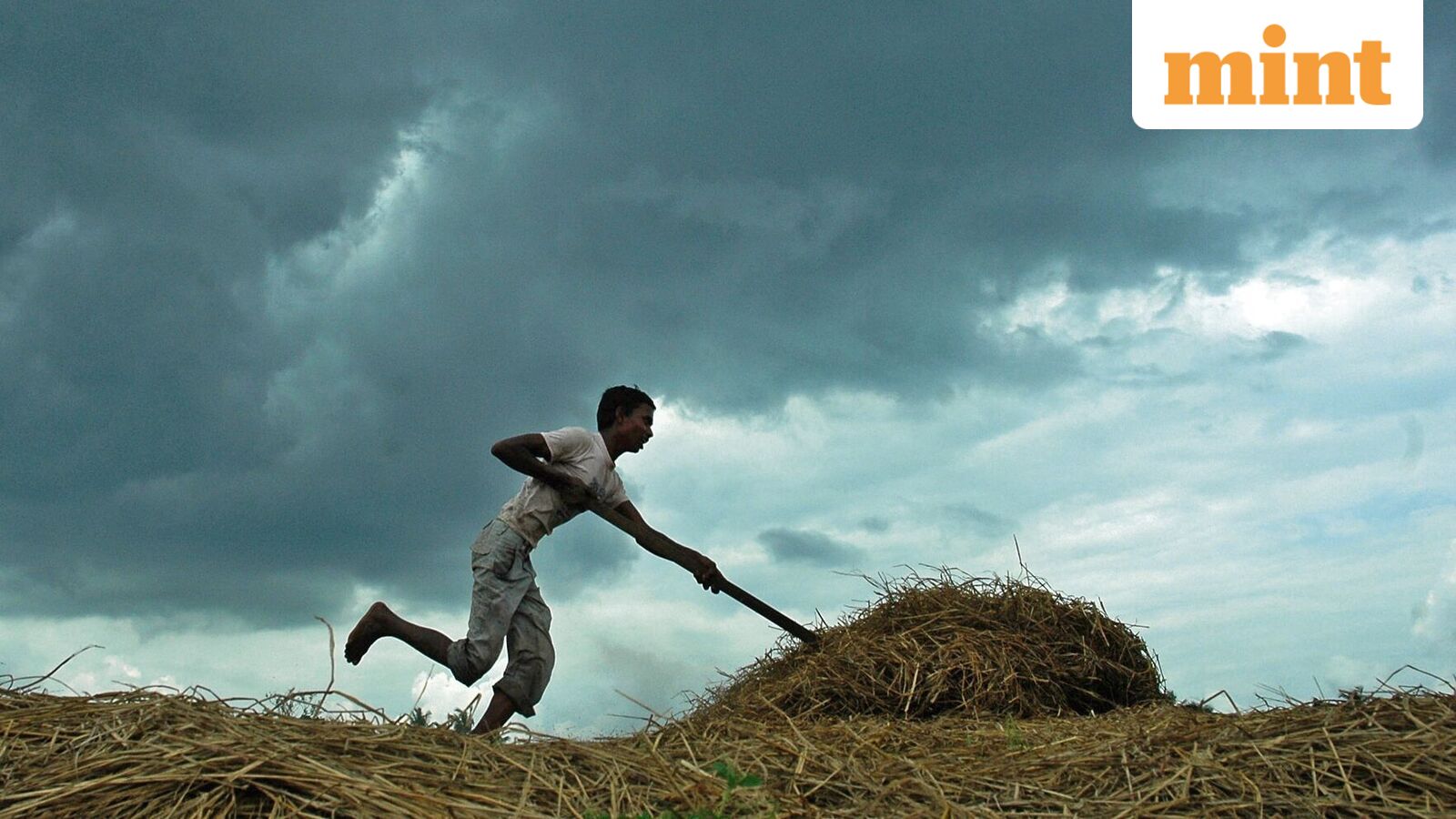
June rainfall fell 40% below normal. Agricultural GVA still grew 3.8% in recent weak monsoon years, CareEdge data shows. Food inflation at 5.3% threatens to rise further.
June rainfall in India fell 40% below normal. July rains picked up, leaving a cumulative deficit that still threatens kharif sowing – down 16% from last year as of July 10. The India Meteorological Department projects a sub-normal monsoon at 90% of the long-term average, citing El Niño.
That pattern would have devastated agricultural output a few decades ago. The link between rainfall and farm growth has weakened sharply, according to economists at CareEdge Ratings. Their analysis, using 20-year rolling regressions, shows that in the two decades ending 1984-85, sub-normal rainfall years saw agricultural gross value added (GVA) contract an average of 4%. By the 2005-15 period, the same deficit produced growth of 1.3%. In the most recent decade ending 2024-25, agricultural GVA expanded 3.8% even in bad monsoon years.
Several structural factors explain the shift. Irrigation coverage rose from 17% of gross sown area in 1950-51 to nearly 60% by 2023-24. The government released 2,996 climate-resilient crop varieties between 2014 and 2025 under the National Agricultural Research System. Farmers have also diversified income. Livestock's share of agricultural income climbed from 24% in 2011-12 to 33% in 2023-24. Fisheries and aquaculture rose from 4.4% to 7.5%. The share from crop production fell from 63% to 53%.
Despite that diversification, crop production still accounts for more than half of farm income. Rural livelihoods remain exposed to a poor monsoon, the CareEdge economists said. The bigger concern now is inflation.
Consumer price data for June showed food inflation jumping to 5.3% from about 3% in the first quarter. CareEdge expects food inflation to hit around 7% in the October-December quarter and average 6% for the full fiscal year 2026-27. El Niño-driven heatwaves can hit perishables such as tomatoes and potatoes, which have triggered spikes before. Pulses are another risk. A Niti Aayog report found that 15 El Niño episodes since 1951 led to lower pulse acreage and productivity. Edible oil inflation is already 10% and could rise further because El Niño affects palm oil output in Malaysia and Indonesia.
Some buffers exist. Grain stocks stood at record levels at the end of April, giving the government room to manage production shortfalls. Global commodity prices have been stable, and past episodes of deficient rainfall did not always produce runaway food inflation, the economists wrote. Still, the spatial and temporal distribution of rain in the coming weeks will determine whether the risks materialize.
Agriculture contributes 18% of India's economy but employs 43% of the workforce. Any hit to rural incomes flows through to consumption demand. The monsoon's path from here will shape both the inflation outlook and the broader economic picture.
Drafted by a large language model from the source reporting linked above, then screened by automated publishing checks. It is not read by a journalist before publication. Some articles cite our Alpha Score. Verify prices and figures against the original source. Educational coverage, not personalized advice.