Commodities● Neutral
India's Exam Leak Exposes a Deeper Jobs Crisis for Gen Z
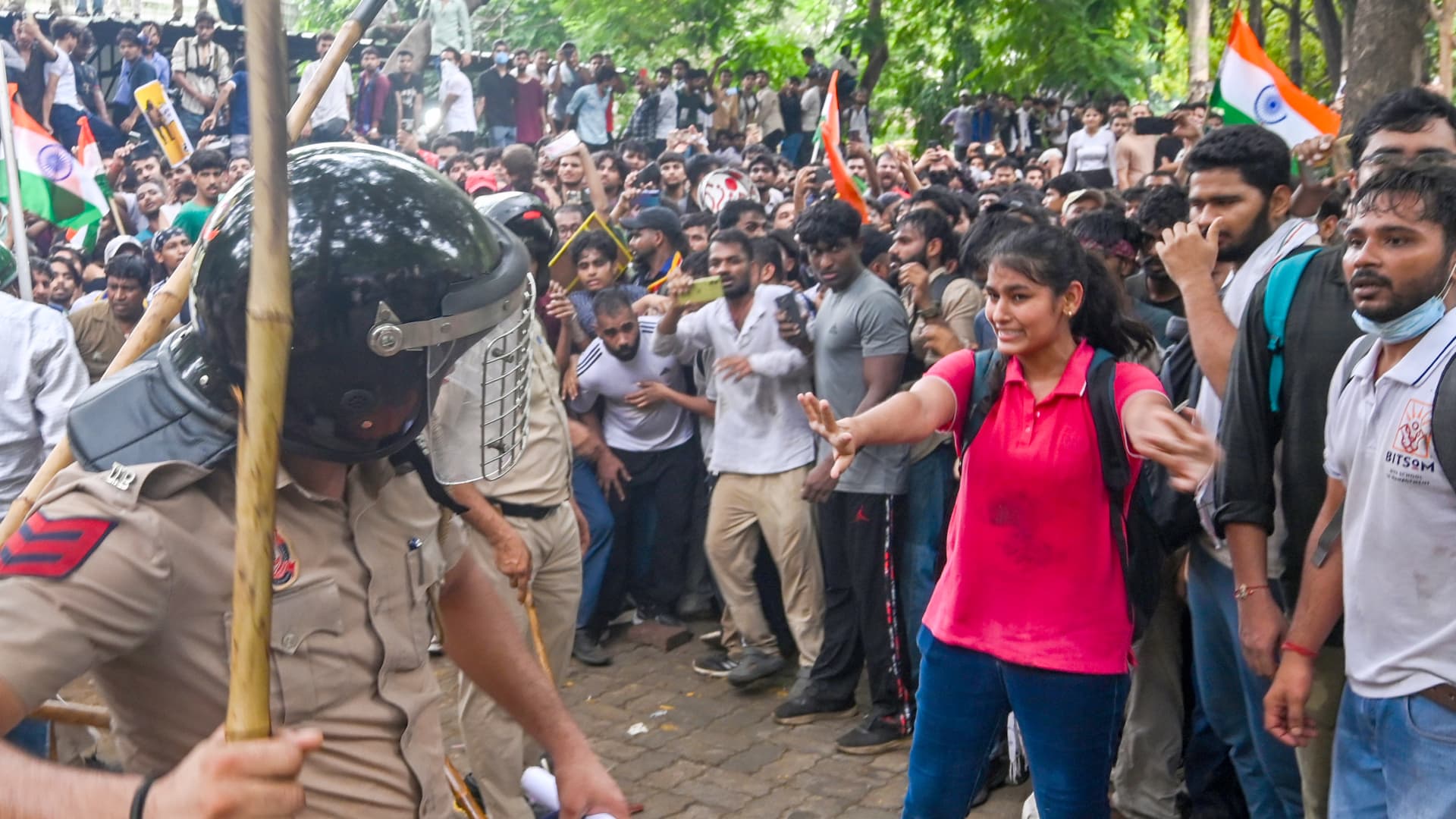
Graduate unemployment near 40% and a glut of applicants for scarce secure jobs fuel protests after medical exam leak. Economists warn of demographic burden.
Continue with
Thousands of students took to the streets in Delhi and Bengaluru in July after a leaked paper forced a retest of India's medical entrance exam. Police fired tear gas. A satirical youth movement called the Cockroach Janta Party went viral.
The exam scandal was the trigger. The underlying anger runs deeper.
Graduate unemployment among 15-to-25-year-olds sits near 40%, according to the State of Working India 2026 report. Graduates made up two-thirds of the country's unemployed in 2023. India produces roughly 5 million graduates a year. Only 2.8 million find jobs, the same report showed. Secure, well-paid work is scarce.
For millions of young Indians, the path to a stable career runs through a handful of ultra-competitive entrance exams – the NEET for medicine, the JEE for Indian Institutes of Technology, the UPSC for civil services. The number of NEET applicants rose 50% between 2019 and 2026, to over 2.2 million, National Testing Agency data show.
“In a country where nearly one in two graduates is not getting a job, young people are choosing routes like the NEET that guarantee one,” Neelanjan Sircar, an associate professor at Ahmedabad University, told CNBC.
The competition creates immense pressure. More than 20 students died by suicide after the May leak, according to local reports. Even scoring well does not guarantee a place. Seventeen-year-old Dimpy Gola took the NEET twice this year and did not score high enough for a medical college seat. She plans a gap year and another try. “Even with a master's and a PhD, my prospects would be uncertain,” she said.
The jobs problem has been building for years. Higher education expanded rapidly after 2004. Job creation lagged. Alex Hermann Prasad, lead economist at Oxford Economics, told CNBC the root cause is the limited supply of “secure, well-paid jobs.”
Prime Minister Narendra Modi inherited these structural challenges when he took office in 2014. His political appeal rested on promises of economic transformation and better employment. Progress has been uneven, economists said. India's shift from agriculture into manufacturing has been slower than hoped.