India is moving faster than planned on alternative fuels. The world’s third-largest crude consumer made 20% ethanol blending in petrol mandatory five years early. It is scaling up compressed biogas and last week ran its first hydrogen-powered train. The government is also considering mixing 15% isobutanol into diesel, local media reported.
The push reflects a real squeeze. Crude has climbed over 25% this month after U.S.-Iran tensions flared. Kpler, the energy intelligence firm, has warned that prices could top $100 a barrel if both the Red Sea and the Strait of Hormuz close. Russian oil accounted for more than half of India’s crude imports in June. In the first 15 days of this month, India bought 2.6 million barrels of Russian oil per day – over half its crude imports, Sumit Ritolia, lead research analyst at Kpler, told CNBC.
That reliance on Moscow carries its own risk. Washington has proposed 100% tariffs on buyers of Russian oil unless peace is made with Ukraine by September. The threat hangs over every barrel India takes from Russia.
High oil prices have already hit India’s public finances. Consumer inflation pushed above 4%, the highest in 27 months. India meets about 88.5% of its crude needs through imports. Any fuel that partly substitutes crude provides relief.
“Ethanol blending has emerged as one of India’s most effective crude oil substitution strategies,” Pankaj Srivastava, senior vice president of commodity markets at Rystad Energy, told CNBC. Every incremental increase in blending reduces gasoline imports, lowers crude dependency, and generates foreign exchange savings while supporting domestic agriculture, he said. The 20% ethanol mandate is estimated to save close to $4 billion annually through 2030, and $6.4 billion under a high price scenario, Srivastava said.
The government said the ethanol blending scheme, launched in 2014, has saved 1.97 trillion rupees ($20 billion) in foreign exchange and substituted 31.6 million metric tonnes of crude oil.
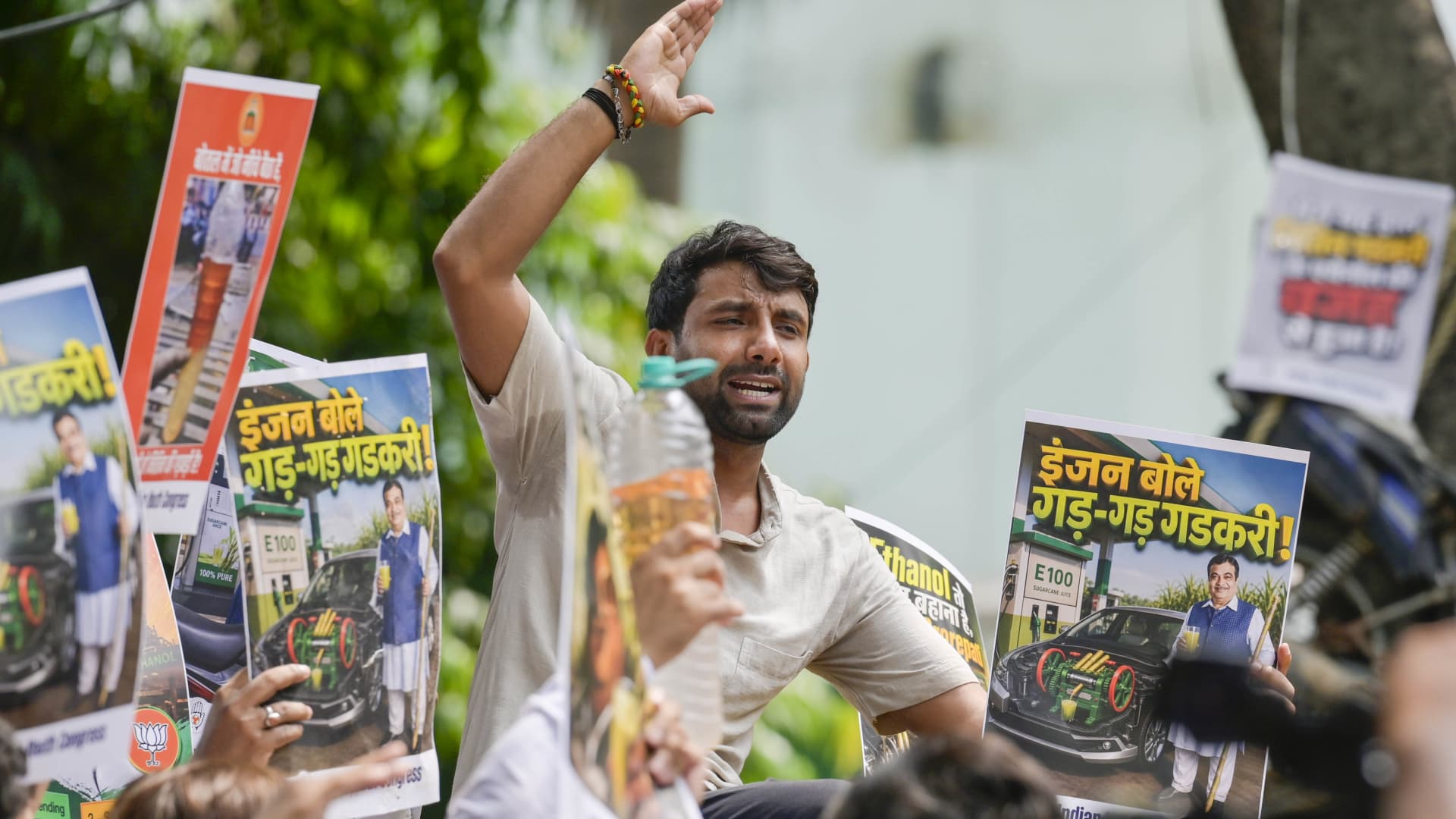
Yet the policy is running into real-world friction. Car owners have complained that blended fuel damages vehicles and lowers mileage. Several legislators raised the issue on Monday. The government has denied claims of any adverse impact.
Auto companies in India started making vehicles compliant with E20 fuel after 2023, said Diwakar Murugan, senior automotive analyst at Omdia. Owners of cars built before 2023 face double the cost, he said. Older vehicles not designed for E20 may suffer reduced fuel economy, compatibility issues, and higher maintenance, experts said.
Auto companies have denied widespread damage. Last week, a consumer court ordered Maruti Suzuki, the country’s largest car maker, to replace a car whose owner claimed damage from E20 fuel, Reuters reported.
The government has additional ethanol capacity to raise blending to 25% but has put those plans on hold. The priority now is managing the transition without alienating the tens of millions of car owners who bought vehicles before 2023.
“Diversification isn’t optional anymore,” Murugan said. Automakers in India are hedging across compressed natural gas, hybrids, flex-fuel platforms, and hydrogen for commercial vehicles, he added.