India's E20 Fuel Efficiency Dip: Why It Won't Slow the Ethanol Push
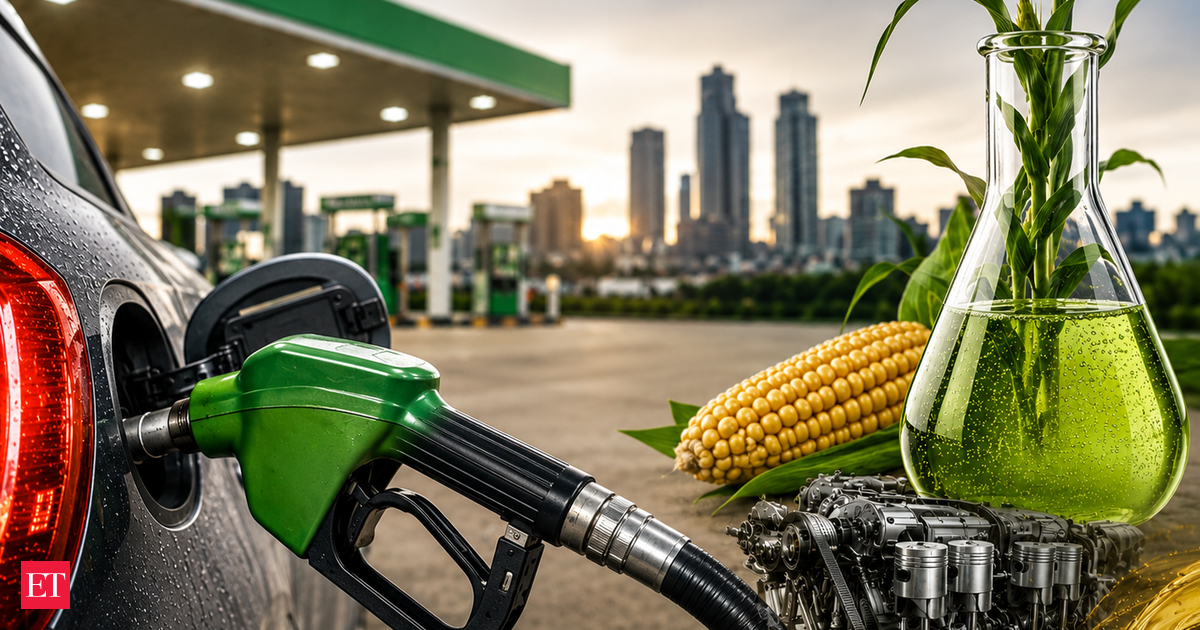
India's petroleum minister admitted E20 petrol cuts mileage 3-6% but said the ethanol push continues. E25 and E85 are next on the roadmap, supporting sugar and ethanol stocks.
India's petroleum minister acknowledged a small drop in vehicle fuel efficiency from E20 petrol but said the government is pushing ahead with ethanol blending regardless. Hardeep Singh Puri told reporters the mileage reduction is "minor" and that the gains in acceleration and engine performance offset the loss.
The admission comes as India rolls out 20% ethanol-blended petrol across a widening set of retail stations. Consumer groups have raised concerns about mileage on older vehicles and potential engine compatibility issues. The government's position is that newer flex-fuel vehicles handle the blend without trouble.
Puri's comments did not quantify the efficiency loss. Auto industry estimates typically put the E20 mileage penalty at 3-6% relative to standard E10 petrol, depending on the engine. The trade-off is lower carbon emissions and reduced oil import dependence – the main rationale for the policy.
India is already looking beyond E20. Puri said the government is exploring higher blends including E25 and E85. That would require a broader fleet of flex-fuel vehicles on Indian roads and more ethanol production capacity, both of which are in early stages. The ministry has said it will not mandate E20 for older cars, leaving the retrofit choice to owners.
The ethanol blending program is part of India's broader energy security roadmap. The country imports roughly 85% of its crude oil needs. Ethanol from sugarcane and rice can displace some of that volume. The current target is 20% blending by 2025, up from about 10% in 2023.
Sugar and ethanol producers are the direct beneficiaries. Higher blending rates mean more demand for ethanol, which supports sugarcane prices and distillery margins. Listed players include Balrampur Chini Mills, Shree Renuka Sugars, and EID Parry. The policy also supports automakers that have invested in flex-fuel technology – Maruti Suzuki and Toyota Kirloskar Motor have both launched E20-compatible models.
Puri said the government will release more detailed data on E20 mileage and performance in the coming weeks. The minister rejected the idea that the minor efficiency drop would slow the rollout schedule.
For commodities watchers, the ethanol push creates a structural demand floor for molasses and grain-based feedstock. India's ethanol blending rate is already near 12%. Each percentage point increase consumes roughly 250 million litres of ethanol, or the equivalent of 600,000-700,000 tonnes of sugar diverted from export. Higher domestic use means less sugar available for the global market, which supports world sugar prices at the margin.
Drafted by a large language model from the source reporting linked above, then screened by automated publishing checks. It is not read by a journalist before publication. Some articles cite our Alpha Score. Verify prices and figures against the original source. Educational coverage, not personalized advice.