Stocks● Neutral
India’s Conductor Makers See ₹25,000-Crore Opportunity
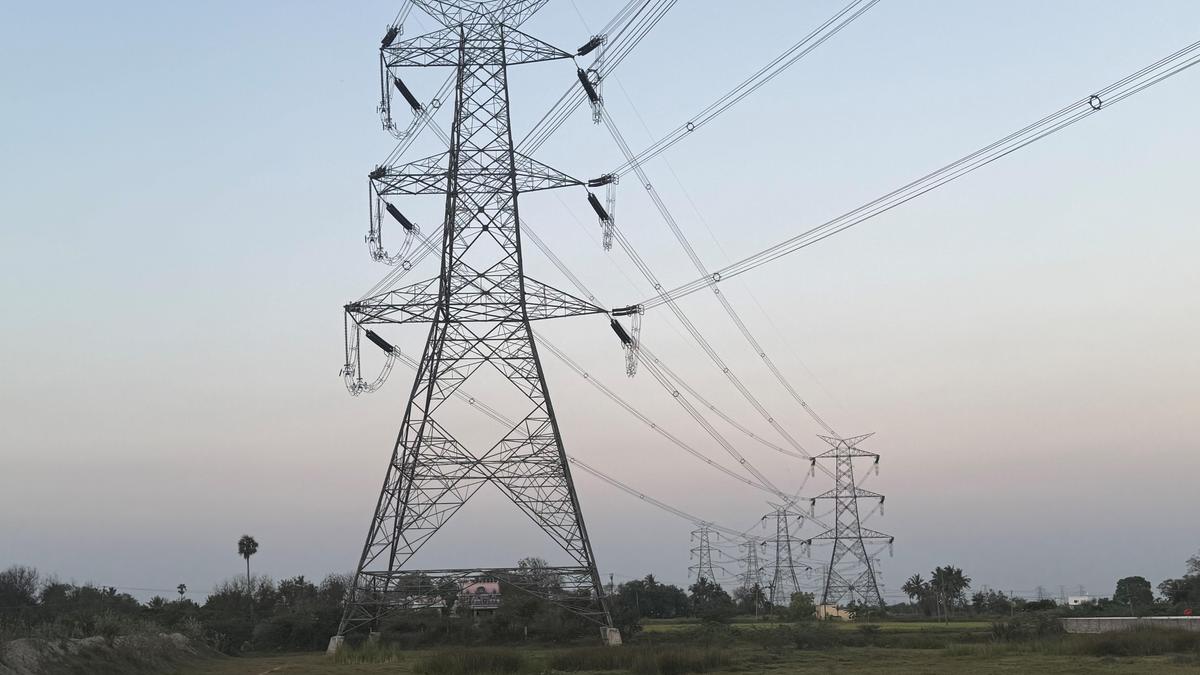
India’s electricity consumption rose 34% in six years. Conductor makers like Laser Power see ₹3,243 crore order book as grid upgrades drive demand for high-capacity lines. What to watch.
Continue with
India’s electricity consumption jumped 34% from FY19 to FY25, and the grid is struggling to keep up. The result is a surge in demand for high-capacity conductors – cables that can carry four times the load of conventional lines without replacing transmission towers. Industry estimates put the conductor market at ₹23,000 to ₹25,000 crore by FY30, according to CRISIL.
Laser Power & Infra Ltd, a Kolkata-based manufacturer, has seen its order book swell to ₹3,243 crore as of FY26. That figure comprises ₹1,669 crore from manufacturing and ₹1,575 crore from engineering, procurement and construction. The company recently signed a technology tie-up with US-based TS Conductor Corp to produce advanced conductors locally, including ACSS and AECC variants. Deepak Goel, CMD of Laser Power, said the combination of product innovation, global partnerships and backward-integrated manufacturing would help meet the evolving needs of the power sector and drive long-term growth.
Peers are also benefiting. Apar Industries, Polycab, Universal Cables, Lumino, KEI and Dynamic Cables all serve the same transmission and distribution utilities. The industrial sector accounts for roughly 40% of India’s electricity consumption, and new clusters in eastern states – Bihar, West Bengal, Odisha, Chhattisgarh and Jharkhand – are adding demand for substations, transmission lines and cables, analysts said. State-owned utilities and private EPC players such as Montecarlo and KRYFS Power Components are among the buyers.
The shift is not just about volume. High-voltage lines of 400 kV and 765 kV are gaining importance in intra-State networks because they enhance power density, reduce losses and deliver bulk power more efficiently. Similarly, high temperature low sag (HTLS) conductors are replacing conventional ones in areas where thermal expansion is a constraint. The technology collaboration between Laser Power and TS Conductor is one example of how Indian firms are importing know-how to produce these specialised products locally.