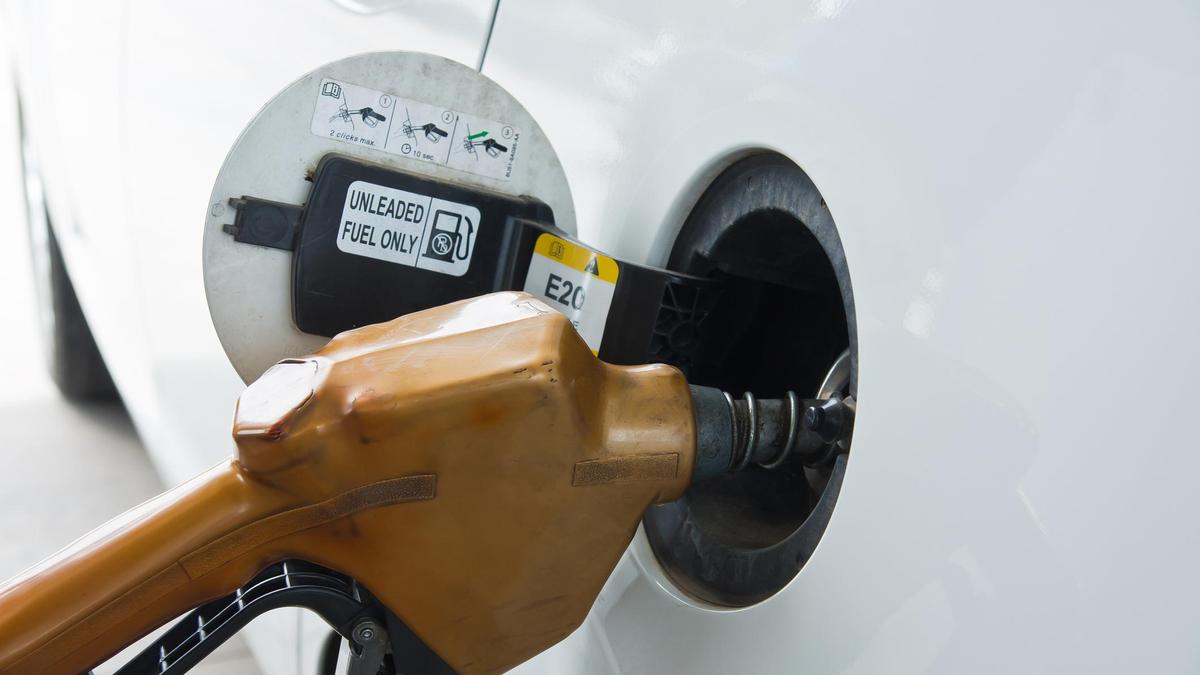
The chief economic adviser's opinion piece warns that mandatory E20 petrol risks damaging 75-80 million older two-wheelers and urges restoring E10 as an alternative.
India should restore a lower-ethanol blend such as E10 alongside the 20% ethanol petrol now mandatory at fuel pumps, chief economic adviser V. Anantha Nageswaran said in an opinion piece published Wednesday. The call is one of the strongest from a senior official for greater consumer choice in the country's ethanol policy.
E20 petrol was rolled out last year and has been the only fuel variant at Indian stations since April 1. The government's goal is to cut oil-import dependence, support agriculture and reduce emissions. Some owners of older vehicles reported a drop in performance and damage to parts. The oil ministry dismissed those claims as false and said maintaining multiple fuel grades was not feasible.
Dismissing the complaints outright would be "a mistake because beneath the noise lies a real problem and a much larger question," Nageswaran and Akash Poojari, a consultant at the Department of Economic Affairs, wrote in the Indian Express. They added that the views were personal.
The authors cited 75 million to 80 million older two-wheelers built before BS-IV that run on carburettors. A carburettor cannot sense the extra oxygen in the ethanol blend and adjust for it. On E20 the engine draws in too little fuel and runs hot. Older rubber seals not rated for ethanol degrade on contact with the fuel, they said.
Restoring a lower-blend option such as E10 would protect older vehicles while allowing the ethanol programme to continue, Nageswaran and Poojari said. Retrofitting incompatible vehicles would be inexpensive but take years to complete across India's ageing fleet.
Ethanol contains less energy than petrol. The authors estimated a 6-7% energy penalty from E20, far smaller than the reductions sometimes claimed online. Testing in the United States and India found no evidence of increased engine wear in E20-compatible vehicles.
The opinion piece also questioned whether India should push ethanol blending beyond the E20 target. Higher levels could intensify competition between fuel production and food crops. Maize now accounts for about half of India's ethanol feedstock; grains together make up nearly 67%. Maize competes with oilseeds such as soybean and groundnut for land, complicating efforts to cut edible-oil imports.
Water use is another concern. The authors said policymakers should focus on "blue water" drawn from rivers and groundwater rather than headline estimates that include rainfall. The climate benefit of grain-based ethanol beyond E20 is not clear-cut, they said, since studies differ on emissions from cultivation and processing.
India's ethanol programme has helped clear sugarcane arrears, supported rural incomes and provided a guaranteed market for producers. Holding the blend at E20 carries its own costs, since distillery capacity was built around expectations of rising demand.
"The engine row we witnessed was never the real argument. The real one is about what we choose to grow, and what we will not be able to take back," the opinion piece said.
Nageswaran and Poojari recommended restoring a lower-blend option, adjusting pricing and water-use incentives that favour maize over competing crops, reconsidering edible-oil import duties, and holding at E20 until the food-versus-fuel trade-off has been fully assessed.
Drafted by a large language model from the source reporting linked above, then screened by automated publishing checks. It is not read by a journalist before publication. Some articles cite our Alpha Score. Verify prices and figures against the original source. Educational coverage, not personalized advice.