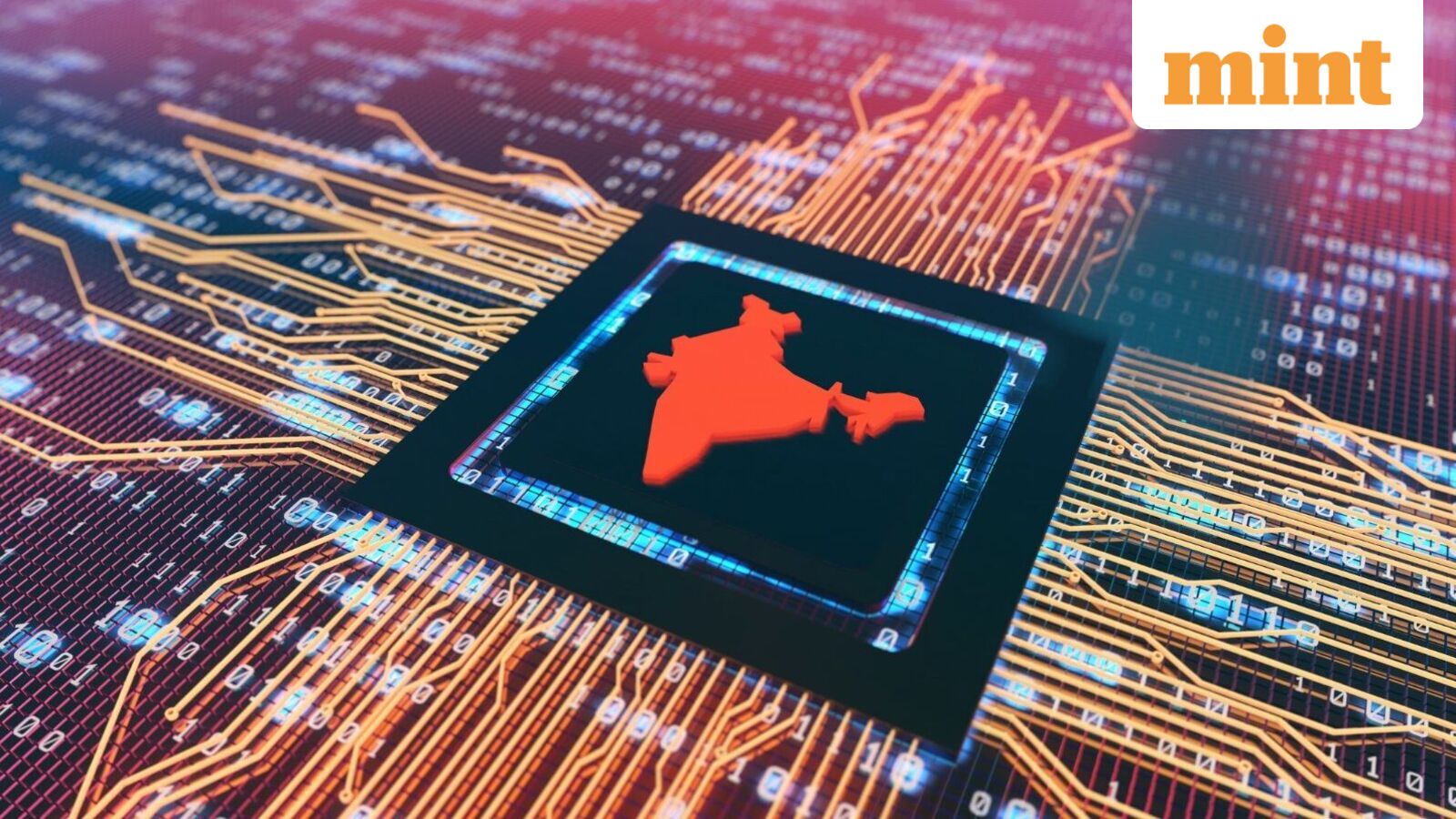
The debate over India’s artificial intelligence strategy has reached a critical inflection point. For years, the prevailing consensus among domestic IT services leaders favored a pragmatic approach: leveraging existing large language models (LLMs) developed by US-based giants like OpenAI, Google, and Meta rather than committing scarce capital to building frontier models from scratch. This logic, rooted in cost-efficiency and the avoidance of redundant development, is rapidly losing ground to the reality of strategic autonomy. As AI evolves from a productivity tool into a foundational layer of national security, the risk of technological dependency has moved from a theoretical concern to a tangible vulnerability.
At the heart of this shift is the realization that AI is no longer a neutral technology. It functions as a force multiplier in both kinetic warfare and cyber-security. The recent restricted release of Anthropic’s Mythos model serves as a primary case study for this new reality. Marketed as a powerful cyber gap-spotting tool, Mythos is reportedly so potent that its access has been tightly controlled, with only 40 trusted entities—predominantly based in the US—granted the ability to utilize its capabilities. For a nation like India, being excluded from this league of cyber-safety tools creates a structural disadvantage. If critical digital infrastructure is susceptible to vulnerabilities that only foreign-controlled AI can identify or exploit, the nation’s strategic autonomy is effectively compromised.
This dependency creates a dangerous precedent. If the owners of cutting-edge models decide to restrict access or extract a premium for their use, nations without indigenous alternatives are left with little leverage. The Cold War doctrine of mutually assured destruction is increasingly being applied to the AI domain. To deter potential threats, such as AI-guided drone swarms or sophisticated cyber-attacks, a nation must possess the capacity to strike back or defend itself with equivalent technological parity. Relying on foreign models for national security functions is akin to outsourcing one’s defense architecture to a third party whose long-term interests may diverge from one’s own.
India’s path to developing frontier models is not without precedent or capability. While the scale of trillion-parameter models remains the domain of US and Chinese leaders, domestic innovation is already underway. Bengaluru-based Sarvam AI has demonstrated that specialized approaches can deliver high-performance models, such as their 105-billion-parameter iteration, which optimizes computing requirements. This suggests that the barrier to entry is not necessarily a lack of talent or technical ingenuity, but rather a question of resource allocation and national will.
One of the most cited obstacles—the scarcity of high-end AI chips like those produced by NVIDIA Corporation—is increasingly viewed as a surmountable hurdle. The experience of Chinese firms like DeepSeek provides a roadmap for navigating chip denial. By pivoting to domestic alternatives such as Huawei’s Ascend chips, Chinese developers have maintained a rapid pace of innovation despite US-led export restrictions. This demonstrates that while hardware access is a significant constraint, it is not an absolute barrier to progress when backed by state-level support and a clear strategic mandate.
For investors and market participants, this shift signals a potential pivot in government policy and capital expenditure. If India commits to a sovereign AI program, the focus will likely move toward massive infrastructure investment, domestic chip fabrication, and the scaling of local AI startups. This transition would mirror the competitive dynamics seen in the US-China race, where the primary objective is to secure the technological stack against external interference. The current market environment, where players like Meta Platforms Inc. (Alpha Score 65/100) and other global tech leaders dominate the landscape, may soon face a more fragmented global market where sovereign AI models become a standard requirement for major economies.
Ultimately, the decision to pursue domestic LLMs is a hedge against the risk of tech deprivation. The cost of building these models is high, but the cost of being locked out of the next generation of cyber-security and defense technology is significantly higher. As the geopolitical landscape continues to prioritize technological sovereignty, the focus for India will likely shift from the question of whether to build to the question of how quickly it can scale. This is a fundamental change in the stock market analysis of the regional tech sector, moving from a service-oriented model to one defined by deep-tech self-reliance.
What would confirm this shift is a sustained increase in government-backed R&D funding and the formation of public-private partnerships aimed at domestic model training. Conversely, a failure to secure the necessary compute resources or a continued reliance on foreign-hosted models would weaken the thesis of strategic autonomy. For those tracking the sector, the focus should remain on the pace of domestic chip adoption and the scale of investment in local AI infrastructure, as these will be the primary indicators of whether India can successfully bridge the gap with global leaders.