Stocks● Neutral
India's 27.5% Offline Households Reset Digital TAM Math
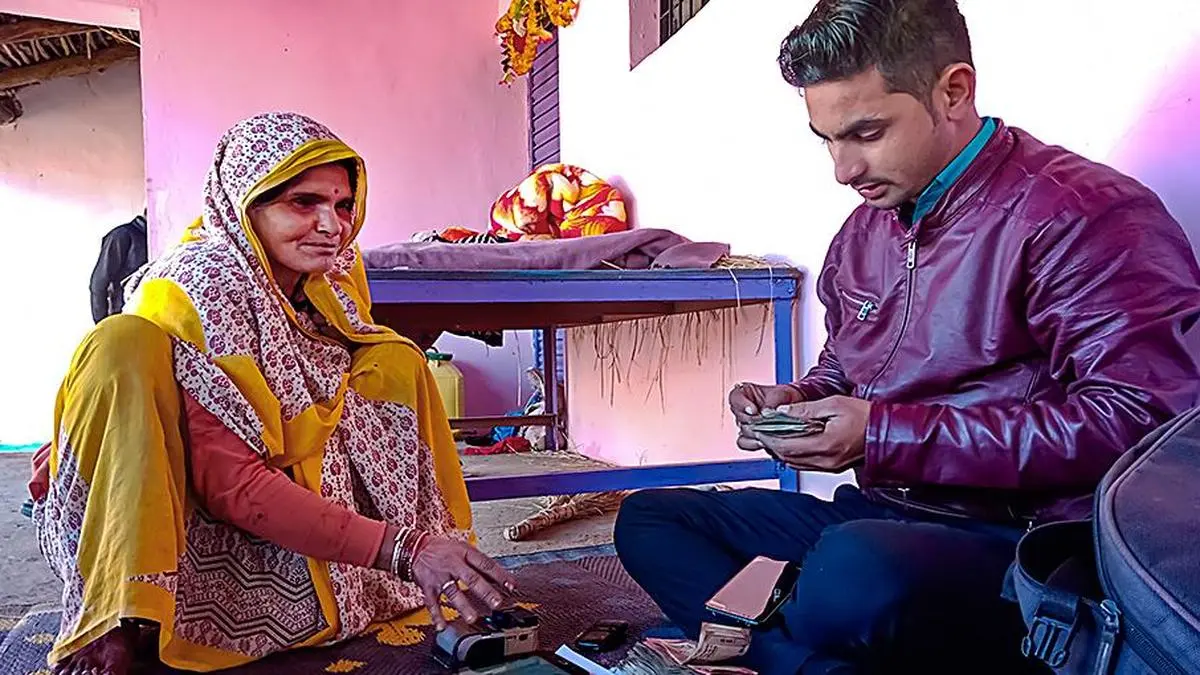
NCAER report shows 27.5% of Indian households offline despite 95.1% mobile ownership. Why the usage gap resets TAM for fintech, e-commerce, and edtech.
Continue with
The NCAER Data Point: 27.5% of Households Offline Despite 95.1% Mobile Penetration
The National Council of Applied Economic Research (NCAER) report, 'The Evolving Landscape of Digital Inclusion in India', draws on the India Human Development Survey (IHDS-3) covering over 47,000 households between 2022 and 2024. The headline number: 95.1% of households own a mobile phone, yet 27.5% have no internet access at all. More than one in four households remain entirely disconnected from digital services.
For investors pricing Indian digital companies, this gap is the single most underappreciated structural risk in the market. Mobile penetration has been the standard proxy for addressable user bases. The report shows that proxy is misleading. Device ownership does not equal connectivity. Connectivity does not equal independent usage.
The average number of phones per household climbs from 1.5 among the poorest households to 2.9 among the richest. In low-income households, devices are shared. For digital services that rely on per-user accounts – fintech, edtech, social commerce – sharing compresses the effective user base. A household with one phone and four members cannot support four independent app logins.
Why the “Device Proxy” Fails Digital TAM Estimates
India’s digital story has been told as a straight-line expansion: cheap data, Jio, and smartphones equal 1 billion internet users by 2025. That headline is correct at the macro level. The report’s contribution is to puncture the assumption that the next billion is simply a function of time and falling device costs.
The Difference Between Registered Users and Active Users
Many Indian digital companies report large registered user bases with stubbornly low monthly active user growth. This report supplies an explanation: a meaningful share of those “connected” households still cannot transact or interact independently. The 20.4% of digital-service-using households that need help from someone outside the household are effectively mediated users. They may show up as registration numbers, engagement and revenue-per-user are structurally lower.
Among households with no formal education, the share needing outside help rises to nearly one in three. The internet functions as a mediated service, not a self-service tool.
The “Mediated Internet” as a Cost Center
For businesses, mediation means the cost of customer acquisition includes not just marketing but also the expense of handholding, assisted checkouts, and offline support. Business models that assume pure self-service adoption will face higher churn and slower unit economics in the bottom 27.5% of households.
Key insight: The 20.4% mediation rate is not a temporary friction. It reflects a permanent capability gap that will require product redesign, not just infrastructure investment, to close.
Sector Read-Through: Who Gains and Who Loses
Digital Payments and Fintech
The need for assisted transactions is a tailwind for models that already operate offline-to-online handholding networks. Purely app-first neobanks targeting mass-market users may underperform if they ignore the mediation requirement. Government digital literacy programs like PMGDISHA and Diksha could accelerate fintech adoption, the effect is multi-year.