Indian Universities Face AI Disruption: Op-Ed Warns of Jobless Graduates
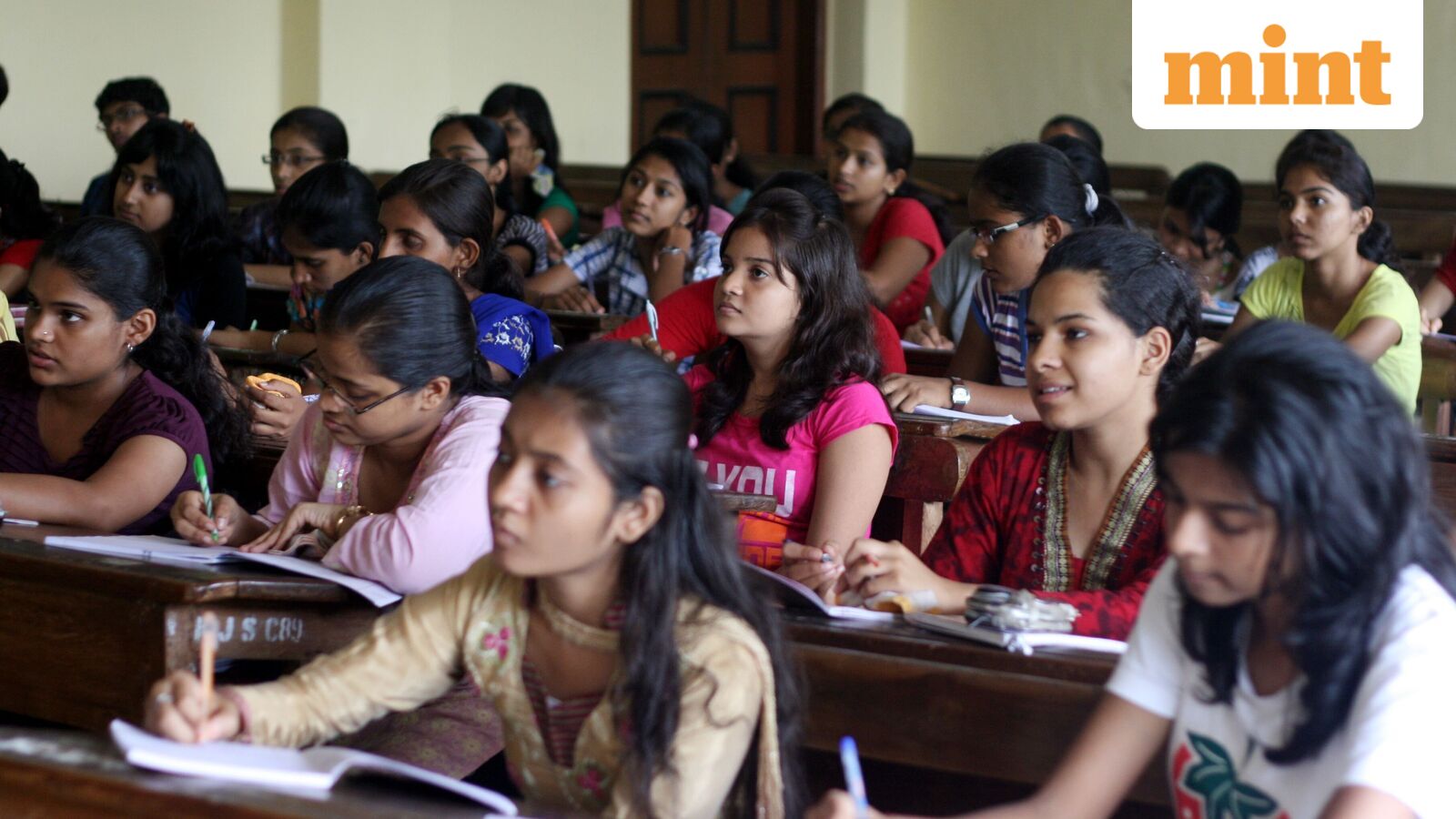
AI is eliminating entry-level jobs, forcing a rethink of higher education. A university director argues colleges must become 'sandboxes' for self-discovery and agility, or face irrelevance.
The promise that a university degree guarantees a job is breaking down as artificial intelligence automates entry-level roles, according to a senior academic who argues that Indian higher education must fundamentally rethink its purpose.
“The corporate hierarchy is aggressively shifting from a pyramid to a diamond,” wrote Purushottam Khandu, director of the School of Technology at Dhirubhai Ambani University in Gandhinagar, in an op-ed. At the bottom, where fresh graduates used to find work, companies now deploy AI to automate tasks, while roles at the centre and top demand synthesis, creativity and adaptability.
“With fewer entry-level positions available, an uncomfortable question haunts every student and parent in India while choosing a college: Why go to a certain university if it no longer guarantees a job?” Khandu wrote.
The answer, he argued, requires tearing down the current view of higher education. The university can no longer be seen merely through the lens of immediate employment. It must become “the student’s ultimate sandbox, a place of radical self-discovery, intellectual friction and exploration.”
Khandu said the three-to-four-year university window is the only period in a young person’s life when they have the intellectual freedom, resources and safety net to experiment without ruinous consequences. Schools are too rigid, he wrote, and the workforce has too high a cost of failure.
“In an age where AI makes tomorrow entirely unpredictable, the only defence we can give our youth is agility,” Khandu wrote. “We must teach them to think like entrepreneurs, not necessarily to build startups, but to navigate ambiguity.”
He said universities currently fail at this because they are trapped in a metric-chasing rat race, counting enrolled students, faculty ratios, publications and patents filed. “Goodhart’s law warns us, when a measure becomes a target, it ceases to be a good measure,” he wrote.
Khandu cited a historical case: Dr Subhas Mukhopadhyay created India’s first IVF baby in 1978, just 67 days after the world’s first in the UK. Instead of being celebrated, he faced a brutal government inquiry that drove him to suicide. “Today, ironically, India is the second-largest IVF destination in the world,” Khandu wrote. The lesson, he said, is that India can no longer afford to crush the experimental spirit.
The National Education Policy 2020 already laid the groundwork, he noted, with concepts like the Academic Bank of Credits allowing a student to take a Python coding class, a behavioural psychology seminar, and build a unique profile. But execution remains patchy. “Universities are deeply territorial, hesitant to accept credits earned elsewhere or allow genuine cross-disciplinary freedom,” Khandu wrote.
He called on regulatory bodies like the University Grants Commission and the All India Council for Technical Education to shift their mandate from enforcing rigid compliance to actively rewarding innovation.
“The era of mass-producing identical graduates for a predictable job market is dead,” Khandu wrote. “We are marching millions of young people into a diamond-shaped economy armed with pyramid-era tools.”
Indian universities face a stark choice, he said: tear down their walls and become interdisciplinary sandboxes, or remain assembly lines producing a workforce that may no longer be needed.
Drafted by a large language model from the source reporting linked above, then screened by automated publishing checks. It is not read by a journalist before publication. Some articles cite our Alpha Score. Verify prices and figures against the original source. Educational coverage, not personalized advice.