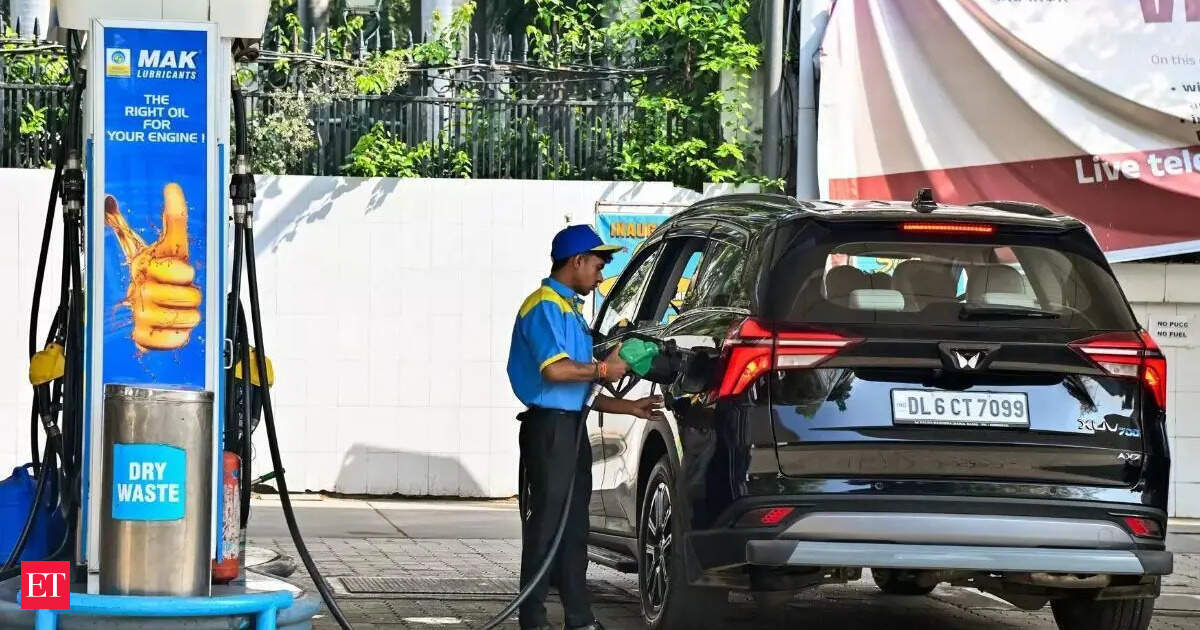
The stability of retail fuel prices across major Indian metropolitan centers on April 23, 2026, stands in contrast to the underlying volatility observed in global crude oil markets. While consumers in cities like Delhi and Mumbai continue to pay fixed rates of 94.77 INR and 103.50 INR per liter respectively, the current pricing environment is widely viewed as a temporary suspension of market-linked adjustments. The disconnect between international energy benchmarks and domestic retail pumps is increasingly attributed to the ongoing assembly election cycle.
The Mechanism of Price Suppression
Fuel retailers in India historically maintain price stability during sensitive political periods to mitigate inflationary pressure on the broader economy. This practice creates a significant divergence between the cost of crude imports and the price at the pump. Current market expectations suggest that the state-owned oil marketing companies are absorbing the volatility to prevent sudden spikes in consumer costs. This strategy effectively defers the impact of global price fluctuations until the conclusion of the electoral process.
Anticipated Fiscal Realignment
Market participants are now pricing in a substantial correction once the electoral mandate is finalized. Projections indicate a potential upward adjustment in the range of 25 to 28 INR per liter to align domestic retail rates with the actual landed cost of crude oil. This anticipated shift represents a significant risk factor for domestic inflation metrics and consumer discretionary spending. The following list outlines the current retail landscape for fuel across key urban hubs:
- Delhi: Petrol 94.77 INR/liter, Diesel 87.67 INR/liter
- Mumbai: Petrol 103.50 INR/liter, Diesel 90.01 INR/liter
- Kolkata: Petrol 105.41 INR/liter, Diesel 93.50 INR/liter
- Chennai: Petrol 101.06 INR/liter
AlphaScala Market Context
Energy sector volatility remains a primary driver for broader stock market analysis as investors monitor the correlation between commodity inputs and corporate margins. While the current fuel price freeze provides a buffer for the consumer, it creates a structural overhang for energy-dependent sectors. Investors should note that companies like ON Semiconductor Corporation may face indirect margin pressure if elevated energy costs translate into higher logistics and manufacturing overheads following the expected price reset.
AlphaScala data currently reflects a mixed outlook for various sectors, with Amer Sports, Inc. holding an Alpha Score of 47/100 and Agilent Technologies, Inc. at 55/100. These scores highlight the ongoing difficulty in navigating sector-specific headwinds when macro-level inputs like energy policy remain in flux. The next concrete marker for this narrative will be the official announcement of election results, which will likely serve as the trigger for the anticipated fuel price revision. Market participants should monitor subsequent filings from major oil marketing companies for guidance on how they plan to recover the margins lost during this period of price suppression.