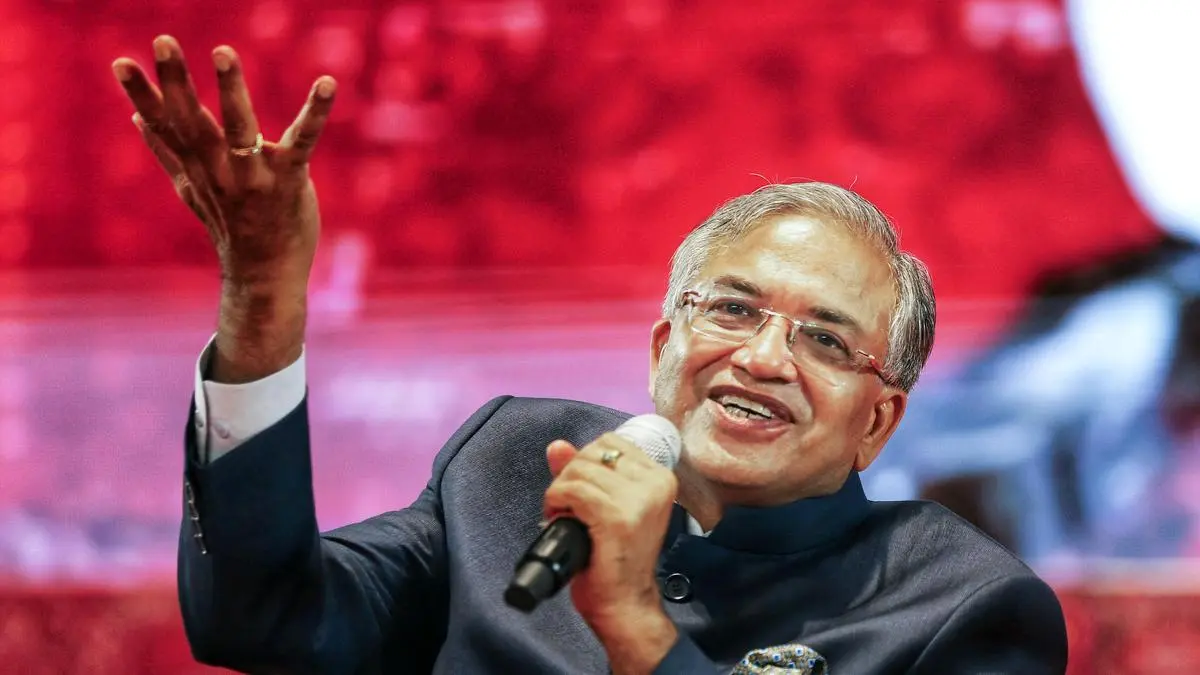
Gyanesh Kumar reiterated that EVMs are manufactured by PSUs and lack wireless connectivity. Speaking in Lucknow, he also detailed concurrent audit processes and urged youth registration under Article 326.
Chief Election Commissioner Gyanesh Kumar on Monday said Indian electronic voting machines are manufactured by public sector companies and have no internet, Bluetooth, or Wi-Fi connectivity. He made the remarks during a two-day visit to Lucknow, where he interacted with students at Colvin Taluqdars’ College, according to an official commission statement.
The statement directly addresses long-running opposition criticism about EVM security. The machines, Kumar said, are built by state-owned firms and operate entirely as standalone devices. He did not name the specific manufacturers – Bharat Electronics Ltd. and Electronics Corporation of India Ltd. have historically supplied them – but the assurance of no wireless links is the core of the commission’s defense against tampering allegations.
Kumar used the student interaction to walk through the checks built into the process. When the electoral roll is prepared, he explained, a concurrent audit is conducted by booth-level agents from every political party. That same layered oversight applies during polling, where candidates’ polling agents verify the process, and again during counting, where counting agents do the same. Each stage, he said, is watched by party representatives in real time, not just by the commission.
The CEC also addressed the scale of the task. India has about 100 crore voters, he noted, and running elections for that electorate requires a large number of officials and employees. The commission provides voter registration through digital platforms, and Kumar urged young people to register under Article 326 of the Constitution.
“Young people are the most important force behind the democratic future of the country,” he said. “If they participate in the electoral process with awareness, democracy will become stronger.”
Kumar also spoke about the Election Commission’s effort to strengthen the Electoral Literacy Club initiative. The clubs, which have been part of the commission’s tradition for a long time, received a renewed push. “Interaction with principals, teachers, and students from 20 districts gives the assurance that our students possess a comprehensive knowledge of the electoral process and take pride in its transparency as well as their own participation in it,” he said.
Before becoming CEC, Kumar recalled his own student days in 1979. He was preparing to go to the United States when his mother’s wish and his attachment to India motivated him to stay. He cleared the civil services examination and began his administrative career in the Kerala cadre of the Indian Administrative Service. His journey eventually led him to the role of Chief Election Commissioner in what he called the world’s largest democracy.
Kumar advised students to verify sources before sharing information, especially on social media. “Before accepting any information, it is essential to check its source and verify its authenticity,” he said.
The concurrent audit mechanism he described is the commission’s strongest answer to claims of EVM manipulation. With party agents present at every step – from roll preparation to the final count – the commission argues that any fraud would require coordination across all parties, a scenario it considers practically impossible. Kumar’s Lucknow remarks frame the process as one of continuous, transparent review rather than a single moment of vulnerability.
Drafted by a large language model from the source reporting linked above, then screened by automated publishing checks. It is not read by a journalist before publication. Some articles cite our Alpha Score. Verify prices and figures against the original source. Educational coverage, not personalized advice.