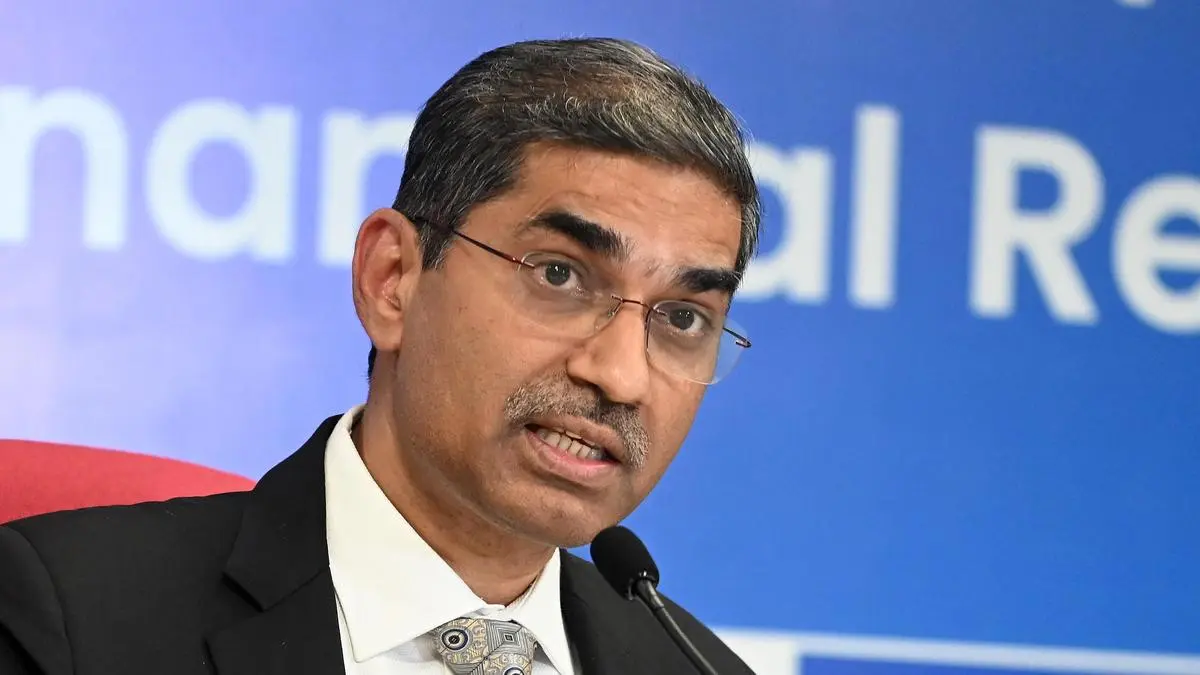
Indian Bank CEO Binod Kumar expects gold loan book to reach ₹1.5 lakh crore this fiscal on tonnage growth. The bank also raised $400M via GIFT City bonds and targets $2B in NRI deposits. RBI closed its swap facility after $73B in inflows.
Indian Bank expects its gold loan book to pass ₹1.5 lakh crore this financial year, driven by tonnage growth rather than rising prices. The public sector lender’s current gold loan portfolio stands at about ₹1.25 lakh crore, MD and CEO Binod Kumar told PTI. Last year the segment grew 30 percent as gold prices jumped. Kumar said growth this year will likely be around 20 percent, slower because gold prices have fallen roughly 30 percent from those peaks.
“Gold loan is safe lending for banks,” Kumar added. “It is not a consumption loan, but mostly it is income-generating and also helps small businesses to grow.” The bank sees the growth coming from higher tonnage, not from price appreciation.
Indian Bank’s overall loan book is split 65-35 between RAM – retail, agriculture and MSME – and corporate lending. Kumar said the bank wants to maintain that mix. RAM has “huge capacity for growth” with opportunity in agriculture and MSMEs.
On the liability side, the bank’s low-cost CASA deposits stood at about 40 percent of total deposits. CASA grew 15.3 percent in the first quarter, with savings deposits up 13.54 percent and current account deposits up 26.33 percent. CASA remains a challenge, Kumar said, but branch participation has improved. Only 25-27 percent of branches met their CASA targets in the same quarter last year. This year that figure rose to 51 percent.
Indian Bank has also turned to overseas markets for dollar funding. It issued $400 million in four-year bonds through its GIFT City branch on August 18. The issue is part of a plan to raise $1 billion from foreign markets by the end of 2026 using a special regulatory window. The remaining $600 million is expected in the third quarter, Kumar said.
The bank is also tapping NRI deposits. Kumar expects FCNR(B) deposits to reach $2 billion by August 31. Indian Bank has already raised $1.5 billion from that product, he said. Demand has been strong because the deposits offer attractive returns.
Better-than-expected FCNR(B) flows prompted the Reserve Bank of India to close its concessional forex swap facility early – ahead of the scheduled September 30, 2026 deadline. The swap facility was introduced to encourage foreign currency inflows. Through August 21, it attracted $72.848 billion in total inflows, the RBI said on Saturday. Of that, FCNR(B) deposits accounted for $65.397 billion, while overseas foreign currency borrowings contributed $4.86 billion and external commercial borrowings another $2.591 billion. The RBI halted the window, Kumar noted, because the response was already sufficient.
Prepared with AlphaScala editorial tooling from the source reporting linked above. Indexable analysis may include a cited Alpha Score value. Publishing checks screen each story before release. Educational coverage, not personalized advice.