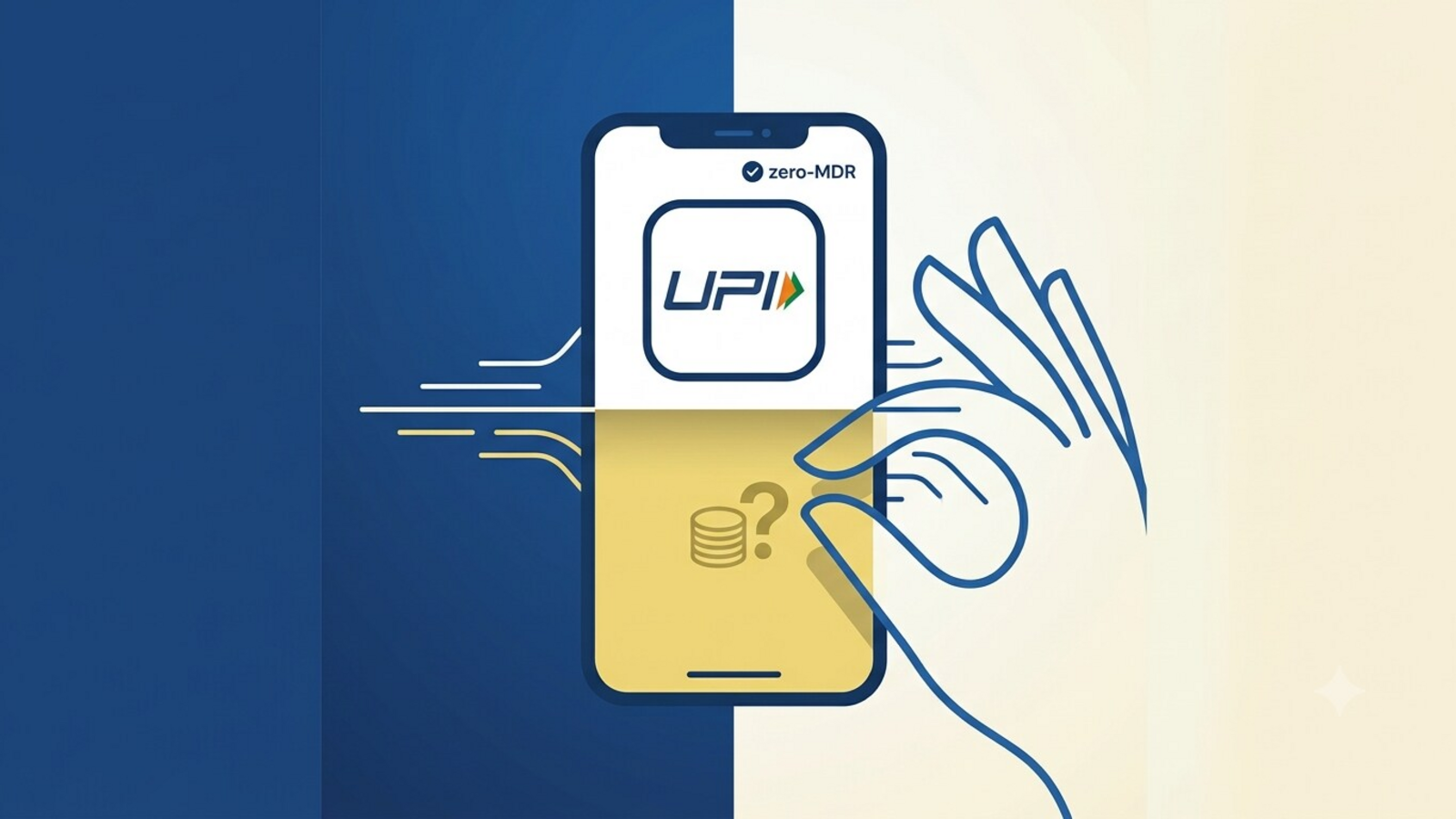
The government is examining a tiered MDR on high-value UPI payments to fund the digital payments ecosystem. Small merchants and P2P transfers would remain free. The threshold and rate are yet to be decided.
The government is considering bringing back a Merchant Discount Rate (MDR) on a narrow category of high-value UPI transactions. The move follows a recommendation from a Parliamentary Standing Committee on Finance, which called for a self-reliant revenue model to fund India's expanding digital payments system.
The committee proposed a calibrated, tiered MDR framework for larger merchant payments while keeping person-to-person transfers and small merchants free. The government has not yet settled on a transaction threshold or the rate itself, according to a PTI report.
MDR is a fee that merchants pay to accept certain digital payments. The fee is shared among banks, payment service providers and infrastructure companies. UPI operated under a small MDR until January 2020, when the government set a zero-MDR regime to push digital adoption and reduce cash use. Since then, merchants have paid nothing for UPI payments, though the banks and payment companies that process them still carry costs.
The core problem is the gap between what the government allocates and what the industry spends. The centre has set aside Rs 2,000 crore to subsidise RuPay debit cards and low-value BHIM-UPI transactions. The Parliamentary panel said the industry's estimated operating cost is about Rs 20,700 crore. The committee warned that relying on inadequate subsidies could force payment companies to cut back on cybersecurity, fraud prevention and network infrastructure.
The proposed MDR would not cover everyday person-to-person UPI transfers or small merchants. The government has indicated that any charge would apply only to selected merchant transactions above a specified threshold. The exact threshold and MDR rate are still being worked out. The UPI and Services Steering Committee, which is headed by the National Payments Corporation of India (NPCI), will decide the structure, Business Standard reported.
The legal basis for introducing MDR now exists. Parliament recently passed amendments to the Payment and Settlement Systems Act, 2007. The changes remove the legal restriction that prevented banks and payment service providers from imposing MDR on notified electronic payment modes. The law itself does not set a specific rate or threshold. Those details are left to the government and the NPCI.
The committee urged the government to notify and operationalise the framework quickly. "The committee, therefore, reiterates the recommendation to expedite the implementation of a self-reliant, tiered revenue framework for higher-value merchant transactions while safeguarding small merchants and P2P transfers," the panel said, according to PTI.
UPI has become one of the world's largest digital payment systems. The panel noted that the platform could eventually handle 150 billion transactions a month and add 600 million new users, Business Standard reported. The scale means even small costs add up. The committee warned that continued dependence on government subsidies could affect investments in security and network expansion.
No date has been set for the government to announce the MDR framework. The threshold, rate and merchant categories are still under discussion.
Drafted by a large language model from the source reporting linked above, then screened by automated publishing checks. It is not read by a journalist before publication. Some articles cite our Alpha Score. Verify prices and figures against the original source. Educational coverage, not personalized advice.