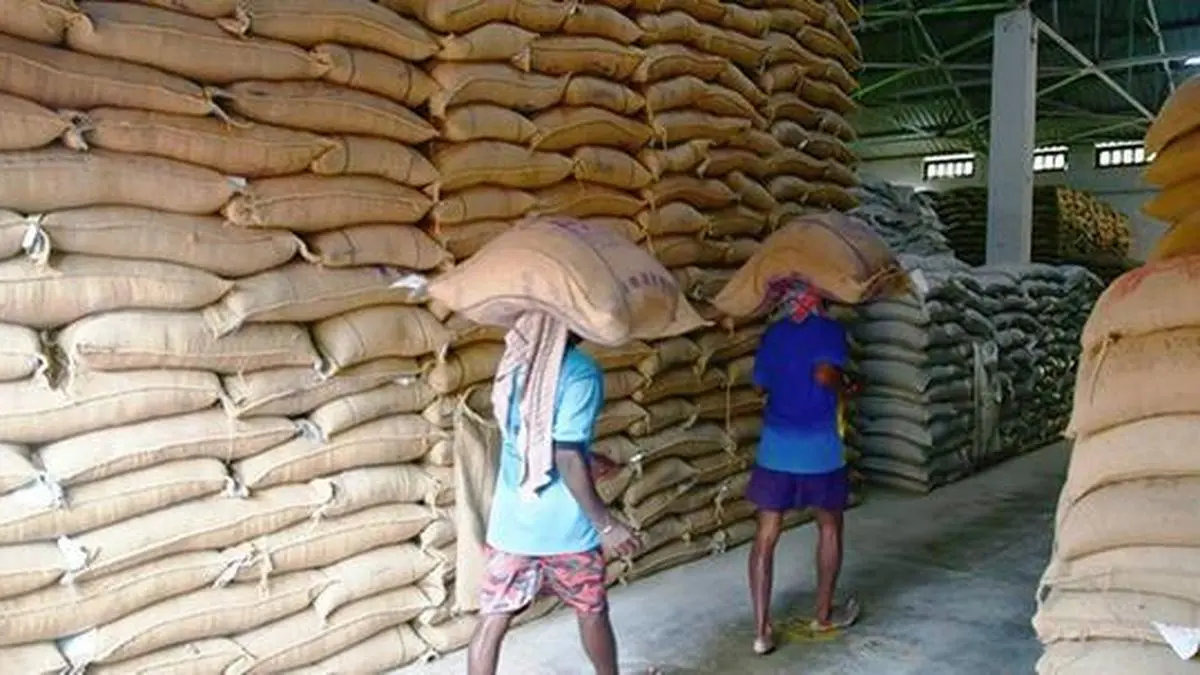
India diverted about 3.9 million tonnes of surplus FCI rice and roughly 6.8 million tonnes of maize to ethanol production in the current supply year through June 2026, according to the government. The 20% blending target has not hurt food availability or food security, Minister of State for Petroleum Suresh Gopi told Rajya Sabha on Monday.
Only surplus grain that exceeds the requirements under the National Food Security Act and welfare schemes plus buffer stocks goes to ethanol, Gopi said. The programme follows a “waste-to-wealth” approach, using damaged grain and other feedstocks that would otherwise go unused.
On sugar, Gopi noted that only surplus output is diverted for ethanol. Retail sugar prices have risen about 2.5% compared with the previous season, which the minister called a “reasonable range.” The rice diversion has had no impact on food inflation, he said.
The procurement numbers tell a bigger story. In ESY 2023-24, state-run oil marketing companies bought 679 crore litres of ethanol for ₹48,757 crore. That jumped to 1,033 crore litres for ₹73,996 crore in ESY 2024-25. Through June of the current supply year, OMCs have already procured 705 crore litres for ₹49,577 crore.
Gopi also said the government has no plan to require non-blended or lower-blend petrol at some pumps. Policy moves toward cleaner fuels under the National Policy on Biofuels and the Ethanol Blended Petrol programme remain on track.