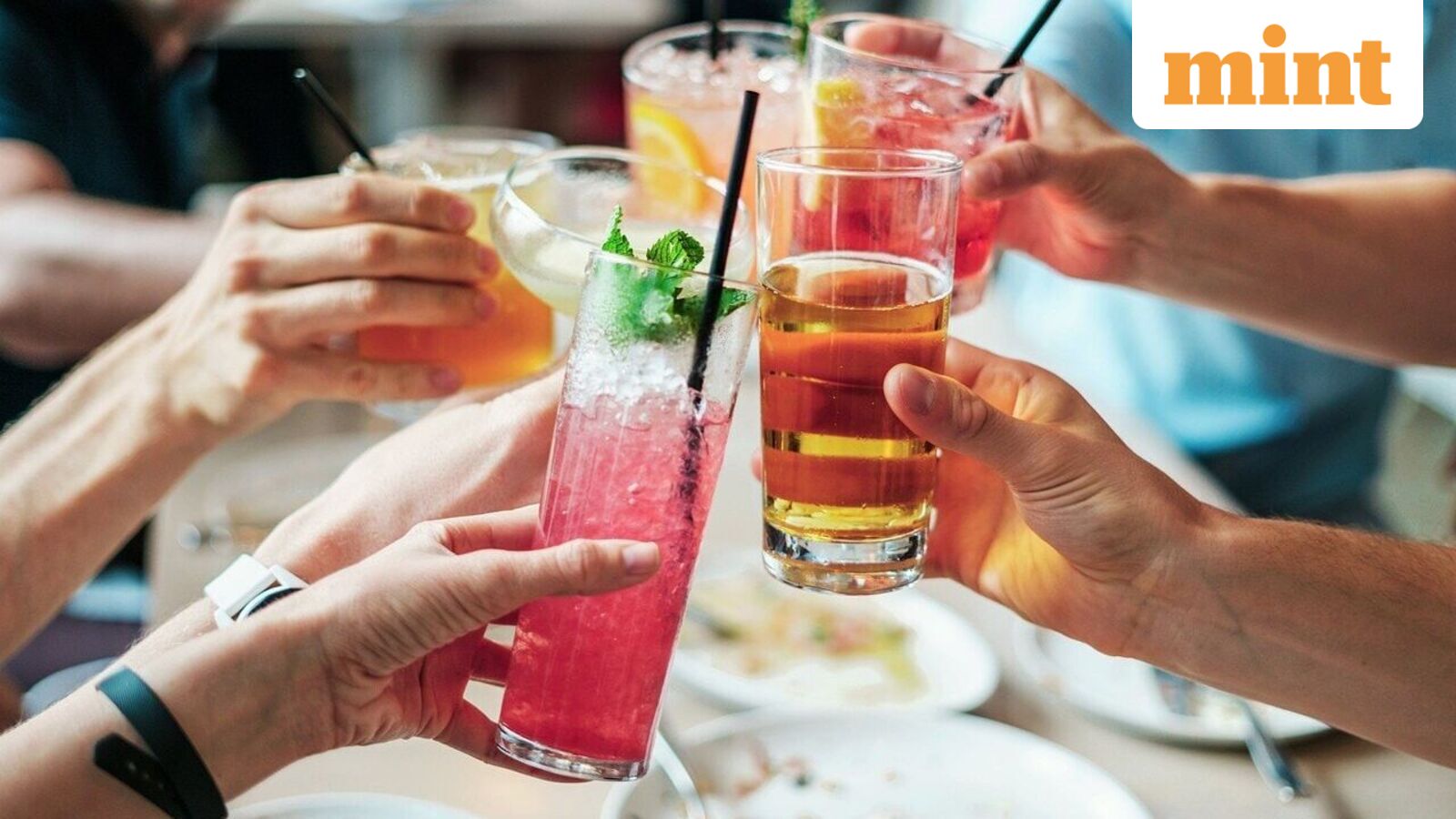
Indian distillers are diversifying portfolios as consumers shift to repertoire-led drinking, with 435 million cases sold in 2025-26. Expect more cross-category.
Alpha Score of 57 reflects moderate overall profile with moderate momentum, moderate value, moderate quality, moderate sentiment.
The Indian alcoholic beverage sector is undergoing a structural shift as consumer behavior moves away from traditional category loyalty toward a repertoire-led drinking model. Major distillers are responding by aggressively diversifying their product pipelines, with nearly a dozen new spirit launches scheduled or already in market through the 2026-27 period. This transition is forcing companies to move beyond single-category dominance, instead prioritizing flexible portfolios that can capture consumers across whisky, brandy, vodka, gin, rum, and tequila.
Industry data indicates that the Indian-made foreign liquor market reached approximately 435 million cases in 2025-26, an increase from 401.7 million cases in 2024-25. While volume growth remains steady, the underlying mechanism of consumption has changed. Consumers are no longer following a linear path of premiumization where they simply trade up to more expensive versions of a single preferred spirit. Instead, they are rotating across categories based on the specific context of the drinking occasion.
This fluidity means that whisky, vodka, and gin are increasingly treated as interchangeable components of a personal repertoire. Pernod Ricard India, for example, has launched the Seagram's Xclamat!on platform to address this, offering a mix of whisky, rum, and brandy under a single banner. According to Debasree Dasgupta, chief marketing officer at Pernod Ricard India, the company is aligning its innovation cycles with these shifting consumption patterns rather than traditional product development timelines.
For listed players like Tilaknagar Industries, Radico Khaitan, Globus Spirits, and Allied Blenders & Distillers, the strategy is now focused on balancing volume stability with value growth. Tilaknagar Industries is expanding its 'House of TI' brand into the super-premium and luxury segments, while simultaneously widening its whisky and brandy offerings. This dual approach is designed to capture consumers who may trade up for formal occasions but remain value-conscious in more informal settings.
Radico Khaitan is employing a similar tactic. The company recently launched the Rampur 1943 Virasat single malt alongside its Kashmyr vodka. Kunal Madan, chief marketing officer at Radico Khaitan, noted that the firm is building luxury spirits at the top end while simultaneously targeting younger consumers through experimental flavors. This strategy aims to capture both the aspirational drinker and the experimenter who views alcohol as a lifestyle choice rather than a routine purchase.
The rise of at-home consumption and cocktail culture is fueling demand for spirits that fit mixed formats, specifically gin, vodka, and tequila. Globus Spirits entered the tequila market in April with its 'Terai' brand, signaling a trend where Indian companies are tracking global categories earlier in their domestic lifecycle. This is particularly relevant for urban nightlife and cocktail-driven consumption, where discovery in bars and restaurants often translates into repeat purchases for home bars.
Industry experts suggest that the most successful firms are those that can build holistic portfolios while maintaining brand differentiation. Vikram Achanta, co-founder and CEO of the consultancy Tulleeho, emphasizes that expansion is occurring through both internal product launches and strategic investments in startups and craft brands. The key risk for these companies lies in execution; craft brands often require operational independence to maintain their market positioning, and large-scale distillers must avoid diluting their premium brand equity while seeking volume growth.
Allied Blenders & Distillers is also selectively expanding into premium segments, such as its 'The Collective' luxury line, which features limited editions and age-statement spirits. The company also introduced Zoya Pink Mix Berries gin in April to cater to the growing demographic of lifestyle-focused consumers. For these firms, the challenge is to maintain relevance in a market that is becoming increasingly fragmented by price point and usage occasion.
Romesh Pandita, chairman and managing director of Alcobrew Distilleries India Ltd, noted that product strategy is now driven by the need for relevance rather than mere shelf presence. As companies continue to leverage their distribution networks to sharpen brand positioning, the ability to pivot between categories will likely become the primary differentiator for stock market analysis participants evaluating the sector's long-term growth potential. Investors should monitor whether these broad-based portfolio expansions lead to sustainable margin improvements or if the increased cost of maintaining diverse product lines creates downward pressure on profitability in the coming fiscal years.
AI-drafted from named sources and checked against AlphaScala publishing rules before release. Direct quotes must match source text, low-information tables are removed, and thinner or higher-risk stories can be held for manual review.